


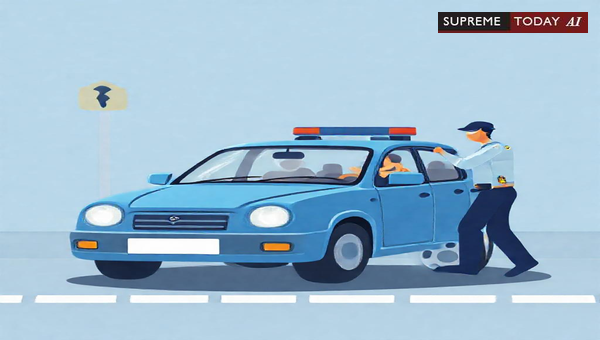
Drunk Driving Case Vehicle Detention — When Police Can and Cannot Keep Your Car
Imagine being stopped at a late-night drunk-and-drive checkpoint, tested with a breath analyser, and then watching the police take away your car or motorcycle — with no clear answer about when you will get it back. A question that arises repeatedly in such situations is: in drunk and drive cases, can the police keep the vehicle with them? Courts in India, particularly the , have answered this question fairly clearly, and their rulings protect vehicle owners from what amounts to .
The Short Answer
Police do not have the statutory power to seize or detain a vehicle solely because its driver or rider was found of alcohol. 2021 0 Supreme(Telangana) 160 What the law permits instead is limited, — and even that comes with a defined procedure and an obligation to release the vehicle.
- Intoxication of the driver is not, by itself, a ground for vehicle seizure.
- If a sober, licensed person is available, that person may drive the vehicle away immediately.
- If no one is present, police may take the vehicle into at a police station or authorized place — but cannot retain it as punishment.
What the Motor Vehicles Act Actually Permits
The , and the , enumerate the limited circumstances in which police may touch a vehicle at all during enforcement:
Seizure Grounds Under
of the Act authorizes seizure only where a vehicle is used in contravention of provisions relating to driving licences, age limits, registration, or permits. Drunken driving is not among them. The has consistently held that neither Sections 185, 206, nor 207 confer a general power to seize the vehicle on the ground of intoxication 2021 0 Supreme(Telangana) 160.
Licence Seizure, Not Vehicle Seizure
empowers police to seize the driving licence — not the vehicle — where the driver commits an offence under specified sections, including (). This distinction is crucial: the statute targets the licence and the prosecution, not the ownership of the vehicle.
As the High Court put it, police officers do not have the power to detain/seize the vehicles under these provisions and must release vehicles in terms of of the State Rules 2021 0 Supreme(Telangana) 160.
The Step-by-Step Procedure Courts Have Laid Down
When a driver is found intoxicated, the framework described in the High Court's directions 2026 Supreme(Online)(Tel) 5900 works in a graduated sequence:
- Ensure the driver does not continue driving. The officer's first duty is to stop the intoxicated person from driving further.
- Hand over to a sober person if available. If another person holding a is present, the police must permit that person to drive the vehicle away — no seizure, no detention.
- Contact a relative or friend. If the intoxicated driver is the only person present, the officer or the driver must immediately inform a nearest relative or friend to come and take custody of the vehicle.
- as a last resort. Only when no one comes forward may the police temporarily take possession and keep the vehicle at the nearest police station or another authorized place for safe custody 2026 Supreme(Online)(Tel) 5900.
Even at this final stage, the custody is protective, not punitive. The High Court has expressly clarified that police do not have power to detain / seize vehicle on the ground that its driver/rider drove it in an intoxicated condition 2026 Supreme(Online)(Tel) 5900.
Getting Your Vehicle Released
The release procedure is straightforward, and owners should be aware of it:
- The vehicle must be released to the owner or an authorized person upon production of the , , and a 2026 Supreme(Online)(Tel) 5900.
- Police cannot retain the vehicle indefinitely or use detention as leverage for revenue collection through drunk-and-drive challans.
- Where prosecution is necessary, a , and the vehicle is to be released once prosecution steps are completed 2021 0 Supreme(Telangana) 160.
Practical judicial practice reinforces this. In cases where vehicles were seized during drunk-and-drive checks, courts have directed that the vehicle be handed back to the petitioner, who then appears before the concerned court for prosecution 2026 Supreme(Online)(Tel) 7811. Where documents were not produced at the checkpoint, courts have still directed release upon the owner appearing with vehicle documents and , with prescribed fines collected for separate document-related violations 043000050149.
Notably, if a vehicle is seized or taken into custody in a drunk-and-drive offence — or the driver simply abandons it at the scene — the owner is entitled to file an application or petition seeking its release
Moyya Ramalakshmi vs The State of Andhra Pradesh
Bandi Sowri vs The Tahsildar, T.P. Guduru Mandalam
.Related Issues Owners Should Understand
The Offence Under
of the Motor Vehicles Act creates a criminal offence, and its ingredients must be proved in accordance with law — typically through a showing alcohol exceeding 30 mg per 100 ml of blood. A challan under is a separate matter from custody of the vehicle; paying or contesting the challan does not depend on the police holding the vehicle itself.
Remedies Against Illegal Detention
If police refuse to release a vehicle despite production of the RC, identity proof, and licence, owners have historically approached the High Court under by way of a writ petition, citing the established precedent that vehicles cannot be seized solely for intoxication 2021 0 Supreme(Telangana) 160. Courts have consistently directed release in such matters, sometimes noting that authorities should not build pressure on police to collect revenue by arbitrarily detaining vehicles.
Key Takeaways
- Intoxication alone is not a seizure ground — police powers under Sections 206 and 207 target licences and specific violations, not the vehicle in drunk-driving cases.
- Safe custody is temporary and conditional, triggered only when no sober licensed person or relative is available.
- Release requires three documents: RC, identity proof, and a — and refusal to release can be challenged by writ petition.
- Your vehicle cannot be held hostage to a pending challan or prosecution; the charge sheet process runs separately, generally within three days.
The law draws a firm line between prosecuting an intoxicated driver and confiscating the property of the vehicle owner. While every case turns on its own facts and circumstances, the prevailing judicial position generally favours prompt release of the vehicle upon production of prescribed documents. This article is general information and not a substitute for advice on a specific matter.
#DrunkDriving #MotorVehiclesAct #VehicleSeizure #TelanganaHighCourt #KnowTheProcedure









