Searching Case Laws & Precedent on Legal Query.....!
Analysing the retrieved Case Laws
Scanned Judgements…!



Searching Case Laws & Precedent on Legal Query.....!
Analysing the retrieved Case Laws
Scanned Judgements…!
Property Ownership and Control in Dnps Cases - When the accused is acquitted, the property (such as vehicles or assets) associated with the case generally remains under police custody or seizure unless the court orders its release. Ownership details, such as joint ownership or the absence of evidence of transfer, influence the court's decision to return the property. In cases involving educational trusts, shared management and recognition up to certain classes establish a unity of purpose, which can impact legal proceedings related to property or institutional recognition. 2024 Supreme(Online)(DEL) 7272, 2024 Supreme(Online)(Del) 32440,
Sri Abdul Mannan Vs The State - Tripura
, 2021 0 Supreme(Tri) 81, 2021 Supreme(Online)(Gau) 434Vehicle Seizure and Acquittal of the Accused - Even if the accused is acquitted, vehicles or property seized during investigation (e.g., in NDPS or forest produce cases) are not automatically released. The court may consider the ownership and the absence of involvement of the owner in the crime. The owner can seek interim relief for the release of the vehicle, provided ownership is established and no evidence links them to the offense. The court's primary concern is proper custody and whether the owner is involved in the crime.
DADIREDDY SATISH REDDY vs STATE OF ANDHRA PRADESH - Andhra Pradesh
,Sri Abdul Mannan Vs The State - Tripura
, 2021 0 Supreme(Tri) 81, 2021 Supreme(Online)(Gau) 434, 2024 0 Supreme(Mad) 2624Legal Provisions Governing Property Custody - Sections 451, 60-62 of the Cr.P.C. and NDPS Act provisions govern the custody and disposal of seized property. When property is produced during trial, courts may order its custody or return based on ownership proof and involvement in the crime. The owner, even if not accused, can request the property's return if they establish non-involvement. Conditions may be imposed to safeguard the property during proceedings. 2024 0 Supreme(Mad) 2624
Implications of Acquittal on Property - Upon acquittal, the property seized in connection with the case is subject to court orders. If ownership is clear and the owner is not involved, the property can be released after appropriate procedures, including furnishing security or fulfilling conditions. The absence of evidence linking the owner to the offense favors the release of the property.
DADIREDDY SATISH REDDY vs STATE OF ANDHRA PRADESH - Andhra Pradesh
, 2021 Supreme(Online)(Gau) 434, 2024 0 Supreme(Mad) 2624Analysis and Conclusion:When the accused is acquitted, the fate of the sized property vehicle depends on ownership proof and the absence of involvement in the crime. Courts generally favor releasing such property if ownership is established and no evidence suggests complicity. Seized vehicles remain in police custody until court orders their return, which can be granted upon satisfying legal conditions. The legal framework emphasizes safeguarding the rights of owners while ensuring proper custody during trial proceedings.
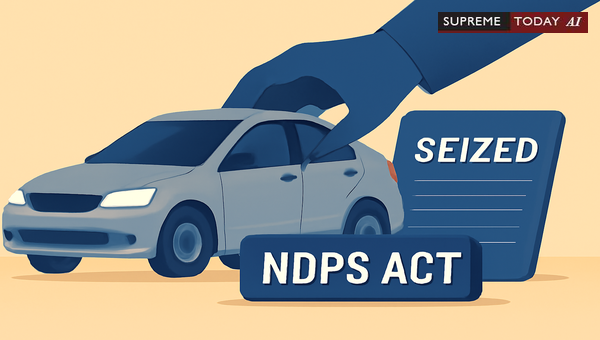
Imagine this: Your vehicle is seized during an NDPS investigation, but the accused driver is later . What happens next to your prized possession? The question on many vehicle owners' minds is, What will happen with the seized property vehicle in NDPS cases when the accused is ? This is a common concern under the , where vehicles used in transporting contraband can face prolonged detention even after the main case concludes.
In this post, we'll break down the legal landscape, drawing from key judicial precedents and statutory provisions. Note that this is general information based on court rulings and should not be taken as specific legal advice—consult a qualified lawyer for your situation.
The is stringent on narcotics offenses, and Section 60 specifically addresses the of vehicles involved in such crimes. When contraband is recovered from a vehicle, it becomes and is typically held in police custody during the trial. But acquittal of the accused doesn't automatically free the vehicle. Courts balance the owner's rights with the need to prevent misuse, often requiring proof of . 2022 0 Supreme(Raj) 1464
Indefinite seizure is frowned upon, as it burdens both the owner and the state without purpose. Courts have ruled that if the owner isn't an accused, they should reclaim the vehicle promptly. 2022 0 Supreme(Raj) 2283
Under , a vehicle is liable to confiscation if used for transporting narcotic drugs or psychotropic substances, unless the owner proves it was done without their knowledge or connivance. This burden persists even post-acquittal of the accused. 2014 0 Supreme(Raj) 1290
For instance, in cases where the owner lent the vehicle innocently, like to a friend or relative, they must demonstrate lack of complicity. One document notes: The motorcycle belongs to the present petitioner, who had given it to Accused No.1. The prosecution does not say that the petitioner is an accused. 2025 Supreme(Online)(Mad) 70257
Acquittal of the accused—say, on technical grounds—doesn't bar confiscation proceedings against the vehicle. If evidence shows the vehicle was used for illegal acts, courts may still order . However, if the acquittal undermines the prosecution's case entirely, release becomes more likely. 2023 0 Supreme(Chh) 151
Courts emphasize: ownership alone doesn't prove guilt; it's the recovery of contraband and offense commission that matter. 2020 0 Supreme(Kar) 1359 2020 5 Supreme 142
Typically, if the owner isn't implicated, courts direct release under , often with conditions like furnishing security or bonds. If the owner is not implicated as an accused, they should be allowed to reclaim the vehicle. 2022 0 Supreme(Raj) 1464 2022 0 Supreme(Raj) 2283
Additional sources highlight that even in non-NDPS cases like forest produce seizures, similar logic applies: no automatic release post-acquittal, but owners can seek by proving ownership and . Though the offending vehicle was detained, no effort was made to bring the owner of the vehicle to book.
-
In NDPS contexts, vehicles remain / until trial completion, but post-acquittal, applications for release gain traction.
Kolli Srinivas Reddy VS State of A. P. Rep. by its PP - Crimes
Indian courts have addressed this repeatedly:
Against Indefinite Detention: Prolonged seizure without proceedings is impermissible. If not produced before authorities within timelines (e.g., one month under some acts), criminal courts can intervene via sections. 2019 0 Supreme(Ori) 3
Owner's Innocence Key: The Accused No.1 has been released on bail, but the vehicle continues to be treated as a / . Owners must file applications showing clean hands. 2025 Supreme(Online)(Mad) 70257
Post-Acquittal Scenarios: Property stays in custody unless ordered released. Ownership proof and no crime link favor return, possibly with safeguards. When the accused is , the property (such as vehicles or assets) associated with the case generally remains under police custody or seizure unless the court orders its release. 2024 Supreme(Online)(DEL) 7272 2024 Supreme(Online)(Del) 32440
Confiscation Only Post-Conviction Proof: Seizure of vehicle in NDPS cases – It is only when prosecution is able to prove guilt of accused beyond all reasonable doubt after completion of trial, then has to pass order to confiscate vehicle.
Kolli Srinivas Reddy VS State of A. P. Rep. by its PP - Crimes
Other cases reinforce: vehicles aren't released automatically; owners must approach courts, especially if not accused.
-
2021 Supreme(Online)(Gau) 434 2024 0 Supreme(Mad) 2624If you're in this situation:
File Promptly: Approach the or with an application under for or release post-acquittal.
Prove Ownership and Innocence: Submit RC book, insurance, and affidavits showing you weren't involved. Highlight if the vehicle was lent without knowledge.
Conditions to Expect: Courts may require surety, hypothecation removal, or no-transfer undertakings. Learned AGA argued that the vehicle is and liable for confiscation, if the accused persons are convicted. 2010 0 Supreme(All) 1487
Legal Help: Engage NDPS specialists to argue against indefinite seizure and shift burden back to prosecution.
From precedents, success rates improve when owners act swiftly and evidence supports non-complicity. 2022 0 Supreme(Raj) 1464
and govern disposal. Post-trial, if no confiscation order, release follows. But delays occur if proceedings linger. Sections 451, 60-62 of the Cr.P.C. and provisions govern the custody and disposal of seized property. 2024 0 Supreme(Mad) 2624
In summary points from sources:- Property ownership influences release; joint or clear title helps. 2024 Supreme(Online)(DEL) 7272- No owner involvement = strong case for return.
-
- Acquittal aids but doesn't guarantee; court orders needed. 2021 0 Supreme(Tri) 81The fate of a seized vehicle in NDPS cases after accused acquittal hinges on owner proof of innocence and court discretion. Generally, non-implicated owners can reclaim it, avoiding indefinite state burden. However, proactive legal steps are crucial—delays risk depreciation or misuse claims.
Key Takeaways:- Acquittal ≠ automatic release; file applications immediately.- Burden on owner to show no knowledge/connivance (NDPS Sec 60).- Courts favor release for innocents; cite precedents like indefinite seizure bans. 2022 0 Supreme(Raj) 2283- Consult lawyers; outcomes vary by facts.
This framework protects rights while upholding NDPS rigor. For tailored advice, reach out to legal experts.
References: 2022 0 Supreme(Raj) 1464 2022 0 Supreme(Raj) 2283 2014 0 Supreme(Raj) 1290 2023 0 Supreme(Chh) 151 2020 0 Supreme(Kar) 1359 2020 5 Supreme 142 2025 Supreme(Online)(Mad) 70257
-
Kolli Srinivas Reddy VS State of A. P. Rep. by its PP - Crimes
2019 0 Supreme(Ori) 3 2010 0 Supreme(All) 1487 2024 Supreme(Online)(DEL) 7272 2024 Supreme(Online)(Del) 32440-
2021 Supreme(Online)(Gau) 434 2024 0 Supreme(Mad) 2624 #NDPSCases, #SeizedVehicle, #LegalRights


He was also the joint owner of the property where MSPS was being run. He was also the permanent and founding member of both the trusts as well as the society. The bank accounts of DNPS and MSPS were in the same bank i.e., Indian Bank, A-3/3, Nehru Ground Faridabad. ... The following cases were relied upon to defend the orders passed by EPFO and EPFAT to demonstrate functional integration based on common staff, common clerks, common managem....

He was also the joint owner of the property where MSPS was being run. He was also the permanent and founding member of both the trusts as well as the society. The bank accounts of DNPS and MSPS were in the same bank i.e., Indian Bank, A-3/3, Nehru Ground Faridabad. ... There was no evidence of actual transfer of property to the Trust/Society. 24. Insofar as financial control was concerned, the Inquiry Officer (RPFC) noted that Mr. Ujjal Pal....

The Accused No.1 has been released on bail, but the vehicle continues to be treated as a material object / case property and is kept in police station custody. ... The case materials indicate that the motorcycle belongs to the present petitioner, who had given it to Accused No.1. The prosecution does not say that the petitioner is an accused; its objection is based on the use of the vehicle#HL_E....

It is well settled principle that even if a vehicle is sized in connection with any crime, there is no bar for granting interim relief of such vehicle when there is no dispute with regard to the ownership. ... Learned counsel for the petitioner submits that the petitioner is a Medical Student in Bangalore and the accused No.1 without consent and knowledge of the petitioner, used the crime vehicle in this....

A search operation was carried out in the vehicle and 23 unmarked sized logs of teak tree were found loaded in the vehicle which were seized and the petitioner was detained. ... , 23 sized logs of teak tree were found loaded in the truck. ... Though the offending vehicle was detained, no effort was made to bring the owner of the vehicle to book. ... In cross-examination the #HL....

A search operation was carried out in the vehicle and 23 unmarked sized logs of teak tree were found loaded in the vehicle which were seized and the petitioner was detained. ... Apparently, in this case, the sized logs of teak tree which were seized from the vehicle in which the petitioner was travelling were all unmarked and apparently, the petitioner was transporting those forest produce in the said #HL....

A search operation was carried out in the vehicle and 23 unmarked sized logs of teak tree were found loaded in the vehicle which were seized and the petitioner was detained. ... Apparently, in this case, the sized logs of teak tree which were seized from the vehicle in which the petitioner was travelling were all unmarked and apparently, the petitioner was transporting those forest produce in the said #HL....
Section 451 Cr.P.C. relates to disposal of property and order for custody pending trial in certain cases. ... Order for custody and disposal of property pending trial in certain cases.- When any property is produced before any Criminal Court during any inquiry or trial, the Court may make such order as it thinks fit for the proper custody of such property pending the conclusion of the i....

to step out of the vehicle. ... Accused No.1 then boarded the vehicle at the rear seat and handed over the bag to that the charge-sheet comprise of an order of seizure (freezing) of illegally acquired property ... Immediately the raiding party approached the spot and encircled the vehicle. ... The total number of dark brown coloured biscuit sized packets were found to be 1....
Later the complainant unloaded the polished PDS rice at stock point, Uravakonda and then sized vehicle bearing No. AP 39 TR 0589 along with the stock and handed over the same along with panchanama to the 5th respondent. ... On 01.03.2024 at about 11.00 AM at Vidapanakal boarder check post, vidapanakal village and mandal the petitioner along with other accused purchased PDS rice from different villagers and got polished the subject rice. .......

Seizure of vehicle in NDPS cases – It is only when prosecution is able to prove guilt of accused beyond all reasonable doubt after completion of trial, then trial Court has to pass order to confiscate vehicle. This Criminal Revision Case is preferred assailing the order dated 26.04.2023 passed in Crl.M.P.No.319 of 2023 on the file of the learned I Additional District and Sessions Judge –cum - Special Judge for Trial of Offences under the NDPS Act, Vizianagaram, in connection ....

If within a month, vehicle is not produced before the learned Collector or Authorized Officer and the confiscation proceeding is not completed within a reasonable period of three months from appearance of the owner of the vehicle after receiving notice as envisaged under Sub-section (4) and Section 71 of the Orissa Excise Act, then in-spite of proviso to Sub-section (7), the criminal courts shall have jurisdiction to entertain the application under Sections 451 and 457 of the Cr.P.C. and pass ....

But when the accident took place, the vehicle cap-sized or toppled and in that process, his leg was crushed under the vehicle.

5. Learned AGA argued that the vehicle is case property and liable for confiscation, if the accused persons are convicted for the offence. Possibility also cannot be ruled out that applicant may transfer the vehicle and destroy the evidence to be used against them.

2 has friendly relations with the petitioner and on 1st of January, 2007 he approached the petitioner at Sumo stand, Lal Chowk, Srinagar and requested him to provide him his vehicle so as to enable respondent No. 2 to carry his family to Tulmula shrine. On such request vehicle was given to respondent No. 2 but even after lapse of 7 days vehicle was not returned and in turn the driver of the vehicle was told unless Rs. 10,000/- was paid vehicle will remain in custody/possession of acc....


An indispensable Tool for Legal Professionals, Endorsed by Various High Court and Judicial Officers
Please visit our Training & Support
Center or Contact Us for assistance

Scan Me!
India’s Legal research and Law Firm App, Download now!


For Daily Legal Updates, Join us on :



 Back to top


