Is Wife's Self-Harm Grounds for Divorce in India?
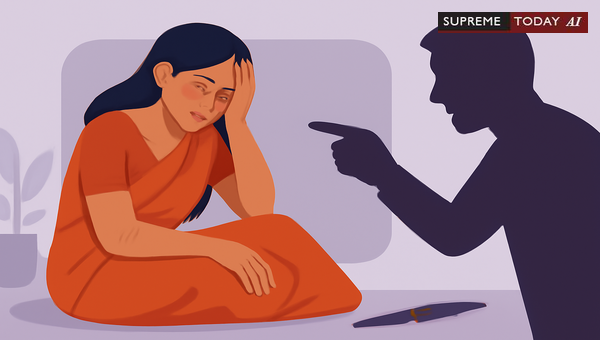
In the complex world of matrimonial disputes, questions about extreme behaviors often arise. One such provocative query is: Wife Cut her own Hands is Ground of Divorce. This raises critical issues under Indian law, particularly the Hindu Marriage Act, 1955 (HMA). Does self-inflicted harm by a spouse automatically qualify as a ground for divorce? This blog post delves into the legal nuances, drawing from statutory provisions, judicial precedents, and key case analyses to provide clarity.
Note: This article offers general information based on legal precedents and is not a substitute for professional legal advice. Consult a qualified lawyer for personalized guidance.
Understanding Grounds for Divorce Under Hindu Marriage Act
The HMA, 1955, outlines specific grounds for divorce in Section 13(1), including adultery, cruelty, desertion, conversion, mental disorder, and more. Cruelty—both physical and mental—is one of the most invoked grounds. However, self-harm, such as a wife cutting her own hands, is not explicitly recognized as a standalone ground for divorce1994 0 Supreme(SC) 675 2023 0 Supreme(MP) 220 2025 0 Supreme(MP) 116.
Courts focus on misconduct by the spouse that endangers life, limb, health, or causes reasonable apprehension thereof. As established, cruelty may be a ground for divorce, but it involves acts that endanger life, limb, or health, or cause mental suffering 1994 0 Supreme(SC) 675. Self-harm does not fit neatly unless proven to stem from the other spouse's conduct.
Key Legal Grounds Recap
- Cruelty (Section 13(1)(ia)): Physical acts causing harm or mental acts leading to suffering or fear 2002 1 Supreme 90.
- Mental Cruelty: Persistent behavior causing emotional distress, but must be inflicted by the spouse 2023 0 Supreme(MP) 220.
- Other grounds like desertion or adultery require direct spousal action, not self-directed harm.
Self-Harm: Not Automatically Cruelty
Self-inflicted injuries, like cutting one's own hands, typically indicate personal mental distress rather than spousal misconduct. Legal documents emphasize that acts of cruelty must be directed or inflicted by the spouse, not acts of self-harm or external factors unless linked to the spouse’s conduct 1994 0 Supreme(SC) 675 2025 0 Supreme(MP) 116.
For instance, cruelty involves acts dangerous to life or health, and mental cruelty involves conduct causing mental suffering or fear—but these must originate from the spouse 2002 1 Supreme 90. Mere self-harm does not qualify unless evidence shows the husband's behavior provoked it, such as through harassment or abuse.
In related contexts, threats of suicide or actual attempts have been scrutinized. Continuous harassment by a wife threatening suicide was deemed cruelty against the husband, as it compelled husband to make various complaint against her... Such conduct and behaviour of wife for such a long period... constitute physical and mental cruelty 2022 0 Supreme(Chh) 609. Conversely, a wife's self-harm without spousal linkage fails as a ground.
Judicial Precedents on Cruelty and Self-Harm
Indian courts adopt a fact-specific approach. Mental cruelty requires proof on the preponderance of probabilities, not beyond reasonable doubt 2024 0 Supreme(Guj) 1193. In one case, a wife's hospitalization after consuming sleeping pills due to cruelty (birth of daughters) supported divorce, as the husband's conduct caused it 2024 0 Supreme(Guj) 1193.
However, unsubstantiated allegations or independent acts do not suffice. The court held that the divorce petition lacked sufficient evidence of mental cruelty and desertion, and that the litigation initiated by the wife... could not be considered as grounds for mental cruelty 2023 0 Supreme(Mad) 2044.
Self-harm akin to suicide threats has limits. In abetment cases, contradictory dying declarations (e.g., victim claiming threats to cut hands/legs) require proof of spousal guilt first 2017 0 Supreme(Bom) 872. Mere presumption under Evidence Act Section 113A does not convict without evidence.
Insights from Broader Cases
- Mental Disorder: Slight mental deformity is insufficient; petitioner must prove it renders cohabitation impossible 2000 0 Supreme(P&H) 1216 2012 0 Supreme(Guj) 614. Retaliatory acts in exasperation do not constitute cruelty.
- Irretrievable Breakdown: Not an independent ground but may fold into cruelty 2025 0 Supreme(Cal) 330.
- Conduct Matters: Prolonging litigation intentionally inflicts mental cruelty 2019 0 Supreme(P&H) 864. Wife intentionally and purposely trying to prolong the litigation... amounts to inflicting mental cruelty.
These precedents underscore: self-harm may evidence cruelty if linked, but standalone, it does not dissolve the marriage.
When Self-Harm May Become Relevant
Exceptions exist if causation is established:- Direct Link to Spouse's Cruelty: If husband's harassment leads to self-harm, it evidences mental cruelty 2023 0 Supreme(MP) 220.- Evidence Threshold: Concrete proof like medical reports, witness testimonies, or patterns of abuse needed 2002 1 Supreme 90.- Limitations: Personal mental health issues without spousal nexus fail 2025 0 Supreme(MP) 116.
For example, if the wife’s self-harm is directly caused by the husband’s acts of cruelty or mental harassment, it might be considered as evidence of cruelty. But independent acts do not qualify.
Proving Your Case: Practical Steps
Seeking divorce on cruelty grounds involving self-harm requires:1. Gather Evidence: Medical records linking harm to spousal conduct.2. Witness Statements: Family, neighbors corroborating harassment.3. Mental Health Evaluation: Professional assessment showing impact.4. Avoid Assumptions: Courts reject trivial irritations; need grave, weighty acts 2022 0 Supreme(Chh) 609.
To seek divorce on the grounds of cruelty or mental cruelty, concrete evidence linking the spouse’s conduct to the act of self-harm would be necessary.
Recommendations for Couples in Distress
Key Takeaways
- Wife's self-harm (cutting hands) is not explicitly a ground for divorce under HMA.
- It may support cruelty claims only if proven caused by spouse's conduct1994 0 Supreme(SC) 675 2023 0 Supreme(MP) 220.
- Courts prioritize evidence of directed misconduct over self-inflicted acts.
- Mental cruelty evolves with precedents, but statutory limits bind.
Matrimonial law aims to protect marriages while remedying genuine harm. If facing such issues, prioritize evidence and professional advice. For deeper insights, review referenced cases or consult experts.
References:1. 1994 0 Supreme(SC) 675: Grounds including cruelty.2. 2002 1 Supreme 90: Defines cruelty.3. 2023 0 Supreme(MP) 220: Mental cruelty focus.4. 2025 0 Supreme(MP) 116: Self-harm linkage.5. Additional cases like 2022 0 Supreme(Chh) 609, 2024 0 Supreme(Guj) 1193, etc., for contextual cruelty analyses.
#DivorceLawIndia #MentalCruelty #HinduMarriageAct