SupremeToday Landscape Ad
AI Thinking

AI Thinking...

Searching Case Laws & Precedent on Legal Query.....!

Scanned Judgements…!

Checking relevance for DELHI TRANSPORT CORPORATION VS D. T. C. MAZDOOR CONGRESS ANB...

1990 0 Supreme(SC) 493 : An employee cannot be terminated in the absence of specific rules for termination. The court held that statutory authorities, including statutory corporations, cannot terminate the services of permanent employees without following a just, fair, and reasonable procedure, even if the contract of service allows termination by notice. The power to terminate must be exercised in accordance with constitutional principles, including Articles 14, 16(1), 19(1)(g), and 21 of the Constitution. The court emphasized that the absence of specific rules or procedures for termination renders the power arbitrary and unconstitutional. The authority must record reasons for termination, provide an opportunity to respond to the grounds, and communicate the decision, even if the material is scanty. The mere existence of a contractual right to terminate by notice is insufficient if it lacks procedural safeguards. Therefore, termination without specific rules or procedural safeguards is invalid and violates fundamental rights.Checking relevance for Delhi Transport Undertaking VS Balbir Saran Goel...

1970 0 Supreme(SC) 66 : The legal documents establish that an employee can be terminated even in the absence of specific rules for termination, provided the termination is carried out under a general provision that confers authority to terminate employment. Regulation 9(b) of the D.R.T.A. (Conditions of Appointment and Service Regulations), 1952, explicitly authorizes termination of service by giving one month''''s notice or pay in lieu thereof in circumstances other than those specified in Regulation 9(a), such as misconduct or probation. The court held that such termination under Regulation 9(b) does not constitute ''''dismissal'''' under Regulation 15(2)(c), which requires a formal inquiry for punishment-related actions. Therefore, termination under Regulation 9(b) is permissible without following the detailed procedure of Regulation 15, as it is not a punitive measure but a non-punitive termination. The court emphasized that the employer''''s choice to terminate under Regulation 9(b) is valid and lawful, even if the real reason for termination relates to misconduct, as long as the form of the order complies with the statutory provision. This confirms that specific rules for termination are not mandatory if a general statutory or regulatory provision (like Regulation 9(b)) confers the power to terminate under defined conditions.Checking relevance for State Bank of India VS S. N. Goyal...

Checking relevance for O. P. Bhandari VS Indian Tourism Development Corporation LTD. ...

1986 0 Supreme(SC) 359 : The legal document establishes that an employee cannot be terminated in the absence of specific, constitutionally valid rules for termination. It holds that a rule authorizing termination by merely giving notice—without any requirement for justification, rational grounds, or adherence to principles of fairness—violates Articles 14 and 16(1) of the Constitution of India. The court explicitly invalidates Rule 31(v) of the ITDC Rules, which allowed termination by giving 90 days'''' notice or pay in lieu, because it permits arbitrary, capricious, or discriminatory termination without any substantive basis. The judgment emphasizes that such a rule would allow termination based on personal preferences, nepotism, casteism, or religious bias, thereby undermining fundamental rights. Therefore, termination without specific, non-arbitrary rules is unconstitutional and cannot be legally enforced.Checking relevance for Punjab And Sind Bank VS Sakattar Singh...

2000 8 Supreme 47 : An employee can be terminated even in the absence of specific rules for termination, provided there is a valid agreement (such as a Bipartite Settlement) that outlines the procedure for termination due to prolonged absence. In this case, clause XVI of the IV Bipartite Settlement explicitly provides a mechanism for deemed voluntary retirement after 90 or more consecutive days of unauthorized absence, requiring the employee to report for duty within 30 days of notice or provide a satisfactory explanation. The absence of formal rules is not fatal if the termination is based on a mutually agreed-upon framework that includes procedural safeguards and due process, such as notice and opportunity to explain. The court upheld the termination as justified because the employee failed to respond to the notice or provide proof of communication, despite claiming illness and sending letters. Thus, the existence of a negotiated agreement with clear terms for termination in cases of prolonged absence satisfies the requirement for a lawful termination process, even without standalone statutory or regulatory rules.Checking relevance for State Of Assam VS Akshaya Kumar Deb...

Checking relevance for Chander Prakash VS Apparel Training And Design Centre Though Director General...

2021 0 Supreme(Del) 1691 : An employee cannot be terminated in the absence of specific rules for termination. The court held that for permanent employees, termination must follow a non-arbitrary and non-discriminatory process, and must be in accordance with the General Service Rules, 2011. Even if the post is not abolished, termination without proper notice (three months) or a fair procedure is deemed arbitrary and discriminatory. The court emphasized that the management cannot ''''pick and choose'''' among permanent employees and must adhere to principles of natural justice, including show-cause notice and enquiry. Thus, the absence of specific rules or procedural safeguards renders termination unlawful.


AI Overview

AI Overview...

  • Termination Without Specific Rules - An employee can be terminated even in the absence of explicit rules, but the legality depends on whether employment is governed by statutory rules or purely contractual terms. If employment is governed by statutory rules, termination must comply with mandatory provisions; otherwise, it may be challenged as illegal or arbitrary

    IND_HC_HCGA010029192_HC_HCGA010029192.
  • Statutory vs. Non-Statutory Employment - For employees of statutory bodies, breach of mandatory statutory provisions during termination renders the action illegal, with remedies limited to damages unless reinstatement is specifically granted by courts. Conversely, non-statutory employees lack such statutory protections, making their wrongful termination more susceptible to challenge but generally limited to damages 2023 Supreme(Online)(MP) 4135, 2024 Supreme(Online)(MP) 41545, 2024 Supreme(Online)(Mp) 34478, 2024 Supreme(Online)(MP) 51381.

  • Termination During Probation - During probation, employment can generally be terminated without a formal enquiry, and such termination is typically not stigmatic if it is a simple order. However, if the termination order is stigmatic or not in accordance with service rules, it may be challenged. Confirmation after probation depends on specific service rules; absence of a confirmation order does not imply deemed confirmation, and termination during probation can be made without a formal enquiry unless rules specify otherwise 2023 Supreme(Online)(CAT) 2764, 2024 Supreme(Online)(Guj) 27796, 2024 Supreme(Online)(GUJ) 1017.

  • Automatic Confirmation & Termination - Whether an employee is deemed confirmed after completing probation depends on service rules; no automatic confirmation occurs unless explicitly provided. Termination during or after probation can be lawful if done according to applicable rules, regardless of confirmation status 2024 Supreme(Online)(Guj) 27796.

  • Remedies for Wrongful Termination - Courts generally do not grant specific performance or reinstatement unless employment is governed by statutory rules or special circumstances exist. In contractual employment, damages are the typical remedy, and wrongful termination orders may be challenged if procedural or statutory violations are evident 2022 Supreme(Online)(All) 26991.

Analysis and Conclusion:An employee can be lawfully terminated in the absence of specific rules for termination if the employment is contractual and the termination complies with general principles of law. However, if employment is governed by statutory rules or codes, termination must adhere to mandatory statutory provisions; otherwise, it may be deemed illegal, with remedies including damages or reinstatement. During probation, termination without enquiry is generally permissible unless rules specify otherwise, and confirmation is not automatic but based on service rules. Therefore, the legality of termination without explicit rules depends primarily on whether the employment is statutory or contractual and the applicable procedural safeguards.

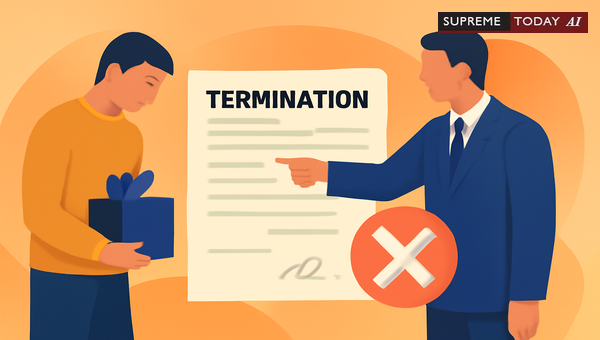
Termination of Temporary and Probationary Employees Without Enquiry: Legal Precedents and Requirements

Can Temporary Employees Be Terminated Without Proper Enquiry?

In today's dynamic job market, temporary and probationary roles are common, but what happens when an employer decides to end such employment abruptly? The question arises: Temporary Employees Also Cannot be Terminated Without Conducting Proper Enquiry. This issue strikes at the heart of employee protections versus employer flexibility, especially under Indian labour laws.

This blog post delves into key legal principles, court rulings, and nuances from statutory versus contractual employment. We'll explore why termination often requires lawful rules or procedures, constitutional safeguards, and important exceptions like probation periods. Note: This is general information based on legal precedents and not specific legal advice. Consult a qualified lawyer for your situation.

The Core Legal Principle: Termination Requires Lawful Authority

An employee cannot be lawfully terminated in the absence of specific rules, regulations, or statutory provisions that explicitly authorize such action. Without clear, lawful rules or statutory authority, termination is generally deemed illegal, arbitrary, or unconstitutional. 1990 0 Supreme(SC) 4931970 0 Supreme(SC) 66

Courts have consistently held that termination must be grounded in lawful rules, regulations, or statutory provisions. Arbitrary or unregulated termination violates constitutional rights under Articles 14 (equality), 16 (equality in public employment), and 21 (right to life and liberty). 1990 0 Supreme(SC) 493

For instance, one ruling emphasizes: The conferment of power with wide discretion without any guidelines, without any just, fair or reasonable procedure is constitutionally anathema to Articles 16(1), 19(1)(g) and 21 of the Constitution.1990 0 Supreme(SC) 493 This highlights how unguided powers lead to unfairness.

Similarly, another case states: In the present case even if it is assumed that law is same as would be applicable to a case governed by Article 311 it is difficult to say on principles laid down in above case that services of respondent were not mercy terminated in accordance with Regulation 9 (b) which governed conditions of his employment.1970 0 Supreme(SC) 66 Here, the court underscored that without following prescribed procedures, termination is unlawful.

Why Proper Enquiry or Procedures Matter

Even for temporary employees, termination without specific rules is problematic. 1986 0 Supreme(SC) 359 notes that rules allowing termination merely by notice, without proper procedures or reasons, are arbitrary and discriminatory, violating Articles 14 and 16. A key quote warns: Such power may be exercised even on the unarticulated ground that the former belongs to the same religious faith or is the disciple of the same religious teacher or holds opinions congenial to him.1986 0 Supreme(SC) 359

Principles of natural justice play a crucial role—employers must record reasons and provide opportunities to respond, preventing abuse of power. 1990 0 Supreme(SC) 493

Statutory vs. Contractual Employment: A Key Distinction

The legality often hinges on whether employment is governed by statutory rules or purely contractual terms. For statutory bodies (e.g., public sector), breaching mandatory provisions renders termination illegal, potentially leading to reinstatement. 2024 Supreme(Online)(CAT) 8932023 Supreme(Online)(MP) 4135

In contrast, non-statutory or private contractual employment may allow termination without detailed enquiry if terms permit, though it must not be arbitrary. Remedies are typically limited to damages rather than reinstatement. 2023 Supreme(Online)(MP) 41352024 Supreme(Online)(MP) 41545

As per one source: As per Rule 56 (iii) (a) of the Rules, if a permanent employee is found guilty of misconduct or is found to be inefficient, his services are terminated only in accordance with the Conduct, Discipline and Appeal Rules of Bharat Sanchar Nigam Limited.2024 Supreme(Online)(CAT) 893 This shows strict adherence required in regulated sectors.

Special Case: Temporary and Probationary Employees

Temporary employees, often on probation, face unique considerations. Generally, during probation, termination can occur without a formal enquiry if it's a simple order and not stigmatic (i.e., not accusing misconduct). 2023 Supreme(Online)(CAT) 27642024 Supreme(Online)(Guj) 27796

However, if service rules require an enquiry or the termination implies misconduct, it may be challenged. Confirmation after probation isn't automatic—it depends on specific rules. No confirmation order means no deemed confirmation, and termination can follow applicable rules. 2024 Supreme(Online)(Guj) 277962024 Supreme(Online)(GUJ) 1017

One case snippet notes: whether an employee is terminated or his probation period gets a specific provision in the said Rules recognizing the concept of ‘ whether the petitioner is a confirmed employee or not, the ... if the inquiry was held for the limited purpose of finding out whether the employee was fit

SANJAY RANE vs STATE OF GOA BY ITS SECRETARY (PERSONNEL) AND 2 ORS - Allahabad

This reinforces that even probationers may need enquiries for fitness assessments.

Exceptions and Limitations

  • Contractual Flexibility: If employment contracts explicitly allow simple notice termination without enquiry, courts may uphold it, provided it's non-discriminatory.
  • Statutory Permissions: Specific statutes or rules may authorize termination for reasons like inefficiency, but procedures must be followed strictly. 2024 Supreme(Online)(CAT) 893
  • Probation Simplicity: Non-stigmatic terminations during probation are typically valid without enquiry unless rules dictate otherwise. 2023 Supreme(Online)(CAT) 2764
  • Remedies: Wrongful termination in contractual roles usually yields damages, not reinstatement. Courts grant reinstatement only in statutory cases or exceptional circumstances. 2022 Supreme(Online)(All) 26991

Practical Recommendations for Employers and Employees

For Employers:- Establish clear, lawful rules governing termination, including for temporary staff.- Always document reasons and follow natural justice principles to avoid challenges.- Differentiate between statutory and contractual roles to comply accordingly.

For Employees:- Review your appointment letter, service rules, and contract for termination clauses.- Challenge arbitrary terminations via labour courts if statutory protections apply.- During probation, ensure terminations aren't stigmatic to strengthen your case.

Key Takeaways

In conclusion: While employers have some leeway in contractual or probationary scenarios, termination without lawful authority or enquiry is likely arbitrary and challengeable. Understanding these nuances protects both parties. For tailored advice, seek professional legal counsel.

References

  1. 1990 0 Supreme(SC) 493 - Constitutional validity of termination powers.
  2. 1970 0 Supreme(SC) 66 - Need for prescribed procedures.
  3. 1986 0 Supreme(SC) 359 - Arbitrariness in notice-based terminations.
  4. 2024 Supreme(Online)(CAT) 893 - Rule-based terminations in public sector.
  5. SANJAY RANE vs STATE OF GOA BY ITS SECRETARY (PERSONNEL) AND 2 ORS - Allahabad

    , 2024 Supreme(Online)(Guj) 27796, and others for probation insights.
#EmployeeRights, #TerminationLaws, #LabourLawIndia
Chat Download
Chat Print
Chat R ALL
Landmark
Strategy
Argument
Risk
Chat Voice Bottom Icon
Chat Sent Bottom Icon
SupremeToday Portrait Ad
logo-black

An indispensable Tool for Legal Professionals, Endorsed by Various High Court and Judicial Officers

Please visit our Training & Support
Center or Contact Us for assistance

qr

Scan Me!

India’s Legal research and Law Firm App, Download now!

For Daily Legal Updates, Join us on :

whatsapp-icon Back to top