


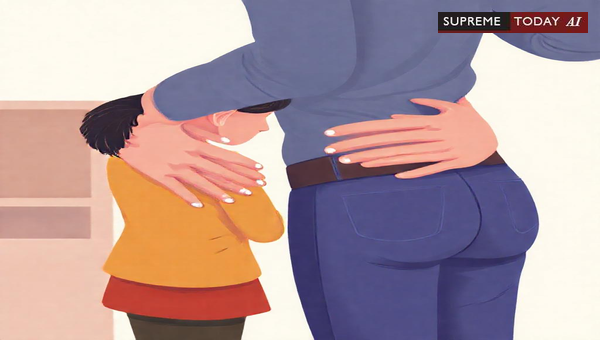
When a Teacher Touches a Girl Student's Waist Without — Is Punishment Possible?
A question that frequently arises in Indian criminal law is whether a school teacher can be punished for touching the waist of a girl student when the act is done without any . The answer, according to the weight of judicial authority, is generally no — provided the contact was a disciplinary or corrective measure administered in and there is no material suggesting a sexual motive. However, the outcome depends heavily on the facts of each case, and courts apply a careful balancing test before discharging an accused teacher.
The Central Test: and
Under the , the most decisive element in a charge of is , not the mere fact of physical contact. The has held that in offences under , is not incidental but foundational, and that in the absence of prima facie material disclosing such intent, penal provision cannot be mechanically attracted.
S. Rajadurai Lingam VS State of Tamil Nadu - Crimes (2026)
This principle was reinforced when the clarified that the most important ingredient for constituting offence of under Section 7 of the Act is and not skin to skin contact with the child. 2021 8 Supreme 211 In other words, touching a student's waist, shoulder, or hand is not automatically an offence; the prosecution must establish that the contact was accompanied by sexual motive.
Similarly, where no criminal or is established, the essential for offences under the IPC or BNS is missing. The has noted that where a teacher acts in discharge of moral or legal duty without circumstances to even remotely indicate criminal intention, no can be attributed. 2021 7 Supreme 214
The Teacher's Position of Implied Authority
Indian courts have long recognized that teachers occupy a special position of trust and discipline known as . The in explained:
When a parent entrusts a child to a teacher, he on his behalf impliedly consents for the teacher to exercise over the student such authority. 2022 0 Supreme(HP) 791
This flows from the settled principle that when a parent sends a child to school, the parent is deemed to give to the child being under the discipline and control of school authorities, including reasonable correction for maintaining order. 2025 0 Supreme(Ker) 395
The court in Sibin S.V. held that where a teacher gives to improve a student's character and conduct, the court must ascertain whether the act was bona fide. If the teacher acted with a good intention, only to improve or correct the student, he is within his limits, and such acts cannot be treated as cruelty under the or as causing hurt under the BNS. 2022 0 Supreme(HP) 791 The court cautioned, however, that teachers must exercise restrained and controlled imposition of punishments, and unwieldy, uncontrolled emotional attacks cannot be accepted. 2022 0 Supreme(HP) 791
What Courts Compare: Disciplinary Contact vs.
The line courts draw is context-driven. Consider these contrasting scenarios from reported decisions:
- Non-sexual, encouraging contact: A teacher patting a student's shoulder to encourage her to remain class monitor by no stretch of imagination can be said to be an act done with . 2023 0 Supreme(Del) 2158 and 2023 Supreme(Online)(DEL) 3092
- inferred from circumstances: Where a teacher in a position of authority and trust touches a student alongside invasive questions, vulgar images, or private meetings, courts find sufficient basis to infer for trial. 2025 0 Supreme(SC) 727
- Pretextual touching: In one case, a teacher used a non-functional stethoscope as a pretext to touch a minor girl's abdomen, breast and private parts — the court upheld conviction for , stressing the victim's credible testimony and the accused's false answers under 2026 0 Supreme(Gau) 1466 and 2026 0 Supreme(Gau) 1496
Thus, a mere touch on the waist during correction, supervision, or guidance — absent surrounding circumstances suggesting gratification — typically falls outside the ambit of .
When Protection Falls Away
The defence of discipline is not absolute. It may fail where:
- Excessive or unreasonable force is used — immoderate punishment attracts liability regardless of intent.
Rajan @ Raju VS Sub-Inspector of Police - Crimes (2018)
- Malafide motive exists — contact motivated by spite or personal gratification destroys the bona fide correction defence. 2022 0 Supreme(HP) 791
- Surrounding circumstances suggest — touching in private settings, repeated inappropriate conduct, or verbal sexual abuse may establish even without skin-to-skin contact with private parts. 2021 8 Supreme 211 and 2025 0 Supreme(SC) 727
- The student is especially young or vulnerable, inviting greater judicial scrutiny. 2025 0 Supreme(SC) 727
- A private settlement exists — settlement alone does not quash POCSO proceedings where the factual substratum of the offence remains.
S. Rajadurai Lingam VS State of Tamil Nadu - Crimes (2026)
Courts also emphasize the breach of trust element: teachers acting in who exploit their authority face heightened accountability, as reflected in convictions upheld for aggravated in the teacher-student context. 2024 0 Supreme(Mad) 2288 and 2024 0 Supreme(Gau) 1432
Key Takeaways
- is the foundational ingredient of under Section 7 POCSO; without prima facie material showing it, charges cannot be mechanically framed.
S. Rajadurai Lingam VS State of Tamil Nadu - Crimes (2026)
- A teacher touching a student's waist without criminal or , as part of discipline, is generally protected by the doctrine of implied parental consent. 2022 0 Supreme(HP) 791 and 2025 0 Supreme(Ker) 395
- Protection is lost where force is excessive, motive is malafide, or circumstances reveal sexual gratification.
Rajan @ Raju VS Sub-Inspector of Police - Crimes (2018)
2025 0 Supreme(SC) 727 - Teachers are well advised to prefer non-physical disciplinary methods, and schools should maintain clear conduct codes and documentation.
This article provides general legal information and not specific legal advice; outcomes in individual cases will depend on the evidence and circumstances assessed by a court.
#POCSOAct #TeacherLiability #SexualIntent #CorporalPunishment #IndianLaw









