Searching Case Laws & Precedent on Legal Query!
Scanned Judgements…!



Searching Case Laws & Precedent on Legal Query!
Scanned Judgements…!
Shamima Farooqui v. Shahid Khan ["2023 0 Supreme(All) 2099"]
Capable of Earning is Not a Sufficient Ground to Deny Maintenance The Court has emphasized that capability to earn alone is not enough to reduce or deny maintenance. The wife’s financial independence or earning capacity cannot be used as a sole reason to deprive her of maintenance if she is unable to support herself due to reasons beyond her control, such as physical harassment or health issues.References:
Abha W/o Ratnesh Singh VS Ratnesh S/o Virendra Singh - Bombay
"]Abha W/o Ratnesh Singh VS Ratnesh S/o Virendra Singh - Bombay
"]Sanjay Damodar Kale v. Khobbanna ["2024 0 Supreme(Cal) 365"]
Maintenance as a Measure of Social Justice and Not Dependent Solely on Income The Supreme Court has reiterated that maintenance is a right of the wife to live with dignity and is not solely dependent on her current income or employment status. The Court considers the standard of living, status of the husband, and the needs of the wife, regardless of her educational background.References:
Bhushan Kumar Meen vs. Others ["2024 0 Supreme(Cal) 1401"]
Interim Maintenance and Its Quantification Orders for interim maintenance are interlocutory and should be based on the facts and circumstances of each case. The Court has held that even if the wife is educated, her claim for maintenance should be considered on her financial needs and capacity, not merely her qualification.References:
The consistent stance of the Supreme Court is that a wife’s education does not automatically negate her right to maintenance if she is not employed or earning due to valid reasons. The Court prioritizes social justice, considering the wife’s needs, her capacity to earn, and her circumstances. The principle underlying these rulings is that maintenance is a right rooted in dignity and support, not solely based on income or employment status.
References:- Chaturbhuj v. Sita Bai, 2008 SCC 316- Shamima Farooqui v. Shahid Khan- Shailja & Anr. v. Khobbanna, 2018 SCC 199- Manish Jain v. Akanksha Jain, 2017 SCC 801- Rajnesh v. Neha, 2021 SCC 324- Bhushan Kumar Meen vs. Others
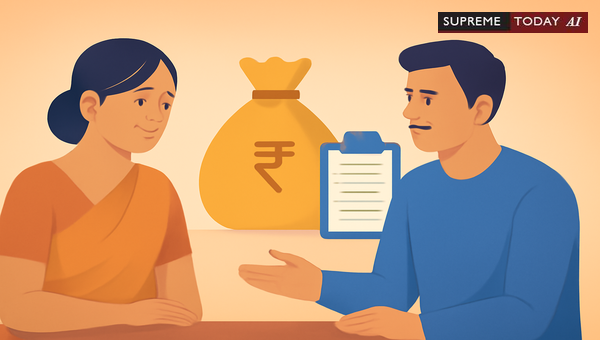
In Indian family law, the question of for an educated wife who is not employed often arises amid . Many wonder: List the Case Laws from the that have Held the same and Similar Views about Paying to the Wife who is Educated but Not Employed Due to Various Reasons. This issue balances a wife's right to financial support against her potential to earn, guided by statutes like , , and .
Note: This blog post offers general information based on judicial precedents and is not a substitute for professional legal advice. Consult a qualified lawyer for case-specific guidance.
aims to ensure a spouse, unable to maintain themselves, avoids or . Courts typically consider factors like the wife's educational qualifications, current income, employment status, standard of living, and sincere efforts to earn. Education alone does not disqualify a wife from if she lacks at the time of the claim. 2023 0 Supreme(Jhk) 1102
The Supreme Court has clarified that the objective of is to prevent , not to punish the spouse. Factors include the wife’s needs, educational qualification, and capacity to earn, but her actual employment status is decisive. 2023 0 Supreme(Jhk) 1102
In this landmark case, the Supreme Court emphasized that an educated woman cannot be refused merely because she can support herself. The capacity to earn does not automatically disqualify her from if she is presently unemployed or unable to support herself. (Paragraphs 77-83) 2023 0 Supreme(Jhk) 1102
The Court laid down comprehensive guidelines for proceedings, stressing uniformity, disclosure of assets, and realistic quantum determination. It discouraged denying based solely on potential earnings without assessing genuine need.
Here, the Court held that the absence of at the time of claim entitles a non-working wife to . Education alone does not deprive her of this right; rather, her inability to support herself is the key criterion. 2022 0 Supreme(Del) 1530
This ruling reinforces that pendente lite depends on whether the claimant has sufficient for support and litigation expenses. The financial position of the wife's parents is irrelevant. 2018 0 Supreme(Bom) 1702
Bhushan Kumar Meen v. Mansi Meen (SLP(Crl) 7924/): The Court noted that a wife’s qualifications do not automatically bar support, but future capacity should be weighed. While not denying outright, it highlights contextual assessment.
: Merely because the wife is capable of earning, it would not be a sufficient ground to reject her claim for . 2024 0 Supreme(Cal) 424
: Even temporary employment does not bar if the wife cannot maintain her standard of living. The husband's ability to pay, despite claims of no income, remains relevant if he is able-bodied. 2025 0 Supreme(Ker) 40
These cases collectively affirm that educated wives without current earnings generally qualify for , provided no disqualifiers like or refusal to cohabit without cause exist under Section 125 . 2023 0 Supreme(Jhk) 1102
While supportive, courts caution against . Genuine efforts to earn are crucial:
In (, influential), an educated wife choosing to remain idle may face reduced . 2017 0 Supreme(Bom) 1649
Rajnesh v. Neha discourages self-made lazy idles who do not make sincere efforts to earn, even if educated. 2023 0 Supreme(Jhk) 1102
From additional precedents:
In a case under DV Act and HMA, for an independent wife was set aside: The petitioner/wife is not dependent on respondent/husband... having a solid professional background and income. Children's was upheld. 2024 Supreme(Online)(TEL) 21691
reiterated parental duty, but noted educated wives can explore employment while caring for children. 2023 0 Supreme(Del) 337
Even employed wives may claim if income is insufficient for prior lifestyle: Wife should be in a position to maintain standard of living which is neither luxurious nor penurious. 2018 0 Supreme(P&H) 4049
Courts thus balance empathy with encouragement for self-reliance. Suppression of income can lead to denial, as in cases where wives concealed earnings. 2018 0 Supreme(P&H) 4049
Section 125 : Entitles a wife unable to maintain herself to , without barring educated claimants. 2023 0 Supreme(Jhk) 1102
DV Act : Monetary relief must be fair, reasonable, and adequate, factoring standard of living, not just earning capacity.
HMA : Guides quantum based on needs, income, and capacity. Even employed wives may receive support: It is the responsibility of the husband to maintain the wife. 2022 0 Supreme(Bom) 1642
Key factors (per Rajnesh guidelines):- Status of parties- Reasonable needs- /qualifications- Health, age, employment efforts- Husband's capacity 2023 0 Supreme(Jhk) 1102
Each case turns on facts: evidence of job searches strengthens claims, while proven idleness weakens them. Courts increasingly demand financial disclosures for transparency. 2024 0 Supreme(Cal) 424
Key Takeaways:- Educated but unemployed wives are typically entitled to if without . 2022 0 Supreme(Del) 1530- Willful refusal to work may limit awards; genuine reasons (e.g., childcare, health) support claims. 2023 0 Supreme(Del) 337- Focus on current need, not mere potential. 2025 0 Supreme(Ker) 40- is adjustable post-trial.
In conclusion, Supreme Court jurisprudence favors protecting vulnerable spouses while promoting self-sufficiency. Rulings like Rajnesh v. Neha provide a balanced framework, ensuring fairness in evolving family dynamics. For personalized advice, seek legal counsel.
References:- Rajnesh v. Neha 2023 0 Supreme(Jhk) 1102- Manish Jain v. Akanksha Jain 2022 0 Supreme(Del) 1530- And other cited cases.
#MaintenanceLaw #SupremeCourtIndia #FamilyLaw


It is the case of the petitioner that their marriage was not consummated peacefully due to various reasons. The opposite party no. 2/husband tortured physically and mentally to the petitioner. Opposite party no. 2 assaulted the present petitioner. ... wife is not employed or at least there is nothing on record to indicate that she is employed....

Even in this case, the petitioner/wife is not dependent on respondent/husband as such granting of interim maintenance to her by the trial Court is not on proper appreciation of the fact and is liable to be set aside. ... The issue before the Court is only regarding the granting of interim maintenance to wife and children before the tr....

Hon'ble Supreme Court in Chaturbhuj Vs. Sita Bai , 2008(2) SCC 316 has held the grant of maintenance to wife is a measure of social justice. ... In a decision of Hon'ble Supreme Court in the case of Shamima Farooqui Vs. Shahid Khan a href="./.. ... Merely because the applicant-wife is capable of earning is not suff....

The Supreme Court repelled this contention, and held that merely because the wife was earning some income, it could not be a ground to reject her claim for maintenance. ... In spite of due service, the opposite party has neither appeared and thus not contested this case. 13. ... In Shailja & Anr. v Khobbanna, (2018) 12 SCC 199 this ....

The Supreme Court repelled this contention, and held that merely because the wife was earning some income, it could not be a ground to reject her claim for maintenance.” 9. ... Khobbanna, this Court held that merely because the wife is capable of earning, it would not be a sufficient ground to reduce the ma....

As regards quantum of Maintenance, the learned counsel for the appellant submitted that the Family Court had not made any discussion or given any reasons as to how it had arrived at the figure of Rs.1,75,000/- as maintenance payable to the wife. ... This is not dependent on the final outcome of the case. The learned counsel also relied upon the judgmen....

Hon'ble Supreme Court of India in ‘Bhuwan Mohan Singh Vs. ... Reiterating the same principle, the Hon’ble Supreme Court in Anju Garg v. Deepak Kumar Garg, 2022 SCC OnLine SC 1314 held as under : “13. ... I do not find any illegality or infirmity in the order of Id. Trial court. The appeal is hence, dismissed.” 12. The case of petition....
The Supreme Court repelled this contention, and held that merely because the wife was earning some income, it could not be a ground to reject her claim for maintenance. ... The Supreme Court repelled this contention, and held that merely because the wife was earning some income, it could not be a gr....
The Supreme Court repelled this contention, and held that merely because the wife was earning some income, it could not be a ground to reject her claim for maintenance. ... In Shailja & Anr. v Khobbanna, (2018) 12 SCC 199 this Court held that merely because the wife is capable of earning, it would not be a sufficien....

The Hon’ble Supreme Court in Rajnesh’s case (supra) has held as under: “82. ... The Hon’ble Supreme Court in the case of Rajnesh v. Neha, (2021) 2 SCC 324 held as under: “III Criteria for determining quantum of maintenance. ... It is the admitted case of the parties that the husband has availed several loans and is....

It was also held that merely because the wife is capable of earning, it would not be sufficient ground to reduce the maintenance awarded by the Family Court. In Reema Salkan v. Sumer Singh Salkan, (2019) 12 SCC 303, it was held that the plea of the husband that he does not have any source of income ipso facto does not absolve him of his liability to maintain his wife if he is able-bodied and has educational qualifications. C (Section 144 of BNSS) does not mean that the wife must be in a state ....

In that case after holding that the respondent-wife was able to maintain herself, the Apex Court has merely reduced the interim maintenance from Rs. 10,000/- to Rs. 5,000/-. The Supreme Court in that case has not denied interim maintenance to the wife on the ground that she is gainfully employed.
In Manish Jain vs. Akanksha Jain – AIR 2017 SC 1640, the Apex Court has held that an order for maintenance pendente lite or for costs of proceedings is conditional on circumstance that wife or husband who makes a claim for same has no independent income sufficient for her or his support or to meet necessary expenses of the proceeding. Likewise, financial position of wife's parents is also immaterial. In this case, the Apex Court has clearly held that it is no answer to a claim of mai....

It has further been held that wife should be in a position to maintain standard of living which is neither luxurious nor penurious but what is consistent with status of a family". The test is whether the wife is in a position to maintain herself in the way she was used to in the place of her husband. Even if the respondent is succeeded in proving that the petitioner has sufficient means, even then he cannot escape from his legal liability to maintain his wife and children. Moreover, ....
Supreme Court has held that it is no answer to a claim of maintenance that the wife is educated and could support herself. The Court must take into consideration the status of the parties and the capacity of the spouse to pay maintenance and whether the applicant has any independent income sufficient for her or his support. Learned counsel for the petitioner has rightly placed reliance on the judgment of the Supreme Court in the case of Manish Jain Vs.Akanksha Jain, reported ....


An indispensable Tool for Legal Professionals, Endorsed by Various High Court and Judicial Officers
Please visit our Training & Support
Center or Contact Us for assistance

Scan Me!
India’s Legal research and Law Firm App, Download now!


For Daily Legal Updates, Join us on :



 Back to top


