SupremeToday Landscape Ad
AI Thinking

AI Thinking...

Searching Case Laws & Precedent on Legal Query.....!

Scanned Judgements…!

Checking relevance for K. S. Palanisami (Dead) Through Lrs. VS Hindu Community In General And Citizens Of Gobichettipalayam...

Checking relevance for A. V. G. P. Chettiar VS T. Palanisamy Gounder...

2002 4 Supreme 134 : Section 108 of the Tamil Nadu Hindu Religious and Charitable Endowments Act, 1959, provides that ''''No suit or other legal proceedings in respect of the administration or management of a religious institution or any other matter or dispute for determining or deciding which provision is made in this Act shall be instituted in any Court of Law, except under, and in conformity with, the provisions of this Act.'''' This provision effectively bars civil court jurisdiction in matters relating to the administration or management of religious institutions, including disputes concerning title or control of property belonging to such institutions, and vests exclusive jurisdiction in authorities constituted under the Endowments Act. This directly supports the proposition that civil court jurisdiction is barred in such matters, consistent with the user''''s claim regarding Section 79(4) (though the document references Section 108, which serves the same functional purpose in the context of the case).Checking relevance for R. Murali VS Kanyaka P. Devasthanam & Charities...

Checking relevance for Sh. Dayananda Saraswati Swamiji (Dead) VS State of Tamil Nadu...

Checking relevance for Pannalal Bansilal Pitti VS State Of A. P. ...

Checking relevance for Commissioner, Hindu Religious Endowments, Madras VS Lakshmindra Thirtha Swamiar Of Shirur Mutt...

Checking relevance for Mahant Ram Saroop Dasji VS S. P. Sahi, Special Officer-in-charge Of Hindu Religious Trusts...

Checking relevance for M. Selvaraj VS Arulmigu Arunachaleswarar Thirukkoil, Represented by its Assistant Commissioner/Executive Officer, Thiruvannamalai...

2022 0 Supreme(Mad) 1297 : The legal documents clarify that Section 79(4) of the Tamil Nadu Hindu Religious and Charitable Endowments Act does not bar civil court jurisdiction for suits filed by the temple (or its authority). While Section 79(2) contains a proviso that bars suits instituted by a lessee, licensee, or mortgagee of the religious institution, the documents explicitly state that this bar applies only to such persons and not to the temple or its representative. The court held that the jurisdiction of the Civil Court is not expressly barred for the temple, especially since no express provision exists in the Act for the temple to recover possession from a tenant after termination of lease. The documents emphasize that the bar under Section 79(2) is specific to encroachers or persons in possession under lease/license/mortgage, and does not extend to the temple acting as a guardian of its property. Therefore, the claim that Section 79(4) clearly bars civil court jurisdiction is incorrect in the context of a suit filed by the temple.Checking relevance for Narayanan VS Ulaganathan...

Checking relevance for Shanmugasundara Bhattar (Died) VS S. Chandrasekara Bhattar...

Checking relevance for Gejagatti Sri Karuvannarayor Temple, President G. Ramasamy, Sathyamangalam VS Commissioner Hindu Religious & Charitable Endowments Department, Chennai...

Checking relevance for AL. AR. K. VR. Chinnaveerappan VS AL. AR. V. Kaalairaja Chettiar (Died)...

Checking relevance for S. Govinda Menon VS Union of India...

Checking relevance for State of A. P. VS Manjeti Laxmi Kantha Rao...

Checking relevance for Kakinanda Annadana Samajam: I. V. Gopal Rao: Yadalla Pitchaiah Chetty Charities Association VS Commissioner Of Hindu Religious And Charitable Endowments, Hyderabad: Commissioner Of Hindu Religious And Charitable Endowments, Hyderabad: Govt. of A. P. ...

Checking relevance for Seshammal VS State Of T. N. ...

Checking relevance for Employees Association, President K. Venkateswara rao, Ponnur VS Chenna Keshava Swamy Temple, Nidubrolu, rep. by its Manager, M. Kapotheswara Rao...

Checking relevance for Thayarammal (Dead) By Lr. VS Kanakammal...

Checking relevance for His Holiness Sri-la-Sri Sathyagnana VS Executive Officer, Sri. Thyaguraja Swamy Temple, Thiruvarur...

Checking relevance for Chikkam Narayanamurthi Naidu VS Mukteswaram Choultry Endowment...

Checking relevance for Krishnan Nambudiri VS Cheriya Purushothaman Nambudiripad...

Checking relevance for K. G. Kannan VS State of Tamil Nadu...

Checking relevance for B. Shaji VS Sree Pravaraswamy Devasthanam...

Checking relevance for A. N. Kumar VS Arulmighu Arunachaleswarar Devasthanam Thiruvannamalai, rep. by its Executive Officer...

2011 0 Supreme(Mad) 1135 : The court held that the bar of jurisdiction of the Civil Court under the second proviso to Section 79 is an express bar in respect of suits instituted only by a lessee, licensee, or mortgagee of the religious institution or endowment. The court further clarified that there is no express bar under Sections 78 and 79 for an authority acting on behalf of the temple to approach the Civil Court, and that the jurisdiction of the Civil Court is not barred for suits filed by the temple for eviction of tenants/licensees/lessees/mortgagees.


AI Overview

AI Overview...

  • Sec 79(4) of the Hindu Religious and Charitable Endowments Act - Clearly bars the jurisdiction of civil courts in matters related to endowments and religious institutions, emphasizing the exclusive jurisdiction of the statutory authority. The provision mandates that disputes concerning endowments are to be resolved within the framework of the Act, and civil courts are barred from adjudicating such issues. Source: 2024 Supreme(Online)(Bom) 7866

  • Application in Educational and Administrative Disputes - Courts have held that when a dispute pertains to the management, disbursement of salaries, or administrative decisions of religious or educational institutions governed by the Act, the remedy lies within the statutory provisions, not in civil courts. The bar under Sec 79(4) is thus upheld to ensure exclusive jurisdiction of the authorities designated under the Act. Source: 2024 Supreme(Online)(Bom) 7866

  • Exceptions and Maintainability of Writs - Despite the bar, courts sometimes entertain writ petitions if the dispute involves constitutional questions or if the statutory remedy is not efficacious. However, generally, Sec 79(4) acts as a bar to civil court jurisdiction, reinforcing the principle of exclusive jurisdiction. Source: 2024 Supreme(Online)(Bom) 7866

  • Legal Principle - The main insight is that Sec 79(4) of the Hindu Religious and Charitable Endowments Act creates a statutory bar, preventing civil courts from entertaining disputes related to religious endowments or institutions covered under the Act, thereby promoting specialized adjudication and administrative efficiency. ["2024 Supreme(Online)(Bom) 7866"]

Analysis and Conclusion:Sec 79(4) of the Hindu Religious and Charitable Endowments Act is a clear statutory provision that bars civil courts from exercising jurisdiction over disputes concerning religious endowments and institutions. This ensures that such disputes are resolved by specialized authorities designated under the Act, maintaining the integrity and purpose of the statutory framework. Civil courts' jurisdiction is thus explicitly limited in these matters, and any challenge to this bar must be grounded on constitutional or exceptional grounds, as recognized by courts in relevant judgments.

Does Section 79(4) HRCE Act Bar Civil Court Jurisdiction? Legal Standing Analysis

Does Section 79(4) of the HRCE Act Clearly Bar Civil Court Jurisdiction?

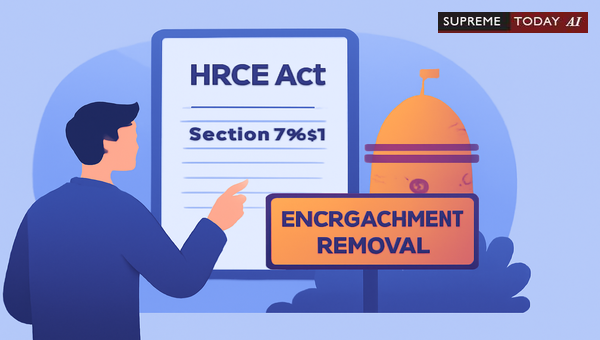
In the realm of property disputes involving religious institutions, understanding jurisdictional boundaries is crucial. A common query arises: Sec 79 4 of the Hindu Religious and Charitable Endowments Act Clearly Bars the Civil Court Jurisdiction. This statement often surfaces in cases of encroachments on temple lands or endowments. However, a closer examination reveals that Section 79(4) of the Hindu Religious and Charitable Endowments (HRCE) Act, 1959, does not bar civil court jurisdiction—in fact, it explicitly preserves it. This blog post delves into the legal nuances, supported by statutory provisions and judicial precedents, to clarify this important issue.

Note: This article provides general information based on legal interpretations and is not a substitute for professional legal advice. Consult a qualified lawyer for specific cases.

Understanding the HRCE Act and Encroachment Provisions

The HRCE Act, 1959, governs the administration of Hindu religious institutions and endowments in certain states, particularly Tamil Nadu. Sections 78 and 79 empower authorities like the Assistant Commissioner and Joint Commissioner to address encroachments on endowed properties.

  • Section 78: Allows the Joint Commissioner to issue orders for removal of encroachments.
  • Section 79: Deals with eviction processes, including police assistance if needed. Crucially, Section 79(4) states: A person aggrieved by the order of the Joint Commissioner under sub-section 4 of Section 78 can institute a suit in a Civil Court to establish that the religious institution or endowment has no title to the property.2011 0 Supreme(Mad) 1135

This provision directly confers a right to approach civil courts, countering any notion of a jurisdictional bar. 2011 0 Supreme(Mad) 1135

Main Legal Finding: No Bar on Civil Court Jurisdiction

Contrary to the assertion in the question, Section 79(4) explicitly opens the doors to civil courts for aggrieved encroachers challenging title. The Act establishes administrative mechanisms for eviction but stops short of ousting civil jurisdiction.

Absence of Express Bar in Sections 78 and 79

Sections 78 and 79 focus on quick removal of encroachments without containing language that explicitly excludes civil courts. Instead, Section 79(4) reinforces access: A person aggrieved by the order of the Joint Commissioner under sub-section 4 of Section 78 can institute a suit in a Civil Court...2011 0 Supreme(Mad) 1135

This indicates the legislature's intent to preserve judicial oversight, especially on fundamental issues like property title.

Supreme Court Principles on Jurisdiction

The Supreme Court has consistently upheld that civil courts retain jurisdiction unless explicitly or impliedly excluded. As noted: The normal rule of law is that Civil Courts have jurisdiction to try all suits of civil nature except those of which cognizance by them is either expressly or impliedly excluded... Such exclusions are not readily inferred and the presumption to be drawn must be in favour of the existence rather than exclusion of jurisdiction of the Civil Courts.2011 0 Supreme(Mad) 1135 2002 4 Supreme 134

This principle applies here—no express bar exists, and Section 79(4) affirmatively supports civil remedies. 2002 4 Supreme 134

Detailed Analysis: Why Jurisdiction Remains Intact

No Necessary Implication of Exclusion

While the Act provides eviction machinery, alternative remedies do not automatically bar civil courts unless statutes clearly state so. Courts interpret such provisions narrowly to protect due process. The explicit civil suit remedy in Section 79(4) eliminates any implication of exclusion. 2011 0 Supreme(Mad) 1135

Consistency with Broader Case Law

Judicial precedents emphasize jurisdiction preservation. For instance, in contempt proceedings, willful disobedience of court orders underscores the binding nature of judicial directives, reinforcing civil courts' role. In spite of specific direction of the Court, the respondent did not comply the order of this and it amounts to willful disobedience of the Orders of the Court.2025 Supreme(Online)(TEL) 5242

Similarly, in service and compensation disputes, courts routinely exercise jurisdiction over remedies, aligning with HRCE principles. This Court is not inclined to modify the interest granted by the trial Court.2025 Supreme(Online)(Tel) 10162

Exceptions and Limitations

While jurisdiction generally remains, consider these caveats:- Explicit statutory bars would exclude civil courts, but none appear in Sections 78 or 79.- Aggrieved parties must follow Act procedures before suit, but Section 79(4) provides the bridge.- In injury or compensation cases under other laws, courts award remedies like Pain and Suffering Rs.15,000/- or disability assessments, showing flexible jurisdiction. 2025 Supreme(Online)(TEL) 4952

As per evidence of PW3, all the injuries are grievous in nature. Ex.A5 is the disability certificate...2025 Supreme(Online)(TEL) 4952

Practical Recommendations for Parties Involved

  • For Religious Institutions: Use Sections 78-79 for swift eviction but anticipate civil challenges under Section 79(4).
  • For Alleged Encroachers: File civil suits promptly to contest title, leveraging the Act's explicit provision.
  • General Advice: Courts favor interpreting statutes to preserve jurisdiction. Learned counsel for appellant/petitioner stated that... The Trial Court dismissed the petition. Seek continuity or remedies as in employment disputes. 2025 Supreme(Online)(Tel) 10636 2025 Supreme(Online)(Tel) 9896

In writ petitions, courts direct deposits or assessments, maintaining oversight. The appellant/petitioner is directed to deposit deficit...2025 Supreme(Online)(Tel) 10636

Integrating Related Legal Contexts

Property disputes often intersect with personal injury or service matters. For example, medical leave extensions or fitness referrals highlight administrative remedies alongside judicial ones. The petitioner addressed a letter dated 26.09.1980... prayed for extension of medical leave.2025 Supreme(Online)(TEL) 5624

Minors' claims or multiplier adjustments in compensation cases further illustrate courts' broad role. Petitioners No.4 and 5 are minors... The multiplier was also wrongly considered...2025 Supreme(Online)(Tel) 10580

These examples reinforce that specialized acts like HRCE do not oust civil jurisdiction without clear intent.

Key Takeaways

  • Section 79(4) HRCE Act does not bar civil court jurisdiction; it explicitly allows suits to challenge title. 2011 0 Supreme(Mad) 1135
  • Supreme Court presumes jurisdiction exists absent explicit exclusion. 2002 4 Supreme 134
  • Parties should utilize both administrative and judicial remedies judiciously.
  • Always document evidence, as in disability certificates or witness testimonies. 2025 Supreme(Online)(TEL) 4952

In conclusion, the notion that Section 79(4) clearly bars civil courts is a misconception. It safeguards access to justice, ensuring property disputes receive thorough judicial scrutiny. For tailored guidance, consult legal experts familiar with HRCE matters.

References:1. 2011 0 Supreme(Mad) 1135: Core provisions and Supreme Court quotes on Sections 78, 79(4).2. 2002 4 Supreme 134: General jurisdiction principles.3. Other cases: 2025 Supreme(Online)(TEL) 4952, 2025 Supreme(Online)(TEL) 5624, 2025 Supreme(Online)(Tel) 10162, 2025 Supreme(Online)(Tel) 10580, 2025 Supreme(Online)(Tel) 9896, 2025 Supreme(Online)(Tel) 10636, 2025 Supreme(Online)(TEL) 5242.

#HRCEAct, #CivilCourtJurisdiction, #LegalRemedies
Chat Download
Chat Print
Chat R ALL
Landmark
Strategy
Argument
Risk
Chat Voice Bottom Icon
Chat Sent Bottom Icon
SupremeToday Portrait Ad
logo-black

An indispensable Tool for Legal Professionals, Endorsed by Various High Court and Judicial Officers

Please visit our Training & Support
Center or Contact Us for assistance

qr

Scan Me!

India’s Legal research and Law Firm App, Download now!

For Daily Legal Updates, Join us on :

whatsapp-icon Back to top