Searching Case Laws & Precedent on Legal Query.....!
Analysing the retrieved Case Laws
Scanned Judgements…!



Searching Case Laws & Precedent on Legal Query.....!
Analysing the retrieved Case Laws
Scanned Judgements…!
Obscenity Definition and Ingredients Section 294(b) IPC pertains to obscene acts and songs, requiring that the uttered words or acts be obscene and cause annoyance in or near a public place. The definition of obscenity is derived from Section 292(1) IPC, as IPC does not explicitly define it. To attract Section 294(b), two main elements must be established: (i) the offender uttered obscene words or songs in or near a public place, and (ii) such utterance caused annoyance to others ["2024 Supreme(Online)(Ker) 81971"], ["2024 0 Supreme(Ker) 798"].
Application to Phone Calls The key issue is whether calling obscene words over the phone qualifies as an offense under Section 294(b). Several judgments clarify that the phrase in or near public place does not strictly limit the offense to physical public spaces; it can include places where the public is likely to be affected or where the words are uttered in a manner that causes public annoyance. However, courts have emphasized that mere abusive or humiliating words, without a tendency to deprave or corrupt, do not satisfy the criteria for obscenity under Section 294(b) ["2024 0 Supreme(Ker) 616"], ["2023 Supreme(Online)(MAD) 20604"], ["2025 Supreme(Online)(MAD) 13598"].
Calling Obscene Words Over Phone The act of calling obscene words over the phone may not automatically constitute an offense under Section 294(b) unless it can be shown that such calls were made in a manner that caused annoyance to others in a public or semi-public context. Courts have noted that the words must have a tendency to deprave or corrupt those exposed to such influences, and mere abusive language without such an effect may not attract the offense ["2024 0 Supreme(Ker) 616"], ["2023 Supreme(Online)(MAD) 20604"].
Legal Precedents and Clarifications Courts have held that for Section 294(b) to apply, the words must be obscene and uttered in a context that causes public annoyance. The intent to annoy is relevant, but the words must also have an obscene quality, not just be abusive or defamatory ["2024 0 Supreme(Ker) 798"], ["2024 Supreme(Online)(Ker) 81971"].
Calling obscene words over the phone may attract Section 294(b) IPC if the words are of an obscene nature and cause annoyance in or near a public place or in a manner that affects the public. The courts have clarified that not all abusive or humiliating words qualify as obscene under this section; the words must tend to deprave or corrupt and be uttered in a context that causes public annoyance. Therefore, the mere act of calling obscene words does not automatically attract Section 294(b) unless the words are obscene and cause annoyance in a manner recognized by law.
References:- 2024 Supreme(Online)(Ker) 81971- 2024 0 Supreme(Ker) 798- 2024 0 Supreme(Ker) 616- 2023 Supreme(Online)(MAD) 20604- 2025 Supreme(Online)(MAD) 13598
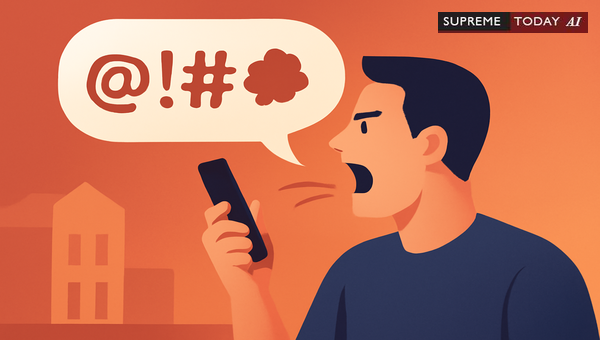
In today's digital age, heated arguments often spill over into phone calls, sometimes involving harsh or offensive language. But what happens when someone utters what they claim are '' during a call? A common question arises: Whether 294 B IPC Attracts on Calling Obscene Word over Phonecall? This issue frequently surfaces in disputes, leading many to wonder if such actions trigger under Section 294(b) of the (IPC).
This article breaks down the legal nuances, drawing from established case law and statutory interpretations. Note: This is general information only and not specific legal advice. Consult a qualified lawyer for your situation.
punishes whoever sings, recites or utters any obscene song, ballad or words, in or near any , to the annoyance of others. The punishment can extend up to three months imprisonment, a fine, or both. Key ingredients include:
Courts have interpreted '' broadly to include roads, vehicles, or areas accessible to the public 2024 0 Supreme(Ker) 837 2024 0 Supreme(Ker) 798. However, a private phone conversation doesn't inherently qualify unless it spills into a public context.
Not all offensive language is 'obscene' under the law. The test, borrowed from (as Section 294 doesn't define it), asks whether the words tend to those whose minds are open to or arouse sexually impure thoughts2024 0 Supreme(Ker) 798. Mere abusive, humiliating, or defamatory words fall short unless they appeal to or involve 2024 0 Supreme(Ker) 798.
For instance, in Latheef v. State of Kerala, the court clarified: abusive words alone do not constitute obscenity without elements appealing to 2024 0 Supreme(Ker) 798. Similarly, P.T. Chacko v. Nainan Chacko emphasized that offensiveness isn't enough; there must be a tendency to deprave morals 2024 0 Supreme(Ker) 798.
In another ruling: It may be that the words are defamatory of the complainant, but I do not think that the words are obscene and the utterance would constitute an offence punishable under Section 294(b)IPC 2024 0 Supreme(Ker) 1536. This highlights that context matters—words must go beyond mere insult.
Phone calls are typically private, raising doubts about the '' requirement. Calling over the phone does not automatically attract unless:
Simply using offensive words privately won't suffice. As one judgment notes: The words which have no literal significance cannot fall in the purview of 2020 0 Supreme(Chh) 175. Courts quash cases where allegations lack these elements, viewing them as 2025 0 Supreme(Kar) 260.
Several judgments reinforce that Section 294(b) demands strict proof:
Other cases stress: But to make it obscene, punishable under , it must satisfy the definition of obscenity... Being a continuation of the subject dealt with under S.292 IPC the definition of obscenity under 292(1) IPC can be applied 2024 Supreme(Online)(KER) 20749 2021 0 Supreme(Chh) 18.
Section 294(b) could potentially apply if:- The call is on speaker in a , annoying bystanders.- Words are sexually explicit, depraving the listener (e.g., lascivious content) 2024 0 Supreme(Ker) 798.- It escalates to public utterance, like yelling obscenities near a crowd 2025 0 Supreme(SC) 260.
Private calls without sexual impropriety or public impact generally escape liability 2024 0 Supreme(Ker) 837.
In summary, calling over a phone call does not automatically attract unless the words are legally obscene (tending to deprave/corrupt), uttered in/near a , and cause annoyance 2024 0 Supreme(Ker) 837 2024 0 Supreme(Ker) 798. Mere abuse or humiliation rarely qualifies, as affirmed across cases like those quashing unsubstantiated charges 2024 0 Supreme(Ker) 1536 2025 0 Supreme(Kar) 260.
Key Takeaways:- Obscenity requires more than offensiveness—prurient appeal is key.- Phone calls are private; public context is crucial.- Frivolous cases get quashed to prevent abuse.
Stay informed, but seek professional advice for disputes. Understanding these boundaries can prevent unnecessary legal battles.
#IPC294b #ObscenityLaw #IPCIndia


While addressing the essentials to constitute Section 294(b), it is relevant to extract Section 294(b) of IPC as under: “S. 294. Obscene acts and songs. ... is used in section 294(b) of the Indian Penal Code . ... But to make it obscene, punishable under S.294(b)....

It may be that the words are defamatory of the complainant, but I do not think that the words are “obscene” and the utterance would constitute an offence punishable under Section 294(b)IPC.” 16. ... The offences alleged in the final report are under Sections 354D, 294(b), 509 of IPC and Section 120(o) of the Kerala Police Act. It is essential to analyze wheth....

Section 294 (b) IPC talks about the obscene acts and songs. Section 294 IPC as a whole reads thus: (b) IPC is made out.” ... The offences alleged are the ones punishable under Sections 294 , 504 and 506 of the IPC . Section 294 of the IPC . They read as follows: “29....
The same are as under: S.294 IPC: Obscene acts and songs. ... In view of the rival arguments, the ingredients to attract Sections 294(b) and 509 of the IPC and Section 11 (i) of the PoCSO Act, required to be addressed. For this purpose, reference to Sections 294(b) and 509 of the IPC and Section 11(i) of the PoCSO Act, is necessary. .....

Seeking quashment of the final report, this petition has been filed on the ground that none of the allegation mentioned either in the FIR or in the final report, attracts any of the ingredients of the offences under Sections 294(b) and 342 of IPC. ... It may be that the words are defamatory of the complainant, but I do not think that the words are 'obscene' and the utterance would constitute an offence pu....
No one has spoken about the obscene words, they felt annoyed and in the absence of legal evidence to show that the words uttered by the appellants accused annoyed others, it cannot be said that the ingredients of the offence under Section 294 (b) of IPC is made out”. 9.1. ... Discussion on the offence under Section 294(b) of IPC:- To prove the offence under Section #HL....

It may be that the words are defamatory of the complainant, but I do not think that the words are 'obscene' and the utterance would constitute an offence punishable under S.294(b) IPC." ... 7.Section 294(b) IPC reads as follows:- "294(b)sings, recites or utters any obscene song, ballad or words, in or near any publi....

Sections 292 and 294 IPC. ... The issue before the Hon’ble Supreme Court was that whether the appellant who has been discharged under Section 67 of the IT Act could be proceeded under Section 292 IPC, which deals with sale etc. of obscene books. ... Section 509 I.P.C. reads as under: - “509. Word, gesture or act intended to insult the modesty of a woman. ... The offenc....

While addressing the essentials to constitute Section 294(b), it is relevant to extract Section 294(b) of IPC as under: “S. 294. Obscene acts and songs. ... place’ is used in section 294(b) of the Indian Penal Code. ... But to make it obscene, punishable under S.294(b#HL....

But to make it obscene, punishable under S.294(b) IPC, it must satisfy the definition of obscenity. S.294 IPC does not define obscenity. Being a continuation of the subject dealt with under S.292 IPC the definition of obscenity under 292(1) IPC can be applied in a prosecution under S.294 IPC also. ... In order to att....

“294. Obscene acts and songs.—Whoever, to the annoyance of others— “6. Section 294(b) IPC talks about the obscene acts and songs. Section 294 IPC as a whole reads thus: 14. In so far as Section 294 of the IPC is concerned, this Court in N.S. Madhanagopal and Another v. K. Lalitha reported in (2022) 17 SCC 818 has explained the true purport and scope of Section 294. We quote the relevant observations as under:- (a) does any obscene act in any public place, or

7. Section 294(b) of the IPC talks about the obscene acts and songs.
The next offence under which the FIR is registered is under Section 294 (b) of the IPC. Section 294 (b) of the IPC deals with uttering obscene words in public place or near any public place.

Of course there is no doubt that the words alleged to have been used by the revision petitioner are in fact abusive and humiliating. Being a continuation of the subject dealt with under Section 292 IPC the definition of obscenity under 292(1) IPC can be applied in a prosecution under Section 294 IPC also. But to make it obscene, punishable under Section 294(b) IPC, it must satisfy the definition of obscenity.
In the present case, as the word uttered by the appellant is not appearing to be obscene word, charge under Section 294 of IPC is not established. The words which have no literal significance cannot fall in the purview of obscene words.


An indispensable Tool for Legal Professionals, Endorsed by Various High Court and Judicial Officers
Please visit our Training & Support
Center or Contact Us for assistance

Scan Me!
India’s Legal research and Law Firm App, Download now!


For Daily Legal Updates, Join us on :



 Back to top


