Searching Case Laws & Precedent on Legal Query..!
Scanned Judgements…!



Searching Case Laws & Precedent on Legal Query..!
Scanned Judgements…!
Legal Notice Not Served or Intentionally Not Sent to Correct Address - Several sources indicate that if the complainant fails to serve the legal notice at the correct address or deliberately avoids service (e.g., returning the notice with endorsements like 'addressee absent' or 'door locked'), this can impact the case but does not automatically lead to acquittal. Courts consider whether proper service was made; if service is proved or presumed (e.g., through deemed service under law), the case proceeds. Notably, in some cases, courts have held that sending notices to the correct address is sufficient, even if the accused does not receive or reply ["2024 Supreme(Online)(Kar) 44253"], ["2023 Supreme(Online)(KAR) 19169"], ["2025 Supreme(Online)(KAR) 1365"], ["2023 Supreme(Online)(KAR) 1588"].
Filing of Petition or Legal Proceedings After Notice - Filing a petition or legal case after the issuance of a cheque bounce notice does not automatically result in acquittal. The key issue is whether the legal requirements, such as proper notice and service, were fulfilled. If the accused does not respond or pay after proper service, the prosecution can proceed, and a conviction can be maintained. The fact that the accused has filed other cases or petitions post-notice does not alter this principle ["2024 Supreme(Online)(Kar) 44253"], ["2023 Supreme(Online)(KAR) 8411"].
Impact of Not Sending Notice or Sending to Wrong Address - If the complainant intentionally avoids sending the notice to the correct address or does not prove proper service, it can be a ground for acquittal. However, courts tend to presume service if the notice was sent to the correct address and not disputed by the accused, especially if the notice was returned with endorsements like 'door locked' or 'addressee absent' (Section 27 of the General Clauses Act). Mere denial by the accused about receipt does not necessarily prove non-service ["2024 Supreme(Online)(Kar) 44253"], ["2025 Supreme(Online)(KAR) 1365"], ["2023 Supreme(Online)(KAR) 19169"].
Filing of Petition Against Accused and Acquittal - Filing a complaint or petition after the cheque bounce and legal notice does not automatically lead to acquittal. Acquittal depends on whether the prosecution proved all essential ingredients, including proper service of notice and issuance of cheque dishonour. If the legal notice was properly served and the accused failed to respond or pay, the conviction is sustainable. Conversely, if service was not properly established or was intentionally avoided, acquittal may be justified ["2024 Supreme(Online)(Kar) 44253"], ["2023 Supreme(Online)(KAR) 8411"], ["2023 Supreme(Online)(KAR) 1588"].
Analysis and Conclusion:Intentionally not sending the legal notice to the correct address or not serving it properly can be a valid ground for acquittal, especially if the accused can prove non-service or improper service. However, courts generally presume proper service if the notice was sent to the correct address and not disputed, and the notice was returned with endorsements indicating attempts at service. Filing a petition or proceeding after the cheque bounce and legal notice does not automatically result in acquittal; the verdict depends on whether the prosecution established all legal requirements, including proper notice and cheque dishonour. Therefore, the filing of a petition after the legal notice does not, in itself, amount to an acquittal; the case's outcome hinges on facts regarding service and proof of dishonour ["2024 Supreme(Online)(Kar) 44253"], ["2023 Supreme(Online)(KAR) 8411"], ["2023 Supreme(Online)(KAR) 1588"].
References:- 2024 Supreme(Online)(Kar) 44253- 2023 Supreme(Online)(KAR) 8411- 2023 Supreme(Online)(KAR) 1588- 2025 Supreme(Online)(KAR) 1365- 2023 Supreme(Online)(KAR) 19169
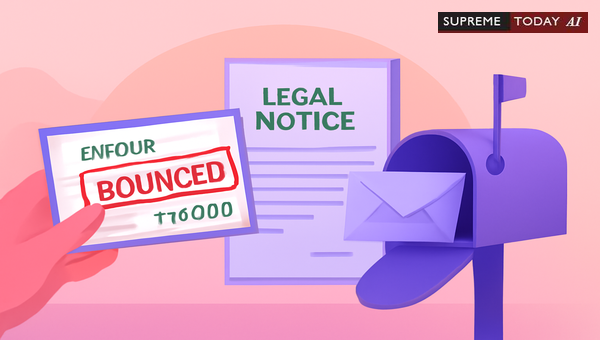
In the high-stakes world of disputes under (NI Act), one procedural misstep can derail an entire case. Imagine this: You've filed a petition against the accused for a bounced cheque, but your was sent to the wrong address—intentionally or otherwise. Does this spell automatic acquittal for the accused?
The question at the heart of many such cases is: The Complainant is Not Send to Correct Address Intentionally in Case after he Filed Petition against to the Accused is it Become Acquittal? This post dives deep into the legal nuances, drawing from established precedents and statutory requirements to clarify when a flawed notice might jeopardize your claim.
Disclaimer: This article provides general information based on judicial interpretations and is not legal advice. Consult a qualified lawyer for case-specific guidance.
Section 138 of the NI Act criminalizes the due to insufficient funds or other specified reasons, making it a cornerstone for recovering debts via cheques. However, for a complaint to be maintainable, the complainant must issue a demanding payment within 30 days of receiving bank dishonour information. This notice must be in writing and sent to the correct address of the drawer (accused) 2008 7 Supreme 779 2010 3 Supreme 547.
Failure to comply can render the complaint non-maintainable, potentially leading to acquittal 2008 7 Supreme 779. Courts emphasize that proper service is essential for the to accrue 1992 0 Supreme(Ker) 130.
Here's what typically constitutes proper service:
The burden initially lies on the complainant to prove dispatch to the correct address. If successful, it shifts to the accused to rebut 2008 7 Supreme 779.
Intentionally sending notice to an incorrect address undermines the entire process. Courts have ruled that such actions can lead to acquittal, viewing it as a deliberate attempt to fabricate a case.
In one case, the trial court concluded that the appellant-complainant has intentionally issued to the wrong address and has managed to file a false case against the respondent-accused 2021 0 Supreme(Kar) 52. This highlights that when the sender dispatches to a wrong address, does not apply—no arises 2021 0 Supreme(Kar) 52.
Contrast this with proper dispatch: Even if returned with endorsements like 'house locked' or ',' service is presumed unless the accused proves evasion or non-knowledge 2010 3 Supreme 547 2004 8 Supreme 4. For instance, dispatch of notice to the correct address, even if returned or with endorsements like house locked or , can be presumed to be valid service 2010 3 Supreme 547.
If proven intentional, it not only rebuts presumptions but can question the complainant's credibility. In 2023 Supreme(Online)(KAR) 1587, the complainant failed to prove a recoverable debt, and the presumption under was rebutted, leading to acquittal confirmation. Similarly, in 2023 0 Supreme(P&H) 3245, acquittal was upheld due to issues, including improper notice to the firm issuing the cheque.
However, mere denial by the accused isn't enough if the address was correct. In 2022 0 Supreme(Kar) 1544, the accused resided at the given address, and notice sent there sufficed, overturning acquittal.
Courts consistently stress complainant diligence:
In 2022 Supreme(Online)(Kar) 61133, notice was duly served to the proper address, upholding conviction as the accused failed to rebut presumption.
Another ruling: The complainant is not required to prove the service of notice on accused before institution of the case—but only if properly addressed 2024 0 Supreme(Jhk) 914.
In cases of death or non-appearance, proceedings may halt, but notice validity remains key 2021 0 Supreme(Telangana) 369 2018 0 Supreme(P&H) 562.
To avoid acquittal risks:- Verify and use the exact address from cheque or prior dealings 2008 7 Supreme 779.- Send via registered post with tracking; retain receipts 1992 0 Supreme(Ker) 130.- If returned, gather evidence of accused's evasion (e.g., witnesses) 2010 3 Supreme 547.- Avoid reminders as primary notice; they supplement only 2017 3 Supreme 332.- Document everything—fax timestamps, postal proofs—to invoke presumptions.
Generally, intentionally sending to the wrong address in a case may lead to acquittal, as it negates service presumption and questions intent 2021 0 Supreme(Kar) 52 2008 7 Supreme 779. Courts protect the process's integrity, placing the onus on complainants to prove proper dispatch to the correct address 2010 3 Supreme 547. While endorsements like '' are rebuttable if addressed right, a wrong address is a fatal flaw.
Key Takeaways:- Always confirm the drawer's address meticulously.- Leverage Section 27 presumptions by dispatching correctly.- Prepare rebuttal evidence for trial.
Stay compliant to safeguard your claim under . For tailored advice, reach out to a legal expert.
References: (As cited inline with document IDs)
#ChequeBounce, #Section138, #LegalNotice


Having failed to receive the notice, the accused has not only failed to send reply to the notice and also pay the amount due under the cheque. ... The citations relied upon by the Sessions Court are not applicable to the case on hand. The complainant has not proved that a sum of Rs.21,77,000/- was due from the #HL_ST....

In this case, the complainant has produced the cheque, bank endorsement and legal notice. ... Accused has also not replied to the legal notice. ... According to him, he had earlier also filed two cheque bounce cases against two other persons. ... Then, he issued a leg....

Be that as it may, it is settled principle of law that initial burden of proving the case is on the complainant. In this case, the complainant has produced the cheque, bank endorsement and legal notice. Of course, the statutory presumption under Section 139 of the NI Act arises in his favour. ... It is evident that the complainant is ....

Be that as it may, it is settled principle of law that initial burden of proving the case is on the complainant. In this case, the complainant has produced the cheque, bank endorsement and legal notice. Of course, the statutory presumption under Section 139 of the NI Act arises in his favour. ... It is evident that the complainant is ....
In this regard, the complainant got issued legal notice on 13-11-2015. Though the notice was duly 4 served, the accused did not repay the amount. ... It is further contended that no legal notice was served on the accused. ... bounce cases?" ... Though notice was addressed to the proper #HL_ST....
Though the legal notice was sent to the address of the accused, intentionally he has not chosen to receive it and send reply. ... The complainant has alleged that intentionally the accused has not chosen to receive the legal notice and managed to sen....

Having perused photocopies of the complaint; cheque (Ex.C-1); and legal notice (Ex. ... Another point worth mentioning in the present case is that through the cheque in question has been signed by the accused as proprietor of Vishal Catering, the said firm was never made a party to the litigation. Even no notice of demand has been send to the firm of t....
When the proper course available to the accused was to send reply to the legal notice, it cannot be accepted that accused met the complainant and questioned him about the legal notice, especially when accused having experienced several cheque bounce cases pending against him. ... If this is the #HL_....
In the present case the accused has not denied that he is residing in the address given in causetitle. The demand notice is posted to the correct address of the accused. ... The accused is residing in the address given in cause-title and the notice is sent to the correct #HL_START....

The complainant is not required to prove the service of notice on accused before institution of the case. ... It is also not disputed that the notice was not sent on correct address of the addressee, the simple denial from the receipt of the notice does not entail any adverse conse....

5. If the accused person in a cheque bounce case dies, the case gets over and the only remedy left with the complainant is to file a civil case against the legal heirs of the accused person (if it is within limitation) because criminal liability cannot be shifted to the legal heirs of the accused person. The case under Section 138 of the NI Act being criminal in nature, the liability of the accused cannot be shifted to the legal heirs of the accused.
Considering all these facts, the trial Court has rightly come to the conclusion that the appellant-complainant has intentionally issued legal notice to the wrong address and has managed to file a false case against the respondent-accused. When a sender has dispatched the notice through registered post with correct address written on it, Section 27 of General Clauses Act could be profitably imported and in such a situation service of notice deemed to have been effected on the ....
It is a settled law that the complainant has to prove his case and in the case on hand, the accused also did not dispute the cheque as well as his signature and also he has not given any reply and no complaint was given when the notice was given. When such being the case, the presumption is available in favour of the complainant and no doubt the said presumption is rebuttable presumption and the question before this Court is whether the accused rebutted the presumption and I ....
7. It is the complainant’s averment as well the evidence of PW-1 that the statutory notice sent to the accused after the dishonour of the cheque and demanding him to make good the amount demanded in the notice, came to be returned un-served with the postal endorsement that the addressee was out of station and not claimed the article. In a similar circumstance, the Hon’ble Apex Court in the case of Ajeet Seeds Limited vs. K.Gopala Krishnaiah reported in (2014) 12 SCC 685, was pleased to hold th....

Even otherwise, the complainant/appellant is not going to gain anything in delaying the matter since he is the complainant in cheque bounce case. 9. There is no doubt that the case was called thrice on 21.01.2015 and none appeared on behalf of the appellant, but the reason is validly explained i.e. a wrong date was communicated by his counsel before learned trial Court.


An indispensable Tool for Legal Professionals, Endorsed by Various High Court and Judicial Officers
Please visit our Training & Support
Center or Contact Us for assistance

Scan Me!
India’s Legal research and Law Firm App, Download now!


For Daily Legal Updates, Join us on :



 Back to top


