Searching Case Laws & Precedent on Legal Query.....!
Analysing the retrieved Case Laws
Scanned Judgements…!



Searching Case Laws & Precedent on Legal Query.....!
Analysing the retrieved Case Laws
Scanned Judgements…!
Dishonor of Cheques - A single complaint can be maintained for the dishonor of multiple cheques if the cause of action (issuance, notice, and filing of complaint) arises from the same transaction or series of transactions. Courts have held that separate complaints are not necessary if the dishonor pertains to multiple cheques issued in the same context. ["2024 0 Supreme(Guj) 1047"]
Legal Requirements for Dishonor Cases - The issuance of a valid cheque, proper notice of dishonor within prescribed time (usually 30 days), and filing of complaint within the statutory period are crucial. Failure to issue timely notice or proper communication can invalidate the proceedings. ["2024 0 Supreme(Del) 372"], ["2024 0 Supreme(Raj) 371"]
Notice of Dishonor - Must be distinguished from a mere Letter of Demand. Proper notice must be issued to the drawer, specifying the dishonor and demanding payment within the statutory period. Non-issuance or delay in notice can be a ground for dismissal. ["2023 Supreme(SRI)(SC) 20676"]
Grounds for Dishonor - Cheques can be dishonored due to insufficient funds, mismatch of signatures, or other reasons like stop payment instructions. The specific reason affects the applicability of Section 138 of the Negotiable Instruments Act. For instance, dishonor due to signature mismatch may not attract liability under Section 138. ["2023 0 Supreme(Cal) 435"]
Presumption and Evidence - Under Section 139 of the NI Act, a presumption of liability arises once the cheque is issued and dishonored, shifting the burden to the drawer to prove otherwise. The complainant must establish that the cheque was issued for a debt or liability. ["2023 0 Supreme(Cal) 435"], ["2024 0 Supreme(Raj) 371"]
Jurisdiction and Procedure - The complaint must be filed within the territorial jurisdiction as per Section 142(2)(a). Proper legal notices and compliance with procedural requirements are essential for the maintainability of the case. ["2024 0 Supreme(Del) 372"], ["2023 0 Supreme(P&H) 1583"]
Additional Evidence and Defenses - Defendants may seek to produce relevant documents like income tax returns or licenses to challenge the case, but courts primarily focus on whether the cheque was issued for a valid debt and whether legal procedures were followed. ["2024 0 Supreme(Raj) 371"], ["2024 0 Supreme(MP) 95"]
Analysis and Conclusion:Dishonor cases under the NI Act are governed by strict procedural requirements, including issuance of proper notice within 30 days, filing within the statutory period, and establishing the existence of a debt. Multiple cheques can be covered under a single complaint if linked to the same transaction, but procedural lapses like delayed notices can lead to case dismissal. The reason for dishonor (funds, signature mismatch, stop payment) significantly impacts liability under Section 138. Courts emphasize adherence to legal formalities, and evidence like notices and dishonor memos are critical for establishing the offense. Proper legal compliance ensures the maintainability of dishonor cases.
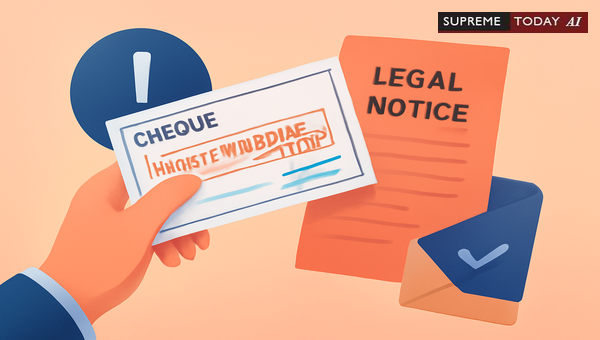
In today's fast-paced business world, cheques remain a common payment method in India. However, when a cheque bounces due to or other reasons, it can lead to serious legal consequences under (). A 'Check Dishonor Case'—often called a cheque bounce case—raises critical questions about procedural compliance, timelines, and enforceability. If you're a business owner, lender, or individual facing or filing such a case, understanding these rules is vital to protect your interests.
This guide breaks down the main legal findings, key procedures, and court insights. Note: This is general information based on judicial precedents and not specific legal advice. Consult a qualified lawyer for your situation.
The dishonor of a cheque is an offense under Section 138 of the , provided specific procedural steps are followed. Courts emphasize that the offense arises from dishonor due to or , but only if timelines for presentation, notice, and complaint filing are met. The dishonor of a cheque constitutes an offence under Section 138 of the , and the courts maintain the conviction when evidence supports it 2025 0 Supreme(Raj) 44.
Key elements include:- Cheque presented within its validity period (typically 3 months from issue, or 6 months in some contexts).- Dishonor information received from the bank.- issued within 30 days of that information.- Failure to pay within 15 days of notice receipt, triggering the .
Failure in any step can lead to dismissal or 2013 8 Supreme 777.
The cheque must be presented to the bank within its validity period. Upon dishonor, the payee must issue a legal notice demanding payment within 30 days of receiving bank information about the dishonor. The law mandates that after a cheque is dishonored, the complainant must send a legal notice within 30 days of receiving information from the bank regarding the dishonor 2025 0 Supreme(Raj) 2091.
The complaint must then be filed within one month (30 days) from the date the arises—typically 15 days after notice service, plus time for . Delays here are fatal: Failure to issue the notice within this period renders the complaint not maintainable 2013 8 Supreme 777.
Once initiated properly, Section 139 creates a that the cheque was issued for a . The accused must rebut this. In one case, the upheld this: The under Section 139 emphasizes the burden on an accused to rebut the of a with evidence 2025 0 Supreme(Kar) 920. Even in '' scenarios, the holds unless disproven, as disputed facts can't be probed at 2020 0 Supreme(UK) 172.
Courts strictly enforce timelines to prevent abuse. The period of limitation is not to be counted from the date when the cheque was presented in the first instance or the legal notice was issued but from the receipt of information of dishonor from the bank 2013 8 Supreme 777.
Non-compliance, like notice after 30 days, leads to dismissal: Proceedings can be dismissed if legal notice is issued beyond 30 days after receipt of dishonor information 2022 0 Supreme(Raj) 2948. Additional sources highlight service issues; for instance, lack of direct intimation about dishonor was scrutinized in a bank manager's case 2024 Supreme(Online)(AP) 13353.
Procedural errors are the biggest pitfalls:- Delayed or improper notice service.- Re-presenting cheque without valid reason.- Filing beyond limitation.
If the legal notice is issued beyond 30 days after receipt of dishonor information, the complaint is considered not maintainable 2013 8 Supreme 777. Courts quash such cases under , refusing roving inquiries into facts like signatory identity at early stages
. In insurance contexts, account holders must ensure sufficient funds, as policy lapses from dishonor void claims 2023 Supreme(Online)(Del) 18873.
Section 139's favors the holder: The automatic in favor of the holder of a cheque under 2020 0 Supreme(UK) 172. Accused must prove no debt exists.
Exceptions include:- : Directors/partners liable only with specific proof of role; mere position insufficient 2014 0 Supreme(SC) 903.- /Security Cheques: Still attract Section 138 unless rebutted 2020 0 Supreme(UK) 172.- Illegal Transactions: Claims from betting void under public policy 2013 0 Supreme(Del) 743.- : Bouncing post-settlement undermines credibility 2018 0 Supreme(Del) 2513.
No need for complainant to prove lending license; focus is procedural 2024 0 Supreme(Raj) 371.
Courts may reduce sentences or quash on compromise, viewing proceedings as compensatory. Courts have discretion to reduce default sentences or set aside convictions based on settlement or compromise between parties 2025 0 Supreme(Raj) 2091 2025 0 Supreme(Raj) 44. Full compensation plus costs often leads to closure.
Evidence matters: Matching signatures presumed, but mismatches need rebuttal 2017 0 Supreme(Raj) 1178. In appeals, acquittals overturned if holds 2025 0 Supreme(Kar) 920.
To succeed in cases:- Present cheque promptly within validity.- Issue notice within 30 days of bank memo.- File complaint timely.- Document service proof.- For accused: Rebut early with evidence.- Consider settlement to leverage court discretion 2025 0 Supreme(Raj) 2091.
Verify steps to avoid technical dismissals.
cases under Section 138 hinge on procedural rigor. Timely notices and filings are non-negotiable, with presumptions aiding complainants who comply. Courts prioritize credibility in transactions: The basic object of the law contained in Section 138... is 'to enhance credibility of the cheque transactions' 2018 0 Supreme(Del) 2513.
Key Takeaways:- Adhere to 30-day notice rule strictly 2013 8 Supreme 777.- Leverage Section 139 2025 0 Supreme(Kar) 920.- Settle early for favorable outcomes 2025 0 Supreme(Raj) 44.- Avoid lapses to prevent quashing.
Stay compliant to safeguard financial dealings. For personalized guidance, seek professional legal counsel.
References:1. 2025 0 Supreme(Raj) 2091 – Compromise and procedural correctness.2. 2025 0 Supreme(Raj) 44 – Conviction principles and timelines.3. 2013 8 Supreme 777 – Notice timelines.4. 2022 0 Supreme(Raj) 2948 – Dismissal for delays.5. 2025 0 Supreme(Kar) 920 – Section 139 .6. 2020 0 Supreme(UK) 172 – cases.
(Word count approx. 1050. Based solely on cited documents.)
#ChequeBounce, #Section138, #NIACT


[6.1] In the present case, a very short issue is, as to whether for dishonor of four cheques, one complaint is maintainable or not? ... The cause of action occured only after the dishonor of cheques and issuing the notice herein for dishonor of cheques and then the complaint came to be filed. ... The High court of Punjab and Haryana at Chandigarh, in case of "Sh.Charashni Kumar Talwani Vs. M/s. ... In t....

The fact of the case is that the Insurance Policy on account of dishonor of cheque and non - payment of premium had become void. So when the car met with an accident, the Insurance Company had rightly rejected the claim. ... In a situation like this it become incumbent on the Account holder to check her account and ensure sufficient amount to cater to his loan repayment as well as any cheque to be issued. This was evidently not done. ... No....

The petitioner submits that the facts of the given case are totally different from the instant case. ... It is held that the presumption under Section 139 is attracted in such a case also. ... The question was whether dishonor of a cheque on the ground that the drawer had stopped payment was a dishonor punishable under Section 138 of the Act. Relying upon two earlier decisions of this Court in Electronics....

Whether the complainant had a license to lend on interest is not relevant in the case of cheque dishonor. In the case of cheque dishonor, what is to be seen is if the cheque was issued in relation to a valid loan and was dishonored without payment, even after giving notice. 6. ... The relevant facts of the case are that in proceedings under Section 138 of the Negotiable Instruments Act, 1881 instituted ag....

Even if the said cheque has been signed by one person for discharging the liability of two or more persons including him, then also in case of dishonor of the cheque it is only that person who shall be liable under section 138 of the Act, 1881 and not those persons for discharge of whose liability also ... In the present case also the cheque was signed by accused No.1. The same was not signed by the petitioner. ... Further it has been provi....

It may be noted that in the present case admittedly, as per the complaint, affidavit and legal notice, Respondent No. 2 came to know about the dishonor of the cheque on the 10th July, 2010. ... The demand made by Respondent No. 2 was beyond the period of 30 days and now Respondent No. 2 cannot agitate that he be permitted to lead evidence to show that he received the knowledge of dishonor of the cheque on 12th July, 2012, which was not the ....

There is no explanation as to what prevented the respondent from directly intimating the petitioner about the dishonor of the check through a note or a memo. ... In the present case, the consequence of dishonor cheque issued by the petitioner was viewed seriously for the reason that the petitioner was working as a Branch Manager. ... Learned counsel for the petitioner submits that had the petitioner been informed of the #H....

The accused has also contested the case of the complainant vis-à-vis the dishonor of both the cheques. Hence, the said contention is not liable to be accepted. 25. ... Consequent to the dishonor of cheques dated 31.08.2011 and 30.09.2011, the complainant got issued legal notice dated 03.03.2012 (Ex.P5), whereunder, the accused Nos.1 and 2 were notified regarding the dishonor of said cheques dated 31.08.2011 and 30.09.2011.....

Case No. 751/2000 (F) (C.A Minutes 20.05.2016) at p. 7 a notice of dishonor must be distinguished from a Letter of Demand. “Notice of dishonor must be distinguished from a ‘Letter of Demand’. ... On 27.08.2012 as the Defendant was absent and unrepresented, the case was fixed for ex-parte trial against the Defendant and the Plaintiff closed his case on that day. ... Before considering the merits of the D....

A perusal of Annexure P-2 reveals that the complaint was for the dishonor of a cheque amounting to Rs. 49 lacs, and similarly, Annexure P-3 was filed for the dishonor of a cheque dated 17.02.2015 amounting to Rs.1.10 crores and total cheque amount in both the case is Rs. 1.59 crores. ... A perusal of Annexure R-2/1 dated 07.03.2015 refers to the dishonor of a cheque amounting to Rs.49 lacs, and Annexure R-2/2 dated 07.04.2....

It was a case of ‘stop payment’ and not a case of dishonor of cheque, due to insufficient funds.
Post-dated cheques were handed over the first of which also bounced. As observed in Meters and Instruments Private Limited (supra), the basic object of the law contained in Section 138 of the Negotiable Instruments Act, 1881 is “to enhance credibility of the cheque transactions”. The conduct of the petitioner in issuing a post-dated cheque (pursuant to a settlement) that failed upon presentation is not one that would “enhance the credibility” of cheque transactions. In a case relatin....

This case includes neither as the sole reason for dishonor of the cheque/cheques was insufficiency of funds. Learned counsel for the petitioner has tried to co relate non maintenance of account in the concerned bank by the petitioner as the cheque said to have been dishonored was allegedly issued by some other person in the name of P. The bank note categorises various reasons for returning of a cheque/instrument and some of the reasons includes closure of accounts or non exis....
Notice dated 7th May, 2009 of the Advocate for the defendant no.3 to the plaintiff no.2 regarding dishonor of the cheque for Rs.5 lacs. photocopy of a Sale Deed dated 24th March, 2009 executed by the plaintiff no.1 in favour of the defendant no.2 of a portion of the ground floor without roof rights of property bearing No. 137, Space No.3 area measuring 14 sq. mtrs. total area measuring 90 sq. mtrs. in Block and Pocket A-2, Sector-3, situated at Rohini Residential Scheme, Rohi....

The criminal case related to dishonor of a cheque issued by petitioner’s son in favour of the complainant. Even otherwise, it is clear from the record that the criminal case did not relate to the conduct of the petitioner as a police officer. In any case here was a case where the police submitted charge-sheet in Court, but the high Court stayed the proceedings of the criminal case. It is not the charge that the petitioner abused his position as a police officer by influencing....


An indispensable Tool for Legal Professionals, Endorsed by Various High Court and Judicial Officers
Please visit our Training & Support
Center or Contact Us for assistance

Scan Me!
India’s Legal research and Law Firm App, Download now!


For Daily Legal Updates, Join us on :



 Back to top


