


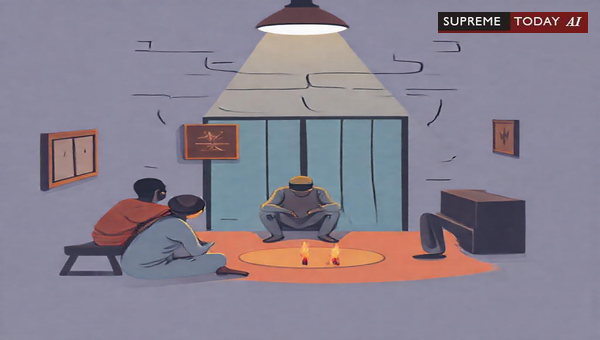
When Caste Insults in a Closed Room Do Not Amount to an Atrocity Offence Under the 1989 Act
A recurring question before Indian criminal courts is whether an insult or abuse directed at a member of a Scheduled Caste or Scheduled Tribe constitutes an offence of atrocity when it occurs inside a closed room, away from the eyes and ears of the public. The answer, under the , generally turns on one statutory phrase: . If that ingredient is missing, the atrocity offence typically does not stand — even if the abuse itself is demeaning and caste-based.
The Short Answer
An abuse committed in a closed room, where no member of the public is present, does not satisfy the of and therefore does not amount to an atrocity offence under of the Act. The provision penalises with a member of a Scheduled Caste or Scheduled Tribe, but only when the act occurs in a place within public view.
This was applied directly in a case where an accused, while talking to another person over the phone, abused the de facto complainant in the name of caste. The court held that since the alleged abuse was not made within public view as required under the section, no offence was made out, and allowing the criminal proceedings to continue would amount to an abuse of the process of the court. 2023 0 Supreme(Guj) 830 and 2021 0 Supreme(AP) 314
Why Public View Is a Mandatory Ingredient
of the 1989 Act requires that the insult or intimidation be intentional and carried out with , and that it occur in . Courts have consistently treated this as an essential , not a cosmetic detail.
The Swaran Singh Distinction
The Supreme Court in clarified the distinction between a and a place within public view:
- A place within public view need not be a . A private place can qualify if it is visible or audible to members of the public from outside — for example, a lawn outside a house visible from the road.
- Conversely, if the remark is made inside a building but some members of the public (not merely relatives or friends) are present, it may still fail the test, because the location is not in public view in the statutory sense.
As summarised in , which relied on Swaran Singh: Another key ingredient of the provision is insult or intimidation in . 2023 0 Supreme(Guj) 830
Application to Closed-Room Abuse
Where the alleged insult occurs inside a building and no members of the public are present, the offence under is not made out. In the matter, for instance, the FIR did not disclose that any other person was present at the time of the alleged insult or intimidation, and the abuse was said to have occurred over a phone call inside private premises. The court held the provision inapplicable because the essential ingredient of public view was absent. 2023 0 Supreme(Guj) 830 and 2021 0 Supreme(AP) 314
Gujarat High Court decisions reinforce the same principle in reverse: even where an incident might have occurred in a , if it was not within public view, the ingredients of the atrocity offence are not satisfied. 2026 Supreme(Online)(Guj) 27625 In another matter, an FIR that alleged offences under the without averments attracting its provisions was found, , to disclose no such offence. 2025 Supreme(Online)(Guj) 12576
Consequences for FIRs, Bail, and
The public view requirement has significant practical consequences at three stages of a criminal case:
Registration and . Courts scrutinise the FIR for specificity regarding the place of the incident and the presence of the public. Where the FIR or charge-sheet does not allege abuse within public view, proceedings under Sections 3(1)(r) and 3(1)(s) may be quashed. 2021 0 Supreme(AP) 314 In one case involving a simple road accident, the court found some colour of had been added by the complainant despite no material, and quashed the atrocity allegations as an while leaving IPC offences intact. 2019 0 Supreme(Guj) 281
. The bar in against applies only when an offence of atrocity under Section 3 is actually made out on the allegations. The specific bar cannot be bypassed merely because police noted an atrocity offence while registering the crime; the court must be satisfied on judicial scrutiny that no atrocity offence is disclosed. 2023 0 Supreme(Guj) 844 Courts have also recognised that where no case is made out or the complaint is mala fide, there is no absolute bar against under -A. 2019 0 Supreme(Guj) 178
Trial and conviction. At the appellate stage, convictions under the Act have been set aside where evidence did not show that the victim was targeted because of community status — as in a rape case where the offence under of the SC/ST Act was held not made out for want of such evidence, even though IPC convictions stood. 2015 0 Supreme(All) 940
What Does Not Fall Within the Public View Rule
The requirement is specific to certain insult and intimidation offences. Important distinctions include:
- Other subsections of Section 3. Offences such as mischief by fire or explosive substance under do not contain a public view requirement. An act like setting fire to property belonging to an SC/ST member can constitute an atrocity even if committed privately.
- Section 3(1)(x)-type allegations. Where a crime is registered only for a specific insult provision, courts examine the complaint's own allegations to determine whether any atrocity offence under Section 3 is made out, rather than relying on the police's registration entry. 2023 0 Supreme(Guj) 844
- Public duty scenarios. By contrast, where atrocious words are used against an SC/ST complainant in the presence of the public while performing a public duty — such as a Sarpanch inspecting a public road — the public view ingredient is satisfied and the atrocity provision may apply. 2026 Supreme(Online)(Guj) 27625
Alternate Offences in Private Abuse Cases
If abuse occurs in a genuinely private setting and the does not apply, other penal provisions may still be available. Courts routinely examine whether the facts attract (intentional insult with intent to provoke breach of peace) or (criminal intimidation) of the . 2023 0 Supreme(Guj) 844 In matters where atrocity allegations were quashed, IPC offences were often left to proceed because some material existed against the accused on those counts. 2019 0 Supreme(Guj) 281
Key Takeaways
- is a mandatory ingredient of the offence under ; its absence is fatal to the atrocity charge.
- A private place can be within public view if visible to the public from outside; a closed room with no public presence generally cannot.
- Abuse over a phone call, or inside private premises with no public present, typically does not attract Sections 3(1)(r) or 3(1)(s). 2021 0 Supreme(AP) 314
- FIRs lacking these details may be quashed, and the bar cannot be invoked where no atrocity offence is disclosed. 2023 0 Supreme(Guj) 844
- Other subsections of Section 3 and IPC provisions may still apply to the same facts, so the analysis is fact-specific.
Whether an abuse in a closed room constitutes an atrocity depends ultimately on the precise facts — who was present, what was visible, and what the FIR alleges. Anyone facing or contemplating such allegations should seek advice from a qualified advocate, as outcomes vary with the record in each case.
#SCSTAct #AtrocityLaw #Section3(1)(r) #PublicView #CriminalLaw












