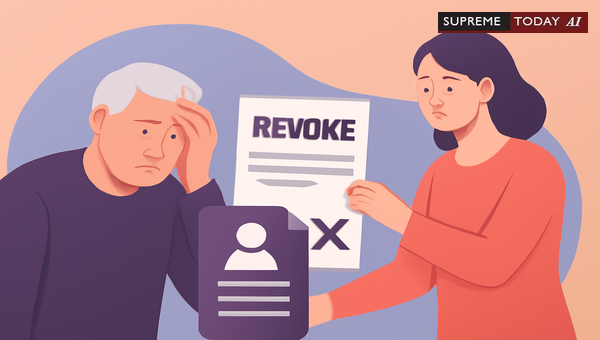
Procedure of Taking Power from Defendant Due to Health Issue
Legal Authority and Residuary Power Courts possess inherent or residuary powers to act ex debito justitiae (according to justice) when a defendant’s health condition renders them incapable of managing their affairs or participating effectively in legal proceedings, even if procedural rules do not explicitly provide for such actions. This approach emphasizes that procedure should serve justice, not hinder it. ["kazi ashfaq shams plaintiff- petitioner vs kazi tareq shams defendant-opposite party - Supreme Court"], ["2023 0 Supreme(Gau) 89"], ["SMT. SATYABHAMA W/O BALAJI BIRADAR Vs KUMARI PREETI AND ANR - Karnataka"]
Assessment of Mental and Physical Health Courts often rely on medical reports and expert opinions to determine whether a defendant is mentally or physically incapacitated. For instance, deteriorating health conditions, such as rapid decline or terminal prognosis, can justify the court’s intervention to take control of the defendant’s affairs or delay proceedings. ["2025 Supreme(HK)(HKDC) 125"], ["
TAN CHIN YAP vs NYANASEGAR MUNIANDY & ANOR - High Court Malaya Georgetown
"], ["kazi ashfaq shams plaintiff- petitioner vs kazi tareq shams defendant-opposite party - Supreme Court"]Procedural Flexibility in Exceptional Cases The courts have the discretion to accept late filings or to set aside judgments if a defendant’s health issues caused procedural delays or inability to participate. This flexibility aims to prevent miscarriage of justice, especially when health deterioration is substantiated by medical evidence. ["2023 0 Supreme(Gau) 89"], ["2024 Supreme(SRI)(CA) 837"]
Specific Legal Provisions and Acts Under the Mental Health Act, 2018, courts can appoint guardians or committees for individuals with mental health issues, especially if they are deemed incapable of managing their affairs. The appointment process involves judicial inquiry into mental health status, often supported by medical reports. ["kazi ashfaq shams plaintiff- petitioner vs kazi tareq shams defendant-opposite party - Supreme Court"], ["
TAN CHIN YAP vs NYANASEGAR MUNIANDY & ANOR - High Court Malaya Georgetown
"]Impact of Health on Court Proceedings When a defendant or their counsel is incapacitated due to health, courts may postpone hearings, accept affidavits filed late, or exercise revisional powers to rectify procedural irregularities, ensuring justice is not compromised. ["2024 Supreme(SRI)(CA) 837"], ["SMT. SATYABHAMA W/O BALAJI BIRADAR Vs KUMARI PREETI AND ANR - Karnataka"]
Analysis and Conclusion
Courts have a well-established legal framework and judicial discretion to take control of proceedings or manage a defendant’s affairs when health issues—mental or physical—prevent effective participation. This includes appointing guardians, accepting late submissions, or delaying judgments, all aimed at safeguarding justice. Medical evidence plays a crucial role in informing such decisions, and procedural flexibility is recognized as essential to prevent miscarriages of justice in health-compromised cases.