SupremeToday Landscape Ad

AI Overview

AI Overview...

  • Transfer Order is Stayed by the High Court - Main points and insights:
  • The High Court has intervened to stay or quash transfer orders issued by authorities such as the Board of Revenue or departmental officials, citing procedural violations or lack of proper opportunity to be heard ["2024 0 Supreme(UK) 329"] ["2024 Supreme(Online)(CAT) 11775"].
  • In several instances, transfer orders were issued without following the prescribed rules, without proper recommendations from the Civil Services Board, or without giving affected officers a chance to respond, leading courts to stay or set aside such orders ["2024 Supreme(Online)(CAT) 11775"] ["2022 Supreme(Online)(MAD) 14986"].
  • The courts emphasized that transfer orders must be issued by competent authority and in accordance with rules, and that orders passed in violation, especially without prior hearing, are liable to be stayed or declared invalid ["2024 0 Supreme(UK) 329"] ["2024 Supreme(Online)(CAT) 11775"].
  • Courts have also pointed out that circulars issued for transfer policies are non-mandatory and transfers are generally based on administrative needs, but procedural fairness must be maintained ["2024 0 Supreme(Raj) 851"].

  • Chairman of the Revenue Board Not Giving Office to Officer - Main points and insights:

  • The Chairman of the Board of Revenue or equivalent authority is responsible for disciplinary proceedings, inquiry reports, and issuing notices, and such actions must follow proper procedures and rules ["2025 Supreme(Online)(Raj) 13089"].
  • Orders of transfer or appointment are required to be issued by the competent authority, typically the Chairman, and not by subordinate officers, else they are deemed invalid ["2025 0 Supreme(Gau) 1323"] ["2024 Supreme(Online)(CAT) 11775"].
  • In cases where the Chairman's authority is challenged or orders are issued without proper jurisdiction, courts have held that the Chairman must be allowed to perform his functions, and any interference or refusal to give office is illegal ["2025 Supreme(Online)(Raj) 13089"].
  • Courts have stayed or quashed orders where the Chairman was not involved or where the officer was not given office, emphasizing adherence to rules and proper authority in administrative appointments or transfers ["2024 Supreme(Online)(CAT) 11775"].

  • Analysis and Conclusion:

  • The consistent judicial stance across the cited cases indicates that transfer orders or disciplinary actions by Revenue authorities and the Chairman of the Revenue Board are subject to strict procedural compliance. Any deviation, such as issuing orders without proper authority, without giving affected officers a hearing, or violating rules, leads to stay or quashing of such orders ["2024 0 Supreme(UK) 329"] ["2024 Supreme(Online)(CAT) 11775"].
  • The courts uphold the principle that administrative decisions, especially involving transfers and appointments, must be made by competent authority following due process, ensuring fairness and legality ["2024 0 Supreme(Raj) 851"].
  • When authorities fail to adhere to these principles, courts are willing to intervene, stay orders, or direct authorities to reconsider, safeguarding the rights of officers and maintaining rule of law in administrative proceedings ["2025 Supreme(Online)(Raj) 13089"].
  • Overall, the main insight is that transfer orders are stayed primarily due to procedural lapses or lack of authority, and the Chairman's role is central in ensuring lawful issuance of such orders and providing office to officers, as mandated by rules and judicial precedents.

References:- ["2024 0 Supreme(UK) 329"]- ["2024 Supreme(Online)(CAT) 11775"]- ["2023 Supreme(Online)(Pat) 11138"]- ["2024 0 Supreme(Raj) 851"]- ["2025 Supreme(Online)(Raj) 13089"]- ["2022 Supreme(Online)(MAD) 14986"]- ["2024 Supreme(Online)(CAT) 9114"]

Revenue Board Chairman Non-Compliance with High Court Transfer Stay Orders and Contempt Risk

High Court Stays Transfer Order: What Happens When Revenue Board Chairman Withholds Office?

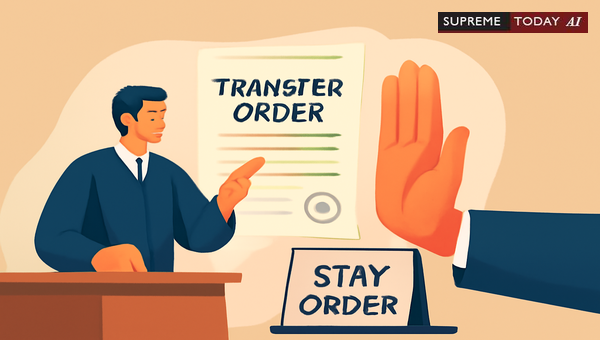
In the complex world of administrative law, transfer orders for government officers are common, but what occurs when a High Court intervenes with a stay? Imagine this scenario: Transfer Order is Stayed by the Highcourt and the Chairman of the Revenue Board is Not Giving Office to the Officer. This raises critical questions about judicial authority, administrative compliance, and potential contempt. This blog post delves into the legal intricacies, drawing from key precedents and analysis to clarify obligations and remedies.

Note: This is general information based on legal precedents and not specific legal advice. Consult a qualified lawyer for your situation.

Background of the Issue

Transfer orders are typically an exigency of service for public servants, and courts generally uphold them unless mala fide intent or procedural violations are evident. However, when a High Court issues a stay, it binds all parties, including administrative heads like the Chairman of the Revenue Board. Non-compliance, such as denying office space or duties to the stayed officer, can trigger serious repercussions.

In the referenced case, the High Court stayed the transfer after finding procedural lapses by the Board of Revenue, including errors in vacating a prior trial court stay 2021 0 Supreme(Raj) 1010. Despite this, the Chairman failed to allocate office, prompting concerns over judicial directive enforcement.

Authority of High Court Stay Orders

High Courts possess inherent powers under Article 226 of the Constitution to stay administrative orders if they violate legal standards. The stay halts the transfer's effect until resolved, meaning the officer retains their original posting and entitlements, including office facilities.

Key findings include:- The Board of Revenue committed serious errors in handling prior stays, justifying the High Court's intervention 2021 0 Supreme(Raj) 1010.- Unless lifted, the stay is mandatory, overriding administrative preferences 2004 3 Supreme 92 2022 0 Supreme(Raj) 1551.

Related precedents reinforce this. For instance, in a case where a transfer was stayed, the officer reported for duty but found no allocated work, highlighting similar administrative foot-dragging 2024 Supreme(Online)(KAR) 32994. Courts emphasize that stays must be respected to uphold the rule of law.

Non-Compliance by Revenue Board Chairman: Risks and Implications

The Chairman, as administrative head, must implement High Court orders promptly. Failure to provide office despite a stay may amount to contempt of court. Precedents warn:- Disobeying a stay can lead to serious repercussions, including fines or other penalties 1970 0 Supreme(SC) 295.- Administrative authorities bear a duty to ensure that the orders of the High Court are implemented, with non-compliance raising accountability issues 2018 0 Supreme(Raj) 1424.

Contrast this with scenarios sans stay: Public servants must comply with transfers or face discipline. As noted, If the order of transfer is not stayed, modified or cancelled the concerned public servant must carry out the order of transfer... he would expose himself to disciplinary action 2021 0 Supreme(All) 1261 2019 0 Supreme(MP) 230. This underscores that a valid stay shifts the onus to authorities.

In another context, officers in-charge cannot exceed statutory powers without explicit authority, as seen where an Assistant Registrar improperly stayed a disqualification 2024 0 Supreme(Kar) 628. Applied here, the Chairman cannot ignore judicial stays under guise of administrative discretion.

Legal Precedents on Transfer Stays and Compliance

Judicial review of transfers is limited but intervenes for illegality or mala fides. Courts have ruled:- Transfers are service exigencies, non-interferable ordinarily unless prohibited by rules or incompetent authority (1993) 1 SCC 148 followed 2019 0 Supreme(MP) 230.- Post-stay, authorities must allocate duties; denial mirrors improper withholding 2024 Supreme(Online)(KAR) 32994.

Revenue-specific cases highlight Board obligations. For example, the Board of Revenue must assign reasons for interim orders, or face remand 2018 0 Supreme(All) 1857. In land matters, stays on Board actions bind until vacated 2017 0 Supreme(Raj) 1957. These align with the principle that judicial stays supersede administrative inaction.

Res judicata may bar re-litigation if prior stays exist, emphasizing finality 2012 0 Supreme(UK) 657. Collectively, precedents mandate swift compliance to avoid escalation.

Administrative Responsibilities and Officer Rights

Revenue Boards handle public finance and postings, but judicial orders prevail. The Chairman's role includes:- Allocating office and duties per stay.- Monitoring compliance mechanisms to prevent recurrence.

Officers, meanwhile, should report for duty post-stay, as non-compliance without stay invites discipline 2021 0 Supreme(All) 1261. In stayed cases, persistence documents good faith, strengthening contempt claims if ignored.

Recommendations for Resolution

To address such standoffs:- Immediate Compliance: Advise the Chairman to provide office forthwith, respecting the stay 2021 0 Supreme(Raj) 1010.- Contempt Proceedings: If defiance persists, initiate against the Chairman for court disobedience 1970 0 Supreme(SC) 295.- Internal Monitoring: Implement reporting for court order adherence within the Board 2018 0 Supreme(Raj) 1424.- Documentation: Officers should formally report non-allocation, preserving records.

High Courts may direct fresh reasoned orders if interim stays lack basis 2018 0 Supreme(All) 1857. Liberal approaches apply in revenue appeals unless laches evident.

Conclusion and Key Takeaways

A High Court stay on a transfer order compels the Revenue Board Chairman to maintain status quo, including office provision. Non-compliance risks contempt, fines, and accountability, as judicial supremacy prevails over administrative inertia. Upholding these orders ensures rule of law in public service.

Key Takeaways:- Stays bind until vacated; ignore at peril 2004 3 Supreme 92.- Document non-compliance for remedies.- Transfers routine sans stay, but stays protect rights.

References: 2021 0 Supreme(Raj) 1010 1970 0 Supreme(SC) 295 2004 3 Supreme 92 2018 0 Supreme(Raj) 1424 2024 Supreme(Online)(KAR) 32994 2021 0 Supreme(All) 1261 2019 0 Supreme(MP) 230 2024 0 Supreme(Kar) 628 2018 0 Supreme(All) 1857 2012 0 Supreme(UK) 657

Stay informed on administrative law—share if this clarifies your concerns!

#HighCourtStay #TransferOrder #ContemptOfCourt
Chat Download
Chat Print
Chat R ALL
Landmark
Strategy
Argument
Risk
Chat Voice Bottom Icon
Chat Sent Bottom Icon
SupremeToday Portrait Ad
logo-black

An indispensable Tool for Legal Professionals, Endorsed by Various High Court and Judicial Officers

Please visit our Training & Support
Center or Contact Us for assistance

qr

Scan Me!

India’s Legal research and Law Firm App, Download now!

For Daily Legal Updates, Join us on :

whatsapp-icon Back to top