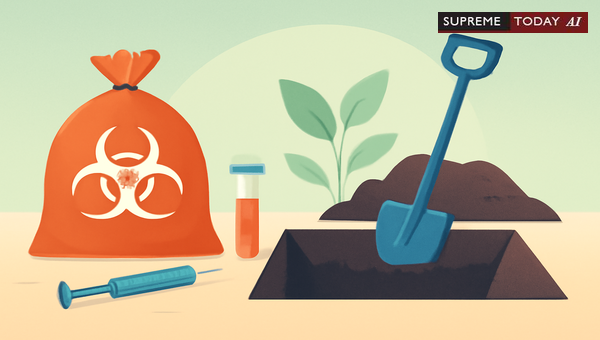
Can You Reuse Deep Pits for Biomedical Waste? Legal Risks
In the realm of healthcare and waste management, proper disposal of biomedical waste is critical to safeguarding public health and the environment. A pressing question arises: Can a deep barrier pit previously used for biomedical waste containing bacteria, viruses, and microorganisms that are not biodegradable be reused? This query touches on stringent regulations in India, where non-compliance can lead to severe penalties, environmental damage, and health hazards.
This blog post provides a detailed legal analysis, drawing from key regulations and court findings. Note: This is general information and not specific legal advice. Consult qualified professionals for your situation.
Understanding Biomedical Waste and Deep Barrier Pits
Biomedical waste includes infectious materials like bacteria, viruses, and microorganisms from hospitals, labs, and clinics. Deep barrier pits are sometimes used for burial of certain treated wastes, but reuse poses unique challenges, especially with non-biodegradable elements. Non-biodegradable pathogens do not break down naturally, risking long-term contamination of soil and groundwater. 2016 0 Supreme(UK) 793
The Bio-Medical Waste (Management and Handling) Rules, 1998 (updated as Bio-Medical Waste Management Rules, 2016) classify waste into categories and mandate specific treatments. Occupiers must ensure waste is pre-treated to neutralize pathogens before disposal and avoid mixing with municipal waste. 1961 0 Supreme(SC) 130
Key Legal Frameworks Governing Reuse
1. Bio-Medical Waste Management Rules
These rules prohibit improper disposal methods. For instance, deep burial is allowed only for specific categories like treated animal waste or sharps, under strict protocols such as pits over 50 cm deep. However, reuse of such pits without thorough decontamination is generally not advisable. 1961 0 Supreme(SC) 130
In COVID-19 contexts, deep burial systems were permitted temporarily if Common Biomedical Waste Treatment Facilities (CBWTFs) were unavailable, but with maintenance per protocols. 2021 Supreme(Online)(NGT) 49 Burials are not being used for disposal of COVID-19 biomedical waste... deep burial systems may be properly maintained as per protocols.
2. Environment (Protection) Act, 1986
State Pollution Control Boards (SPCBs) regulate hazardous waste, including biomedical. They can issue directions for violations. 2021 0 Supreme(SC) 1008 The Central Government delegates powers to ensure standards compliance.
3. Role of National Green Tribunal (NGT)
The NGT emphasizes strict adherence to prevent degradation. It cannot delegate adjudicatory functions and mandates compliance. 2022 0 Supreme(SC) 772 Cases highlight improper facilities causing harm, like the Gadarpur CBWTF, which led to environmental damage due to malfunction. 2020 0 Supreme(UK) 136
Environmental and Health Risks of Reuse
Reusing a deep barrier pit amplifies risks:- Pathogen Persistence: Non-biodegradable microorganisms like certain viruses survive indefinitely, contaminating groundwater. Plastics in waste exacerbate this, lasting over 100 years without decomposition. 2016 0 Supreme(UK) 793- Cross-Contamination: Mixing with non-biomedical waste is forbidden, yet reuse increases this chance. Sanitary napkins, sometimes buried in pits, are not classified as biomedical or plastic waste but require segregation.
MS. PURVA PRAVIN BORA VS MINISTRY OF ENVIRONMENT AND FOREST & CC
Cotton napkins in small burial pits of more than 50 cm deep... segregated sanitary waste can be disposed.-
Ecosystem Harm: Untreated pits lead to pollution, as seen in facilities failing protocols.
2020 0 Supreme(UK) 136Other cases underscore alternatives: Hospitals must use CBWTFs, not ad-hoc burials. In Goa, an Expert Committee was formed to monitor common facilities, addressing deep burial issues. 2015 0 Supreme(Bom) 1667
Legal Implications and Court Precedents
Courts have consistently ruled against lax practices:- Appointment and Oversight: SPCBs must have qualified leaders for enforcement. Improper appointments undermine regulation. 2019 0 Supreme(Gau) 1275- Treatment Mandates: Facilities must shred waste (e.g., syringes) and use sharps pits. Labels must be visible and unwashable. 2014 0 Supreme(Megh) 166 Proper care should be taken to avoid mixing of biomedical waste with non-bio-medical waste.- High Court Directives: In Tamil Nadu, directions ensure linen washing and inspections per Supreme Court orders, even as NGT handles specifics. 2019 0 Supreme(Mad) 2742
Non-biodegradable waste lacks dedicated schemes in some areas, dumped separately from compostable waste. 2017 0 Supreme(UK) 125 There is no scheme for disposal of non-bio degradable waste.
Reusing pits without SPCB approval typically violates these, risking NGT penalties or writ quashing.
Recommendations for Compliance
To navigate this:- Avoid Reuse Generally: Comprehensive treatment and monitoring are required, but alternatives are safer. 1961 0 Supreme(SC) 130- Adopt CBWTFs: Incineration or autoclaving at authorized sites is preferred. Tamil Nadu and Goa examples show state-level pushes. 2019 0 Supreme(Mad) 2742 2015 0 Supreme(Bom) 1667- Engage Authorities: Consult SPCBs for assessments. For animal waste, strict adherence is mandated. 2019 0 Supreme(Mad) 2742- Implement Best Practices: - Segregate at source with color codes. - Pre-treat infectious waste. - Document all processes for audits.
Conclusion and Key Takeaways
Reusing deep barrier pits for biomedical waste with non-biodegradable pathogens is fraught with legal hurdles under the Bio-Medical Waste Rules, Environment Act, and NGT oversight. Health risks, environmental pollution, and non-compliance penalties make it inadvisable without rigorous regulatory approval.
Key Takeaways:- Prioritize CBWTFs over burial.- Ensure pre-treatment and no mixing. 1961 0 Supreme(SC) 130- Collaborate with SPCBs for guidance. 2021 0 Supreme(SC) 1008- Stay updated on NGT orders. 2022 0 Supreme(SC) 772
By adhering to these, healthcare providers protect communities and avoid litigation. For tailored advice, reach out to environmental lawyers or your local SPCB.
References:1961 0 Supreme(SC) 130 2021 0 Supreme(SC) 1008 2022 0 Supreme(SC) 772 2016 0 Supreme(UK) 793 2020 0 Supreme(UK) 136 2021 Supreme(Online)(NGT) 49
MS. PURVA PRAVIN BORA VS MINISTRY OF ENVIRONMENT AND FOREST & CC
2019 0 Supreme(Gau) 1275 2019 0 Supreme(Mad) 2742 2017 0 Supreme(UK) 125 2015 0 Supreme(Bom) 1667 2014 0 Supreme(Megh) 166
#BiomedicalWaste, #EnvironmentalLaw, #WasteManagement