Searching Case Laws & Precedent on Legal Query.....!
Analysing the retrieved Case Laws
Scanned Judgements…!



Searching Case Laws & Precedent on Legal Query.....!
Analysing the retrieved Case Laws
Scanned Judgements…!
Retrospective Effect of Substitution - Generally, amendments involving substitution or replacement of provisions are presumed to have prospective effect unless explicitly stated otherwise. When legislation or amendments do not specify retrospective applicability, they are understood to operate prospectively only 2024 0 Supreme(Chh) 581, 2023 0 Supreme(All) 412, 2024 Supreme(Online)(CHH) 10379.
Judicial Presumption Against Retrospectivity - Courts tend to presume that statutes or amendments are not to be given retrospective effect unless the language clearly indicates such intent. The burden is on the legislation to explicitly state if retrospective operation is intended 2024 0 Supreme(Chh) 581, 2024 Supreme(Online)(CHH) 10379.
Specific Cases of Retrospective Effect - Certain amendments, especially those aimed at removing anomalies or clarifying provisions, have been held to have retrospective effect by courts. For instance, amendments made to remove inconsistencies or to clarify existing law are often given retrospective effect by implication 2023 0 Supreme(Pat) 326, 2022 0 Supreme(Pat) 890, 2022 0 Supreme(Pat) 893.
Effect of Repeal and Substitution - When a provision is repealed and replaced, the new provision generally applies prospectively unless the legislation explicitly states otherwise. The principle of implied non-retroactivity applies unless the amendment is declaratory or clarificatory in nature 2023 0 Supreme(All) 412, 2024 4 Supreme 50.
Legislative Power and Judicial Limitations - The power to enact laws with retrospective effect exists but is limited by judicial scrutiny. Courts examine whether the language of the amendment warrants retrospective operation and whether such retrospective effect would violate vested rights or principles of fairness 2024 0 Supreme(Chh) 581, 2024 Supreme(Online)(CHH) 10379.
Analysis and Conclusion:The prevailing principle is that substitutions or amendments in statutes are presumed to have prospective effect unless expressly provided or clearly implied to be retrospective. Courts scrutinize the language and purpose of the amendment to determine its retrospective applicability. Amendments aimed at clarifying or removing anomalies may be given retrospective effect, but generally, unless explicitly stated, substitution provisions are applied prospectively to avoid infringing vested rights or creating unfair disadvantages 2024 0 Supreme(Chh) 581, 2023 0 Supreme(All) 412, 2023 0 Supreme(Pat) 326.
References:- 2024 0 Supreme(Chh) 581- 2023 0 Supreme(All) 412- 2023 0 Supreme(Pat) 326- 2024 4 Supreme 50- 2022 0 Supreme(Pat) 890- 2022 0 Supreme(Pat) 893- 2024 Supreme(Online)(CHH) 10379
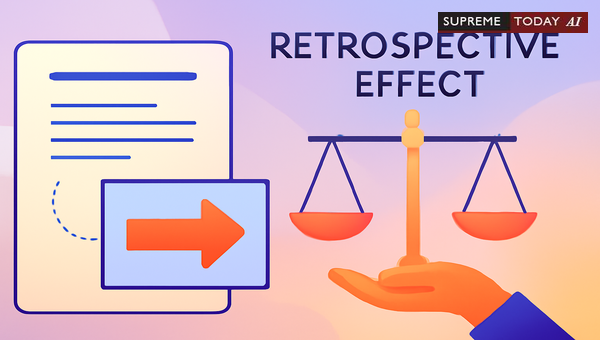
In the ever-evolving landscape of Indian legislation, amendments through substitution of sections raise a critical question: What is the Impact of Substitution of a Section? Will it have a ? This issue often arises in disputes involving tax laws, criminal statutes, and civil rights, where parties debate whether new provisions can reach back to alter past actions or rights.
Understanding this principle is vital for lawyers, businesses, and individuals navigating legal changes. Generally, Indian courts presume statutes operate prospectively to ensure fairness and legal certainty. However, exceptions exist based on . This post delves into the nuances, drawing from judicial precedents and statutory interpretations.
The cornerstone of statutory interpretation in India is that laws apply to future events unless explicitly stated otherwise. This presumption safeguards and prevents injustice from unforeseen legal shifts. As courts have repeatedly affirmed, Statutes are typically interpreted to apply only to future actions unless the legislature explicitly indicates that the law should apply retrospectively. This principle is rooted in equity and predictability.
When a section is substituted—replaced entirely by new wording—the new provision does not automatically erase the past. Instead, it typically governs future applications. For instance, in criminal law amendments, the has ruled that new laws do not affect ongoing proceedings unless specified 2024 3 Supreme 199.
Several doctrines guide whether substitution triggers retrospectivity:
: No statute shall have retrospective operation unless its language compels such a conclusion. It is well settled that no statute shall be construed to have a retrospective operation until its language is such that would require such conclusion 2024 0 Supreme(MP) 740.
as Paramount: Courts scrutinize the amendment's wording, context, and purpose. If intended to clarify or remove anomalies, retrospectivity may apply. For example, A clarificatory amendment of this nature will have retrospectiveeffect2023 0 Supreme(SC) 308.
Nature of the Amendment: might extend backward. Conversely, affecting rights are prospective unless stated otherwise.
Effect of Repeal and Substitution: The substituted section will relate back to the original section which had been omitted from the statute 2020 0 Supreme(Ker) 380, but this does not imply automatic retrospectivity for proceedings. In criminal contexts, implied omissions do not save old prosecutions without express saving clauses.
Retrospective amendments are possible, as The power to make laws includes the power to give it retrospectiveeffect2024 0 Supreme(MP) 740, but judicial scrutiny ensures they do not violate fairness.
Indian courts, particularly the , have shaped this area through landmark rulings:
In criminal law substitutions, changes do not retroactively impact rights unless mandated. Courts have consistently held that unless a statute explicitly states it is retrospective, it should be applied prospectively. For example, in cases involving amendments to criminal laws, the has ruled that new laws do not affect ongoing proceedings unless specified 2024 3 Supreme 199 2024 3 Supreme 130 2024 0 Supreme(SC) 233.
Clarificatory substitutions often receive retrospective treatment. Prior to substitution of Section 50 vide with retrospectiveeffect from ... 2023 Supreme(Online)(MAD) 23409. Similarly, By virtue of the amendment by way of substitution, the said provisions are given in coparcenary rights cases 2015 0 Supreme(Kar) 595.
On procedural rules: First of all it needs to be understood as to what is the effect when a provision is substituted and whether upon substitution a provision should always be deemed to have retrospective or retroactive effect 2022 0 Supreme(Bom) 1564. Courts assess if instructions or provisos, like those to , apply backward 2023 0 Supreme(SC) 308.
Prospective default holds firm: of Substitution - Generally, amendments involving substitution or replacement of provisions are presumed to have prospective effect unless explicitly stated otherwise 2024 0 Supreme(Chh) 581 2023 0 Supreme(All) 412 2024 Supreme(Online)(CHH) 10379.
These precedents underscore that while legislatures can enact retrospective laws, courts presume prospectivity to protect vested interests.
Despite the general rule, certain scenarios warrant :
Clarificatory or Anomalies-Removing Amendments: Certain amendments, especially those aimed at removing anomalies or clarifying provisions, have been held to have by courts 2023 0 Supreme(Pat) 326 2022 0 Supreme(Pat) 890 2022 0 Supreme(Pat) 893. For example, provisos inserted with explicit retrospective dates, like in land acquisition laws: Both the section and its proviso have a 2008 0 Supreme(Bom) 1610.
Beneficial or Procedural Provisions: Amendments enhancing rights, such as daughters' coparcenary shares, apply to pending matters via substitution 2015 0 Supreme(Kar) 595.
Express Legislative Declaration: often specify dates, e.g., retrospective from for 2023 0 Supreme(SC) 308
However, Judicial Presumption Against Retrospectivity - Courts tend to presume that statutes or amendments are not to be given unless the language clearly indicates such intent 2024 0 Supreme(Chh) 581 2024 Supreme(Online)(CHH) 10379. The burden lies on the provision's text.
For legal practitioners, substitution demands careful analysis:
Review Statutory Language: Look for phrases like shall be deemed always to have been indicating retrospectivity.
Contextual Purpose: Amendments fixing loopholes or declaring true intent often retroact 2023 0 Supreme(Pat) 326.
Impact on Proceedings: Pending cases may align with new provisions if procedural, but substantive rights remain protected.
Effect of Repeal and Substitution: New rules apply prospectively unless declaratory 2023 0 Supreme(All) 412 2024 4 Supreme 50.
Businesses facing GST or income tax changes, like 's substitution 2023 Supreme(Online)(MAD) 23409, must track explicit retrospective clauses to avoid penalties.
The prevailing principle is that substitutions or amendments in statutes are presumed to have prospective effect unless expressly provided or clearly implied to be retrospective 2024 0 Supreme(Chh) 581 2023 0 Supreme(All) 412.
The substitution of a section does not automatically imply . The default is prospectivity, overridden only by clear or judicial implication in clarificatory cases. Legal certainty hinges on this balance.
Key Takeaways:- Presume prospectivity unless language dictates otherwise 2024 3 Supreme 199.- Analyze intent via context and purpose 2024 0 Supreme(MP) 740.- Monitor case law for evolving interpretations 2024 3 Supreme 130 2024 0 Supreme(SC) 233.
Recommendations:- Scrutinize the substituted section's wording for retrospective cues.- Evaluate amendment objectives for clarificatory nature.- Consult precedents in similar domains.
This post provides general insights based on established principles and is not legal advice. Seek professional counsel for specific cases.
References: 2024 3 Supreme 199 2024 3 Supreme 130 2024 0 Supreme(SC) 233 2023 0 Supreme(SC) 308 2024 0 Supreme(MP) 740 2023 Supreme(Online)(MAD) 23409 2022 0 Supreme(Bom) 1564 2020 0 Supreme(Ker) 380 2015 0 Supreme(Kar) 595 2008 0 Supreme(Bom) 1610 2024 0 Supreme(Chh) 581 2023 0 Supreme(All) 412 2023 0 Supreme(Pat) 326 2024 4 Supreme 50
#RetrospectiveEffect #SectionSubstitution #IndianLaw


In the amendment notification, it is nowhere mentioned that the amendment which is brought in the Rules, 2019 is having its retrospective effect. ... effect. ... When there is no specific mention that the amended provision will have its retrospective effect, it has to be understood that it is having its application prospectively only. ... However, when an entire Act or section is abrogat....

The Ordinance No. 8 of 2022 does not express intention to make the substituted provisions retrospective. The repeal/substitution of sub-section (13) of Section 15 can only be given prospective effect. ... effect. ... With the substitution of the old provisions, the normal rule is to give prospective effect to the new provisions and the retrospectivity,....

A substitution was made changing ‘after’ to ‘upto’. Zile Singh who had a fourth child in August when sought to be disqualified claimed that the substitution made is retrospective. ... (supra) was a case in which proviso to Section 43B inserted by the Finance Act, 1987, with effect from 01.04.1987, was held to be retrospective. ... The Hon’ble Supreme Court found that the substi....

It is wrong to assume that the substituted Rule is given retrospective effect if its benefits are made available to pending proceedings or to those that have commenced after the substitution. ... It is also submitted on behalf of the State that the substituted Rule cannot be given retrospective effect. We are not in agreement with this submission either. ... The gravity of the offence, its impac....

A clarificatory amendment of this nature will have retrospective effect (ibid., pp. 468-69). 15. ... The first proviso to Section 153C of the Act, 1961 came to be inserted vide Finance Act, 2005 with retrospective effect from 01.06.2003, which provides that the reference to the date of initiation of the search under Section 132 or making of requisition under Section 1....
effect. ... The impact of the deletion of Section 16 (3) and introduction of Section 16 (4) in the Act of 1961 has been dealt with by the Supreme Court in Punyadeo Sharma & Ors. Etc. vs. Kamla Devi & Ors. Etc.; 2022 (1) BLJ 434. 70. ... It was also urged before the Supreme Court that the amending act was only declaratory in nature and, therefore, there was no difficulty in giving it a retrospective #HL_ST....

effect. ... The impact of the deletion of Section 16 (3) and introduction of Section 16 (4) in the Act of 1961 has been dealt with by the Supreme Court in Punyadeo Sharma & Ors. Etc. vs. Kamla Devi & Ors. Etc.; 2022 (1) BLJ 434. 72. ... It was also urged before the Supreme Court that the amending act was only declaratory in nature and, therefore, there was no difficulty in giving it a retrospective #HL_ST....

The power to make laws includes the power to give it retrospective effect. ... In this background, let us now see whether this section has any retrospective effect. It is well settled that no statute shall be construed to have a retrospective operation until its language is such that would require such conclusion. ... With the substitution of the old provisions, the no....

In the amendment notification, it is nowhere mentioned that the amendment which is brought in the Rules, 2019 is having its retrospective effect. ... effect. ... When there is no specific mention that the amended provision will have its retrospective effect, it has to be understood that it is having its application prospectively only. ... and it cannot be applied as retrospective. ... Th....

Prior to substitution of Section 50 vide Finance Act, 2022 with retrospective effect from 01.07.2017, sub-section 3 of Section 50 read as follows:- (3) A taxable person who makes an undue or excess claim of input tax credit under sub- section (10) of Section 42 or undue or excess reduction in output tax liability under sub- section (....

First of all it needs to be understood as to what is the effect when a provision is substituted and whether upon substitution a provision should always be deemed to have retrospective or retroactive effect. The issue that arises for consideration is whether the Instructions appended to Rule 38 of the MCS Rules, 1981, substituted by virtue of Notification dated 24th December 2008 have any retroactive effect or not.

The substituted section will relate back to the original section which had been omitted from the statute. In case of an implied omission of an offence by substitution of a new definition, neither section 6, nor any other provision of the General Clauses Act, 1897, can apply to enable the continuance of the criminal proceedings in respect of the offence which has been impliedly omitted, in the absence of an express provision permitting the continuation of criminal proceedings in the Act by whic....

Therefore, by such amendment, the amending Act has become a part of the original Act. The pending proceedings are also to be decided in the light of the amended provision. On the basis of the said amendment, the daughters who were denied right in the coparcenary property earlier have initiated proceedings in the Court. By virtue of the amendment by way of substitution, the said provisions are given retrospective effect.

It is argued that this will amount to giving retrospective effect to the provisions of Section 2A. In RUSTON & HORNSBY (I) LIMITED (supra 2), the Honble Apex Court at paragraph 6, held as follows: 6. The first argument on behalf of the appellant is that the incident took place in December 1963 and the order of dismissal was made on the 7th January 1964 and as Section 2A of the Industrial Disputes Act came into force on 1-12- 1965 the reference of this dispute under Section 10....

It was later amended in 1958 when a proviso was inserted to Section 84B. Both the section and its proviso have a retrospective effect. Where in respect of a transfer or acquisition of any land made on or after the 15th day of June, 1955 and before the commencement of the Amending Act, 1955, the Mamlatdar, suo motu or on the application of any person interested in such land, has reason to believe that such transfer or acquisition – (a) was in contravention of section 63 or 64 ....


An indispensable Tool for Legal Professionals, Endorsed by Various High Court and Judicial Officers
Please visit our Training & Support
Center or Contact Us for assistance

Scan Me!
India’s Legal research and Law Firm App, Download now!


For Daily Legal Updates, Join us on :



 Back to top


