


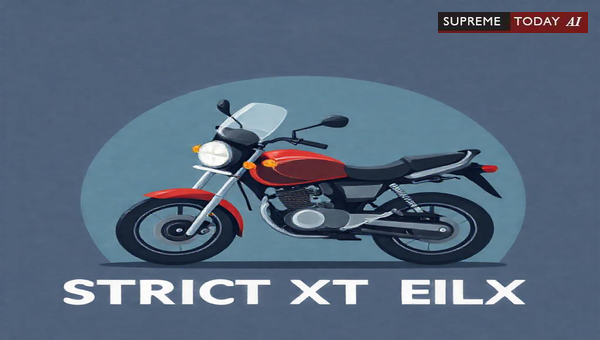
When a Fleeing Rider Leaves Behind a Motorcycle With 60 Bulk Litres of Liquor — Can the Registered Owner Be Convicted Under of the M.P. Excise Act?
Picture this scenario, which appears frequently before the courts of Madhya Pradesh: police spot an unknown man carrying 60 bulk litres of liquor on a motorcycle that has no number plate. On seeing the police, the rider abandons the vehicle and flees. The investigating officer traces the motorcycle through its engine and chassis numbers and discovers that the accused is the registered owner of the vehicle. On this basis alone, an offence under of the is registered against him. The question that arises is stark: can the accused be convicted solely because he is the ?
The short answer, based on the weight of judicial authority, is generally no — mere registration of ownership is not, by itself, sufficient for conviction.
What of the Actually Requires
prescribes a harsher penalty than , and courts have clarified its ingredients carefully. Two conditions must be satisfied together: possession of more than fifty bulk litres of illicit liquor and a prior conviction under . As one judgment explains, the word and in cannot be read as or, and both requirements must be fulfilled 2025 0 Supreme(MP) 949. itself prescribes no minimum quantity — any amount of liquor manufactured, transported, imported, collected or possessed without a licence falls within its scope 2025 0 Supreme(MP) 949.
Beyond these statutory conditions, the prosecution must prove the essential ingredients of the offence: that the accused was in possession of the illicit liquor and had knowledge that it was unauthorized. These are the elements the law demands — not merely a connection through paperwork.
Why Registered Ownership Is Not Possession
The facts described in the question — a numberless motorcycle, an unidentified rider fleeing the spot, and ownership established later through — create only a circumstantial thread. Tracing a vehicle to its registered owner is an investigative step that establishes ownership, not participation in the offence.
Analogous fact patterns recur in the reported orders. In one case, 60 bulk litres of country-made liquor were allegedly carried on a motorcycle without a registration number 2020 0 Supreme(MP) 752, but there the accused was found at the scene with the liquor in his company. In another, the occupants of a car fled upon seeing police, but the accused were identified in torchlight by the vehicle's headlight 2022 0 Supreme(MP) 507 — identification of the fleeing person mattered alongside the recovery. Where only the vehicle is traced and the rider escapes unidentified, the link between owner and liquor remains unproven.
Judicial treatment of vehicle owners reinforces this. In a truck-owner case, the High Court set aside a conviction under where the petitioners had a valid transport licence that the police failed to verify, showing that ownership plus recovery alone does not complete the prosecution's case 2016 0 Supreme(MP) 394. Similarly, courts have repeatedly granted bail to registered owners facing charges where the material against them appeared insufficient, noting that final conclusion of trial was likely to take a long time 2022 0 Supreme(MP) 1335 and 2022 0 Supreme(MP) 1154.
Lessons From Parallel Excise Jurisdictions
The principle is not confined to Madhya Pradesh. Under the , several High Court decisions have held that the in its illegal use for ferrying illicit liquor is an essential prerequisite even for confiscation of the vehicle — and certainly for penal consequences. Where no material showed direct or indirect involvement of the owner, confiscation orders were set aside and motorcycles ordered released 2026 0 Supreme(Pat) 273 and 2026 0 Supreme(Pat) 267. One decision went further, holding that use of the vehicle in transporting intoxicant is a sine qua non for seizure, and the owner's consent or connivance is an equally essential twin requirement; a vehicle owner who was not even an accused was held entitled to compensation for the violation of his property rights 2024 0 Supreme(Pat) 41.
The Bihar High Court has also observed in an anticipatory bail context that where the owner of a motorcycle was neither alleged to have been riding it nor present on the spot nor found in possession of illicit liquor, the presumption provisions could not be pressed against him 2025 0 Supreme(Pat) 1442. Though arising under a different statute, the underlying logic applies squarely: ownership of the conveyance is not culpability for the cargo.
What More Does the Prosecution Need?
For a conviction on these facts to stand, the prosecution would typically need additional evidence, such as:
- Eyewitness identification of the fleeing rider as the accused
- Proof that the accused was present at the scene or was the person riding the motorcycle
- A disclosure statement leading to recovery — noting that information from an accused which does not lead to any recovery is , and prosecution based solely on such inadmissible evidence amounts to an 2020 0 Supreme(MP) 246
- Evidence of knowledge, consent, or connivance of the owner in transporting the liquor
- Prior conviction under , without which the charge itself may not hold 2025 0 Supreme(MP) 949
By contrast, where accused persons were actually found sitting in a tempo carrying 240.88 bulk litres of liquor, conviction rested on 2002 0 Supreme(MP) 948 — underscoring that presence and possession, not ownership, are what courts act upon.
Key Takeaways
- Conviction under of the requires proof of of illicit liquor; registered ownership of the vehicle alone does not satisfy these ingredients.
- A missing number plate and the rider's flight are that may support an inference but cannot substitute for direct proof connecting the owner to the liquor.
- Tracing ownership through engine and chassis numbers is an investigative fact, not .
- Courts in comparable excise cases consistently insist on the owner's involvement or connivance before imposing penal or confiscatory consequences 2026 0 Supreme(Pat) 273 and 2024 0 Supreme(Pat) 41.
On the facts described — an unknown rider, a numberless motorcycle, and post-facto tracing of the registered owner — a conviction resting solely on registration would generally not be legally sustainable. Every case, however, turns on its own evidence, and anyone facing such a charge may wish to seek advice from a qualified advocate familiar with the specific record.
#MPExciseAct #IllicitLiquor #VehicleOwnerLiability #Section34 #CriminalLawIndia









