


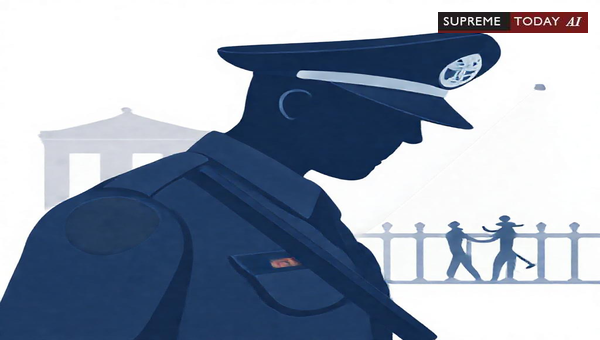
When a Police Officer Delays an Investigation in India, What Are the Actual Legal Consequences?
Criminal investigations are meant to be pursued with diligence, yet delays by investigating officers are among the most common complaints reaching Indian courts. Victims and accused persons alike frequently ask the same question: what is the punishment for a police officer for delayed investigation? The answer is more layered than a single statutory penalty, and understanding it helps litigants, police personnel, and advocates navigate the system realistically.
No Automatic Statutory Punishment, But Real Consequences Exist
There is no single provision in Indian law that prescribes an automatic punishment solely because an investigation was delayed. However, courts consistently treat unjustified delay as an act of , which exposes the officer to two principal avenues of accountability: contempt proceedings and departmental disciplinary action 2003 0 Supreme(Bom) 100.
Because investigation of cognizable offences is a statutory duty, an officer who fails to perform it with the required diligence — or willfully ignores court directions to conclude an investigation — becomes liable to both penal and disciplinary consequences 2003 0 Supreme(Bom) 100. As one judgment observed, a police officer holding a responsible post invites strict action for any act of indiscipline or dereliction of duties 2003 0 Supreme(Bom) 100.
Contempt of Court for Disobeying Timelines
When a court fixes a specific timeframe for completing an investigation, non-compliance without valid justification amounts to actionable under the . Notably, an apology tendered in such proceedings must show genuine repentance; a conditional apology that depends on the eventual finding of the court is not acceptable 2003 0 Supreme(Bom) 100.
Departmental Disciplinary Proceedings
Superior officers are empowered — and expected — to initiate departmental inquiries against officers showing callousness in investigation. In one matter, the Superintendent of Police himself, acting suo motu and not pursuant to any court direction, initiated an enquiry for against an officer who had handled an investigation improperly 2023 4 Supreme 582.
Other consequences documented in judicial decisions include:
- Censure and minor penalties for unprofessional conduct by investigating officers under the 2026 Supreme(Online)(CAT) 7291.
- Departmental enquiries directed by High Courts, including directions to Commissioners of Police to proceed against investigating officers found to have conducted deficient investigations 2021 0 Supreme(Bom) 431.
- Disciplinary or penal action under , where a court finds that an officer responsible for investigating NDPS offences has failed in his duty — such wrongs must be approached and dealt with firmly 2023 0 Supreme(Bom) 1437.
- Offences under , read with state Punishment and Appeal Rules, where neglect or misconduct of subordinate ranks attracts punishments ranging up to dismissal depending on the gravity of the lapse 2011 0 Supreme(All) 3408.
How Delay Affects the Case Itself
Punishment of the officer is only one dimension. Delay can directly damage the criminal proceedings:
- under : if the charge-sheet is not filed within the prescribed 60 or 90 days, the accused becomes entitled to , and continued detention without a valid order becomes illegal 2016 0 Supreme(Bom) 2034.
- Quashing of proceedings: under the framework, investigations must follow strict statutory timelines under ; non-compliance led a court to quash the entire proceedings and order a fresh investigation, emphasizing that for investigating officers 2024 0 Supreme(All) 2447.
- Judicial monitoring: where there is a history of willful negligence, courts may monitor investigations through a or transfer them to independent agencies when police inaction renders the administration of justice irrelevant 2025 0 Supreme(Jhk) 1334 and 1994 0 Supreme(SC) 909.
- Human rights remedies: victims may approach State Human Rights Commissions, which can even recommend monetary compensation from erring officers 2026 Supreme(Online)(Bom) 2854.
When Delay Is Justified: Defences Available to Officers
Not every delay attracts punishment. Courts have recognized genuine limitations:
- Complexity of the case or conduct of parties: if the delay is not willful and the officer's explanation is reliable and accepted, contempt may not be made out 2003 0 Supreme(Bom) 100.
- Unprecedented circumstances: a Police Sub-Inspector successfully challenged a compensation order where delay was attributable to the COVID-19 pandemic, deployment for lockdown enforcement, and the complainant's own unavailability for statement recording — the court held the delay was justifiable and quashed the recommendation 2026 Supreme(Online)(Bom) 2854.
- Multiple assignments: courts acknowledge that a station officer is bound to be entrusted with the investigation in more than one crime, and workload alone does not establish misconduct 2023 0 Supreme(Bom) 1437.
Practical Remedies and Precautions
For litigants facing an unreasonably delayed investigation:
- Approach the High Court under of the Constitution seeking a for a time-bound investigation.
- Move the jurisdictional Magistrate for directions on the progress of the case.
- In serious matters, seek transfer of the investigation to an independent agency if police inaction is apparent 1994 0 Supreme(SC) 909.
For police officers, the safest protection is documentation. Every investigative step should be recorded, and any delay should be justified by objective circumstances — court workload, forensic pending reports, or deployment — rather than personal negligence or external influence 2003 0 Supreme(Bom) 100. Determining who is responsible for a delay, and whether it was intentional, is a factual question courts examine carefully before fixing liability 2024 0 Supreme(All) 2447.
Key Takeaways
- There is no singular statutory punishment for delayed investigation, but willful delay is treated as attracting strict action 2003 0 Supreme(Bom) 100.
- Contempt of court, departmental enquiries, major penalties, censure, and action under or Section 59 of the NDPS Act are all realistic consequences 2003 0 Supreme(Bom) 100 and 2023 4 Supreme 582 and 2023 0 Supreme(Bom) 1437 and 2011 0 Supreme(All) 3408.
- Delay can also wreck the prosecution itself — through or quashed proceedings 2016 0 Supreme(Bom) 2034 and 2024 0 Supreme(All) 2447.
- Justified delay due to genuine, documented circumstances typically protects the officer from liability 2026 Supreme(Online)(Bom) 2854.
This article provides general information based on reported decisions and is not a substitute for advice on a specific case; outcomes depend heavily on the facts of each matter.
#PoliceAccountability #DelayedInvestigation #ContemptOfCourt #CriminalLaw #DepartmentalEnquiry









