Searching Case Laws & Precedent on Legal Query..!
Scanned Judgements…!



Searching Case Laws & Precedent on Legal Query..!
Scanned Judgements…!
Posco Act Challenges – Main Points and Insights
Legal Proceedings and Judicial Interpretations: Several cases involve the application and interpretation of the POSCO Act, particularly regarding procedural compliance, cross-examination rights, and the validity of charges. For instance, courts have examined whether victims can be cross-examined once they turn hostile under Section 33 of the POSCO Act, emphasizing that the Act itself permits such cross-examination ["2022 0 Supreme(Kar) 823"], ["2022 Supreme(Online)(Kar) 56095"]. Additionally, courts have quashed proceedings where procedural lapses or jurisdictional issues arose, such as in Madurai and Coimbatore, citing the importance of adhering to prescribed procedures ["2022 Supreme(Online)(MAD) 22593"], ["2023 Supreme(Online)(Mad) 90584"].
Challenges in Prosecution and Convictions: Several cases highlight difficulties in securing convictions under the POSCO Act, especially when the age of the prosecutrix or the evidence presented is contested. For example, in one case, the High Court acquitted the accused because the prosecutrix was above the age of 15 years when the sexual act was alleged to have taken place ["2023 0 Supreme(SC) 310"]. Some convictions have been challenged on grounds of procedural errors or insufficient evidence, leading to quashing or modifications of judgments ["2022 Supreme(Online)(Mad) 98453"], ["2025 Supreme(Online)(MAD) 1656"].
Procedural and Jurisdictional Issues: Courts have emphasized the importance of following statutory procedures under the POSCO Act. Cases have been dismissed or proceedings quashed due to violations, such as improper transfer of cases, non-compliance with trial procedures, or issues with the admissibility of evidence ["2024 Supreme(Online)(Mad) 53170"], ["2023 Supreme(Online)(MAD) 33348"]. The Act's provisions, such as the special court's powers and procedures, are central to ensuring fair trials and preventing malicious prosecutions.
Interplay with Other Laws and Exemptions: The POSCO Act often interacts with other statutes, such as the Prohibition of Child Marriage Act and the Indian Penal Code. Courts have clarified that merely because the proceedings are under the POSCO Act, the right of cross-examination cannot be taken away ["2023 Supreme(Online)(MAD) 33348"], ["2022 Supreme(Online)(Kar) 56095"]. Additionally, exemptions under labor laws or statutory provisions, like the Interest Act, have been discussed in relation to POSCO-related cases, indicating complex legal intersections.
Sentencing and Appeals: Sentences under the POSCO Act vary, with some cases sentencing offenders to rigorous imprisonment and fines, while others involve acquittals or quashings of charges. Appeals and petitions often seek to modify or quash proceedings, with courts stressing adherence to procedural fairness and statutory mandates ["2023 Supreme(Online)(Mad) 90584"], ["2022 Supreme(Online)(Kar) 54901"].
Analysis and Conclusion The challenges surrounding the POSCO Act primarily revolve around procedural adherence, evidentiary issues, and the interpretation of victims' rights. Courts consistently highlight the importance of following the Act's provisions to ensure fair trials, especially regarding cross-examination rights and jurisdictional correctness. Many cases demonstrate that procedural lapses or misapplications of the law can lead to quashing of charges or proceedings, emphasizing the need for meticulous compliance by prosecuting authorities. The Act's complex interplay with other laws and the need for precise judicial interpretation remain critical to effective enforcement and safeguarding rights.
References:- ["2024 Supreme(US)(ca9) 136"]- ["2023 0 Supreme(SC) 310"]- ["2022 0 Supreme(Kar) 823"]- ["2022 Supreme(Online)(Mad) 98453"]- ["2024 Supreme(Online)(Mad) 53170"]- ["2023 Supreme(Online)(MAD) 33348"]- ["2023 Supreme(Online)(Mad) 90584"]- ["2022 Supreme(Online)(Kar) 56095"]- ["2025 Supreme(Online)(MAD) 1656"]- ["2022 Supreme(Online)(Kar) 54901"]
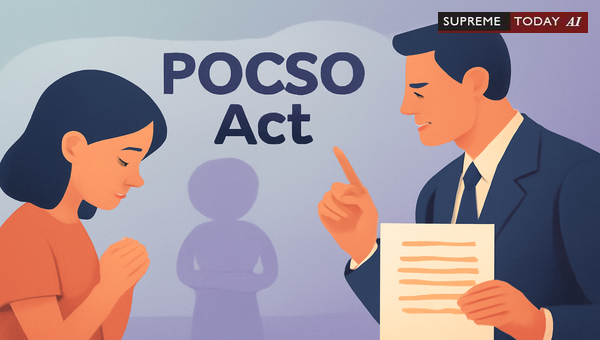
The , stands as a cornerstone of child protection in India, aiming to safeguard minors from sexual assault, harassment, and pornography. However, legal practitioners and courts often grapple with Posco Act Challenges, ranging from interpretive ambiguities to procedural hurdles. This blog delves into these complexities, drawing from judicial precedents and statutory provisions to offer clarity.
Whether you're a lawyer navigating a case, a concerned parent, or someone seeking to understand child rights laws, understanding these challenges is crucial. We'll explore key issues like rights, conflicts with other statutes, and more, supported by court observations.
Enacted in 2012, the POCSO Act creates a , including special trial procedures and dedicated . The (POCSO Act) was enacted to protect children from sexual assault, harassment, and pornography. It establishes a , including special procedures for the trial of such offences and the establishment of 2015 0 Supreme(AP) 765.
The Act is viewed as a with safeguards for child witnesses, emphasizing to prioritize child rights 2021 0 Supreme(All) 616 2021 0 Supreme(MP) 364. Courts stress maintaining a supportive court environment, especially during sensitive proceedings like 2022 0 Supreme(Kar) 823.
One primary challenge is the required due to the Act's protective nature. The POCSO Act is considered a , designed specifically to protect children, with numerous safeguards incorporated to ensure a child-friendly process during legal proceedings 2021 0 Supreme(All) 616 2021 0 Supreme(MP) 364. This can limit flexibility in applying general criminal laws.
For instance, may take directly upon a complaint or police report, bypassing traditional committal processes: reads as under : '33. Procedure and powers of Special Court - (1) A Special Court may take of any offence, without the accused being committed to it for trial, upon receiving a complaint of facts which constitute such offence, or upon a police report of such facts' 2016 0 Supreme(Bom) 1876. This streamlines proceedings but raises questions on procedural fairness.
A contentious issue is balancing the accused's right to cross-examine child victims with the child's emotional well-being. Courts have ruled that outright denial of is unsustainable, provided a child-friendly atmosphere is ensured: Courts have ruled that denying the right to cross-examine a child victim is unsustainable, emphasizing the importance of a child-friendly atmosphere during such proceedings 2022 0 Supreme(Kar) 823.
This underscores the need for video conferencing or screened testimonies to protect the child while upholding .
Section 42A grants the POCSO Act overriding effect over inconsistent laws, sparking debates in overlap cases, such as with the : The POCSO Act includes a in , which gives it overriding effect over other laws, including the SC/ST Act 2021 0 Supreme(MP) 364 2019 0 Supreme(All) 1263.
Legal strategies must carefully argue primacy based on child protection priorities.
The Act defines a child as under 18 years, focusing on biological age. Debates persist on including mental age for intellectually challenged victims: Courts have generally maintained that the biological age is the determining factor, despite arguments for a broader interpretation 2018 4 Supreme 33 1975 0 Supreme(SC) 534. This stance ensures consistency but may overlook vulnerabilities in certain cases.
The 's Section 375 exception for marital rape (for wives over 15) clashes with POCSO's absolute protections: The existing exception in has been criticized for creating an arbitrary distinction between married and unmarried minors, which contradicts the protective intent of the POCSO Act 2017 7 Supreme 673. This highlights calls for legislative alignment to treat all minors equally.
presumes unless proven otherwise, shifting the burden: Presumption of .- (1) In any prosecution for any offence under this Act which requires a on the part of the accused, the Special Court shall presume the existence of such mental state 2015 0 Supreme(Mad) 2133. In one case, consent was deemed immaterial for victims under 16: Aim of POSCO Act, is to protect the children from sexual offences. At the time of the offence, victim girl is aged 16 years... consent is immaterial 2021 0 Supreme(Mad) 2063.
External injuries' absence doesn't imply consent, reinforcing 2021 0 Supreme(Mad) 2063.
Section 21(2) penalizes failure to report offences, particularly for school heads: is a which obliges any person being in-charge of the institution to give information before the police about the commission of an offence under the POSCO Act 2016 0 Supreme(Chh) 105. Courts have quashed hasty prosecutions, granting principals reasonable time for internal inquiries: Head of Institution is entitled to and should be allowed sufficient reasonable time to find out correct facts by making an enquiry at institutional level before reporting matter 2016 0 Supreme(Chh) 105.
Detention for habitual offenders is upheld even for single incidents, reflecting judicial severity: Courts have upheld detention orders for habitual offenders under the POCSO Act, even in cases involving a single incident 2017 0 Supreme(Mad) 1325. Sentences often stick to minima, like 7-10 years for penetrative assault, with limited reduction scopes 2015 0 Supreme(Mad) 2133.
In some proceedings, quash cases if facts don't align, as in: This Criminal Original Petition stands allowed and as a sequel, the proceedings in Spl.S.C.No.164 of 2021... is quashed
.
Navigating Posco Act Challenges demands a nuanced understanding of its child-centric design amid procedural and interpretive tensions. From presumptions under to overrides via Section 42A, courts prioritize protection while safeguarding fair trials 2015 0 Supreme(AP) 765 2021 0 Supreme(All) 616 2021 0 Supreme(MP) 364 2022 0 Supreme(Kar) 823 2018 4 Supreme 33 1975 0 Supreme(SC) 534 2017 7 Supreme 673 2017 0 Supreme(Mad) 1325.
Key takeaways:- Biological age governs 'child' status.- Consent irrelevant below 18.- Institutions get inquiry leeway before reporting.- Minimum sentences are rigid.
This post provides general insights based on judicial trends and is not legal advice. Consult a qualified lawyer for case-specific guidance.
References: 2015 0 Supreme(AP) 765 2021 0 Supreme(All) 616 2021 0 Supreme(MP) 364 2022 0 Supreme(Kar) 823 2018 4 Supreme 33 1975 0 Supreme(SC) 534 2017 7 Supreme 673 2017 0 Supreme(Mad) 1325 2021 0 Supreme(Mad) 2063 2016 0 Supreme(Bom) 1876 2016 0 Supreme(Chh) 105 2015 0 Supreme(Mad) 2133
#POCSOAct #ChildProtectionLaw #LegalChallenges



(CEQA) to extort funds from Plaintiffs in violation of the Racketeer Influenced and Corrupt Organizations Act. ... It also noted that POSCO itself involved significantly more lawsuits: twenty-nine, to be exact. See POSCO, 31 F.3d at 811. ... In their complaint, Plaintiffs allege that Defendants abused the processes available under the California Environmental Quality Act (CEQA), Pub. Res. ... Code §§ 21000–21189.57, to extort funds from Plaintiffs in violation of the Racketeer Influenced and Corrupt Organizations #HL_STA....

The appeal challenges the judgment and order dated 18.11.2017 passed by the learned single Judge of the High Court of Karnataka at Bengaluru vide which the learned Judge has altered the conviction under Section 6 of the Protection of Children from Sexual Offences Act, 2012 (‘POSCO Act”) to conviction ... In appeal, the High Court found that since the POSCO Act came into force on 14.11.2012 and the alleged incident had taken place in August-September, 2012, conviction under PO....

No.55/2021 on the file of the Special Court for Exclusive Trial of POSCO Act cases at Cuddalore. ... No.55/2021 on the file of the Special Court for Exclusive Trial of POSCO Act cases at Cuddalore and quash the same. ... No.55/2021 on the file of the Special Court for Exclusive Trial of POSCO Act cases at Cuddalore and quash the same. 2. ... Act cases, Cuddalore. ... Therefore, she had lodged a complaint before the 1st respond....

, 2012, against the petitioner and the same was taken on file in SPL.C.C.No.256 of 2019 on the file of the Principal Special Court for Exclusive trial of case under POSCO Act, Tirunelveli. ... Act, Tirunelveli in respect of the petitioner. ... Respondents PRAYER:- Petition filed under Section 482 Cr.P.C., to call for the records in Spl.S.C.No.256 of 2019 pending on the file of the Principal Special Court for Exclusive trial of case under POSCO Act, Tirunelveli and quash the same. ... The Principal Speci....

(in short “TBEA”), the company registered under the Companies Act, 1958 engaged in the business of manufacturing transformer, lamination etc. It has commercial relationship with Posco. TBEA provides services to the Posco whenever Posco sells the steel to the TBEA. ... the Posco. ... Shah has taken us through section 2(b) of the Interest Act, 1978 and valiantly argued that Interest Act has granted current rate of interest in accordance with the direction of interest gi....

, 2012 ('POSCO Act' for short) and Sections 9, 10 and 11 of the Prohibition of Child Marriage Act, 2006. ... Before considering the issue, I deem it appropriate to notice the provisions of the POSCO Act which deals with the procedure and powers of the Special Court. Section 33 of the POSCO Act reads as follows: "33. ... The only issue that falls for my consideration is whether the victim under the POSCO Act can be permitted to be c....

Act, Chengalpattu. ... Section 6 r/w 5(m)(i) of POSCO Act,2012 Rigorous imprisonment for a period of 10 years and imposed a fine of Rs.10,000/- in default to undergo one year rigorous imprisonment. ... The petitioner is the accused in S.C.No.79 of 2019 and Old Special SC No. 34 of 2018 on the file of the Learned Special Court for Exclusive trial of cases under POSCO Act, Chengalpattu. The Trial Court, by Judgment dated 28.10.2022 convicted and sentenced the petitioner, as extracted hereunder. .......

Section 33 of the POSCO Act reads as follows: “33. ... , 2012 (‘POSCO Act’ for short) and Sections 9, 10 and 11 of the Prohibition of Child Marriage Act, 2006. ... UNION OF INDIA1 while interpreting Section 33 of the POSCO Act has held as follows: “47. ... Act. ... Merely because the proceedings are under the POSCO Act, the right of cross-examination cannot be taken away as the very #HL_STAR....
Act, Madurai. ... State of Gujrath), this Court in exercise of its jurisdiction under Section 482 Cr.P.C. quashes the Charge Sheet in Spl.S.C.No.164 of 2021 on the file of the Principal Special Court for Exclusive trial of case under POSCO Act, Madurai. ... To This Criminal Original Petition has been filed to quash the proceedings in Spl.S.C.No.164 of 2021 on the file of the Principal Special Court for Exclusive trial of case under POSCO
Act, Madurai. ... Act, Madurai. ... To 1.The Principal Special Court for Exclusive trial of case under POSCO Act, Madurai. ... Act, Madurai and quash the same. ... This Criminal Original Petition stands allowed and as a sequel, the proceedings in Spl.S.C.No.164 of 2021 on the file of the Principal Special Court for Exclusive trial of case under POSCO Act, Madurai, is quashed insofar
To ensure that the tender age of the children are not to be abused and the childhood and youth are protected against the exploitations and they are given facility to develop a healthy manner, in the condition of freedom and dignity. The aim of the POSCO Act, is to protect the children from sexual offences. At the time of the offence, victim girl is aged 16 years and the accused made her pregnant and subsequently, gave birth to a child, which is now, 7 1/2 years.

Section 33(1) of the POSCO Act reads as under : "33. Procedure and powers of Special Court - (1) A Special Court may take cognizance of any offence, without the accused being committed to it for trial, upon receiving a complaint of facts which constitute such offence, or upon a police report of such facts." Example of Section 33(1) of the Protection of Children from Sexual Offences Act, 2012 (for short 'the POCSO Act) can be cited to emphasize the point. This would be an additional reason to support the conclusion I have already drawn that cognizance of any offence punishab....

A conspectus of the afore-stated judgments would show that Section 21(2) of the POSCO Act is a penal provision which obliges any person being in-charge of the institution to give information before the police about the commission of an offence under the POSCO Act. The Act which constitutes an offence under Section 21(2) of the POSCO Act relates to failure to make report of commission of offence under the provision of the POSCO Act under Section 19(1) of the POSCO Act which prescribes that any person (including the child), who has apprehension that an offence under this Act ....
Regarding the culpable mental state of the accused, as pointed out earlier, it is the contention of the learned counsel that the accused, in good faith, took PW-2 to Chennai and brought her back, as she threatened to commit suicide. In this regard, I may refer to Section 30 of the POSCO Act, which reads as follows:- Presumption of culpable mental state.- (1) In any prosecution for any offence under this Act which requires a culpable mental state on the part of the accused, the Special Court shall presume the existence of such mental state but it shall be a defence for the a....

The provisions of this Act shall be in addition to and not in derogation of the provisions of any other law for the time being in force and, in case of any inconsistency, the provisions of this Act shall have overriding effect on the provisions of this Act shall have overriding effect on the provisions of any such law to the extent of the inconsistency." Act are to be applied, such a case shall be tried by a Special Court constituted under Section 28 of the POSCO Act. (1) For the purposes of providing a speedy trial, the State Government shall in consultation with the Chief....


An indispensable Tool for Legal Professionals, Endorsed by Various High Court and Judicial Officers
Please visit our Training & Support
Center or Contact Us for assistance

Scan Me!
India’s Legal research and Law Firm App, Download now!


For Daily Legal Updates, Join us on :



 Back to top


