Searching Case Laws & Precedent on Legal Query.....!
Analysing the retrieved Case Laws
Scanned Judgements…!



Searching Case Laws & Precedent on Legal Query.....!
Analysing the retrieved Case Laws
Scanned Judgements…!
Legal Grounds for Divorce and Custody: The documents indicate that Indian courts recognize cruelty, desertion, and mental harassment as valid grounds for divorce and seeking custody or relief. For example, one case mentions that the wife filed a petition alleging cruelty against her husband in London, which can be grounds for divorce ["2018 0 Supreme(Raj) 635"]. Similarly, in another case, the wife and her daughter returning to London and the couple living separately for years demonstrates grounds for divorce based on separation and breakdown of marriage ["2024 0 Supreme(Guj) 1838"].
Protection Against Unlawful Removal and Custody Issues: If a husband unlawfully removes the wife and child from the matrimonial home, the wife can seek protection under the Domestic Violence Act and related civil or criminal remedies. Courts can issue injunctions or orders to restore her to the matrimonial home or grant custody of children ["2018 0 Supreme(Raj) 635"]. The fact that some wives have been driven out or left the house without consent (e.g., She was driven out of the house in April 2014 after quarrel ["2018 0 Supreme(Bom) 1377"]) underscores the importance of legal recourse for protection and custody.
Remedies for Desertion and Illegal Eviction: Under Indian law, desertion by the husband without just cause entitles the wife to file for divorce or seek maintenance and custody. The courts recognize desertion as a valid ground, especially when the wife is forcibly removed or evicted from the home ["2024 Supreme(Online)(Kar) 39087"]. In cases where the husband has moved abroad or refuses to cohabit, the wife can claim that the marriage has irretrievably broken down, leading to divorce proceedings ["2016 0 Supreme(Del) 1470"].
Legal Procedure and Evidence: Wives can file petitions for divorce on grounds of cruelty, desertion, or mental harassment, supported by evidence such as correspondence, affidavits, and witness statements. Publication notices or ex parte proceedings are sometimes used if the husband is unreachable, but these can be challenged if the wife is not properly served or if the husband is in another country ["IND_KAR00000071700"].
Custody and Maintenance: Indian courts prioritize the welfare of children and can grant custody to the mother if it is in the child's best interest, even if the couple is living separately or has gone abroad ["2006 0 Supreme(Cal) 78"]. Maintenance can also be awarded to the wife and children.
In summary, Indian courts provide multiple remedies to wives who are unlawfully removed from the matrimonial home or face marital disputes abroad. These include filing for divorce on grounds of cruelty, desertion, or mental harassment; seeking custody and maintenance; and obtaining protective orders to prevent unlawful eviction. The cases cited demonstrate that courts recognize the emotional and legal complexities involved when couples move abroad or are separated, and they uphold the rights of wives to legal recourse in such situations.
References:- After marriage the respondent resided with him as a daughter-in-law in their house in Bapu Nagar...she would keep him under constant eyes, which caused mental trauma to him and thus constituted mental cruelty. ["2018 0 Supreme(Raj) 635"]- The wife and her daughter went back to London in 2014, and the couple has been living separately since then, indicating grounds for divorce and relief. ["2024 0 Supreme(Guj) 1838"]- The wife was driven out of the house in April 2014 after quarrel, indicating unlawful eviction, which she can challenge in court ["2018 0 Supreme(Bom) 1377"].- The wife and her daughter returning to London and the marriage breaking down over years provides grounds for divorce. ["2016 0 Supreme(Del) 1470"]- Wives can seek custody, maintenance, and protection orders under Indian law when unlawfully removed or evicted.
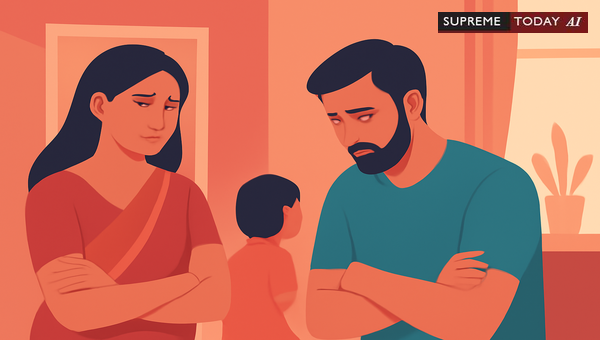
Imagine a couple marries in India, moves to London for a new life, only for the husband to suddenly evict the wife and their young daughter from their home. Devastated and displaced, what can the wife do? Can she turn to for justice, even though the incident occurred abroad? A couple married in India and went to London. In London, the husband removed the wife and daughter from the house. What are the remedies of the wife in ?
This scenario highlights a common challenge for Non-Resident Indian (NRI) families facing marital discord with international elements. generally recognize the wife's rights to protection, residence, custody, and , regardless of where the removal happened. This post explores these remedies under key laws like the Hindu Marriage Act (HMA), 1955, Domestic Violence Act (DV Act), 2005, and others. Note: This is general information, not specific legal advice. Consult a qualified lawyer for your situation.
assert over matrimonial disputes involving Indian citizens or those domiciled in India, even if the marriage occurred abroad or parties reside overseas. The primary factors include the parties' nationality, , and the 's location. have over matrimonial disputes involving Indian citizens or persons with in India, even if the marriage was performed abroad or the parties are residing outside India2018 0 Supreme(Ker) 379.
In cases like those where couples married in India and relocated to the UK (e.g., Watford, Hertfordshire), courts have upheld when one party returns to India seeking relief IND_KAR00000071700_Delhi_CRLMC-1699_2015 2016_DHC_2426. Similarly, the legal framework recognizes that have over matrimonial and family disputes involving Indian citizens or persons of Indian origin, even if the marriage was solemnized abroad2018 0 Supreme(Ker) 379. Foreign elements, such as UK residence, do not automatically oust , especially for 1989 0 Supreme(SC) 191.
When a husband unlawfully removes or detains the wife and child, several remedies are available:
These rights persist even abroad. For instance, in a case where a wife was removed post-marriage in India and relocation to London, courts emphasized her residence rights 2016 Supreme(Online)(DEL) 2293.
The child's welfare is paramount in custody battles. Under the , and , the wife can seek and . prioritize the welfare of the child and have held that the mother’s custody is generally in the child’s best interests2018 0 Supreme(Ker) 379.
Relevant cases underscore this:- In a matter, a child born in India (Nethra) to NRI parents in the UK was deemed best with the mother due to her cardiac condition and family support in India. Ordinarily, the custody of a 'girl' child who is around seven years of age, must ideally be with her mother2017 5 Supreme 379. The court rejected blind comity to foreign orders, focusing on welfare.- rulings affirm: The paramount consideration in child custody cases is the welfare of the child2022 0 Supreme(SC) 615. In one, children were directed back to the US with the mother, considering their established life there, but only after welfare assessment.- Another emphasized: ... cannot override consideration of best interest and welfare of child2019 0 Supreme(SC) 293.
For daughters, maternal custody is often favored, especially young ones, with visitation rights for fathers 2011 0 Supreme(P&H) 1124. claims under CrPC ensure financial support, enforceable against NRIs.
The DV Act is a cornerstone, applicable to NRIs if the wife resides in India or the marriage ties to India. She can seek:- Protection from harassment.- Residence in the matrimonial or shared home.- Compensation for injuries.
The wife can file petitions under the , to secure her residence rights and protection from violence or harassment2019 0 Supreme(Telangana) 97. Courts have granted relief in cross-border cases, like post-UK returns involving alleged violence 2019 0 Supreme(SC) 293.
Civil remedies include suits for divorce on grounds like () if removal constitutes 2010 3 Supreme 689.
may be contested if:- The marriage is void/voidable.- Foreign decrees exist, invoking comity (but welfare trumps) 2010 0 Supreme(SC) 81.- No Indian link.
Cases involving foreign decrees or elements may require consideration of international law principles, but generally assert over Indian citizens or 1989 0 Supreme(SC) 191 2010 0 Supreme(SC) 81. Prompt action is key; delays may invoke , though not strictly in 2017 5 Supreme 379.
In UK-India custody tugs, like a child taken to London then back, courts balance citizenship and connect but prioritize no harm to the child 2018 0 Supreme(AP) 431.
The wife should file a complaint or petition in the Indian family or seeking protection, custody, and 2018 0 Supreme(Ker) 379.
Even if removed from a London home after an India marriage, wives have robust remedies in for residence, protection, custody, and . Key laws like DV Act and HMA provide swift relief, with child welfare as the north star. Cases affirm over NRIs, rejecting foreign dominance where Indian ties exist.
Key Takeaways:- : Yes, for Indian citizens/.- Remedies: , custody, .- Paramount: Child's best interests.
Act decisively, document everything, and seek professional guidance. Indian justice prioritizes family harmony and women's rights.
References: Insights drawn from legal precedents including 2010 3 Supreme 689, 2019 0 Supreme(Telangana) 97, 1989 0 Supreme(SC) 191, 2010 0 Supreme(SC) 81, 2018 0 Supreme(Ker) 379, and case analyses like IND_KAR00000071700_Delhi_CRLMC-1699_2015 2016_DHC_2426, 2017 5 Supreme 379.
#WifeRightsIndia, #NRIChildCustody, #MatrimonialRemedies


After marriage the respondent resided with him as a daughter-in-law in their house in Bapu Nagar. Due to attitude of the respondent his wife Sheela got tense. After a year and a half his son and his daughter-in-law set up their own matrimonial house. ... He pleaded that the marriage between the couple was solemnized on 06/12/1989 as per Hindu custom at Jaipur. Two children, a son named Yash, aged 20 years and a daughter named Priya, aged 14 years when the petition was....

She was protected by the respondent and on occasions, the daughter also went against the father. 15. ... The further serious allegation against the wife is that in 1978 she went to Europe with one "so-called editor" and stayed with him and at that time, the husband discovered that the wife was an unfaithful wife. ... We find from the evidence of the husband himself that they did not have any helping hand in their flat in london. He ....

The defendant returned to Australia in September, 2013 and then after, she went to London in February, 2014 without informing the plaintiff and after returning India from London, she has not contacted the plaintiff. ... At the outset, we would like to observe that the defendant - wife is not residing with plaintiff- husband since 2014 and as we have been told by the learned advocate for the respective parties that currently also, couple is not living together as defen....

as husband and wife. ... 2 went to the parental house of the petitioner No.1 and on 06.12.2005 a wedding reception was hosted in Gurgaon, Haryana. Ultimately, on 07.12.2005, both the newly wedded couple left for London. ... On 07.12.2005, the newly wedded couple left for Watford Hertfordshire, United Kingdom and started residing as husband and wife. ... Learned Senior Counsel for the petitioners further contended that the ....

Learned Senior Counsel for the petitioners further contended that the husband and wife resided together at Watford Herefordshire United Kingdom and never ever resided together in India thereafter. Their son was born on 13.01.2007 at London. ... On 07.12.2005, the newly wedded couple left for Watford Hertfordshire, United Kingdom and started residing as husband and wife. Out of the wedlock of the petitioner No.1 and the respondent No.2, a son – Ronit Kuthiala was born ....
Learned Senior Counsel for the petitioners further contended that the husband and wife resided together at Watford Herefordshire United Kingdom and never ever resided together in India thereafter. Their son was born on 13.01.2007 at London. ... On 07.12.2005, the newly wedded couple left for Watford Hertfordshire, United Kingdom and started residing as husband and wife. Out of the wedlock of the petitioner No.1 and the respondent No.2, a son – Ronit Kuthiala was born ....
as husband and wife. ... 2 went to the parental house of the petitioner No.1 and on 06.12.2005 a wedding reception was hosted in Gurgaon, Haryana. Ultimately, on 07.12.2005, both the newly wedded couple left for London. ... On 07.12.2005, the newly wedded couple left for Watford Hertfordshire, United Kingdom and started residing as husband and wife. ... Learned Senior Counsel for the petitioners further contended that the ....

His request through his advocate to the High Commission of India, India House, London, to trace the respondent and the child went in vain. He sought decree of divorce on the ground of desertion. Notice on respondent was served by paper publication and she was set exparte. ... The parties are not at dispute that they were married on 04.05.1983 and they begot a daughter on 27.05.1984. ... He submits that the daughter of the couple is....

After the marriage, the couple shifted to the U.K. in early 2007 and stayed in Watford. The mother did get an employment in London in 2008, but had to come to her parents’ house in Delhi in June 2009, where she gave birth to Nethra. Thus, Nethra is an Indian citizen by birth. ... After an exchange of legal correspondence between the parties, setting out the numerous differences which had arisen in the marriage, the appellant and her daughter eventually went back to London#HL_....

She also told that Sarnantha has visited India several times and she has also decided to settle in India by marrying an Indian and for this reason they registered her name in the Indian Elite Matrimony- website. ... 7) Accordingly, Samantha visited Bengaluru on 24.07.2021 and stayed with me and she left to London on 26.07.2021 from my house. ... During the marriage, the Muthavalli(priest) insisted them to produce the caste certificate to prove that they were Muslims by religion, which....

After exchange of legal correspondence, the wife and her daughter went back to London in December, 2011, and in January 2012 the daughter was admitted in a nursery in the UK. After the husband arrived in India, the couple went back to the UK in March, 2010 and following certain unsavoury events, the wife and the daughter returned to India in August 2010. In December, 2012, the child was granted the UK citizenship and the husband was also granted the UK citizenship in January 2013. They bought a home in the UK to which they shifted their family.

In July, 2014, the wife returned to India along with her daughter and early 2015 the child became ill and was diagnosed with cardiac disorder and due to the alleged violent behavior of her husband filed complaint against him at the GAW Cell, New Delhi. After exchange of legal correspondence, the wife and her daughter went back to London in December 2011. The wife had conceived in December, 2008 came to New Delhi in June 2009 and stayed there with her parents and she gave birth to a girl child in August, 2009 at Delhi. After the husband arrived in India, the couple....

The wife has conceived in December 2008, came to New Delhi in June 2009 and stayed with her parents and she gave birth to a girl child - Nethra on 07.08.2009 at Delhi. After the husband arrived in India, the couple went back to UK in March, 2010 and following certain unsavoury events, the wife and the daughter returned to India in August 2010. In December, 2012, the child was granted UK citizenship and the husband was also granted UK citizenship in January 2013. After exchange of legal correspondence, the wife and her daughter went back to London in December, 2011....

Almost since then, both the husband and wife are residing separate, though in London. He was taken to London on 27.6.2008 by the mother, but was brought back by the father on 21.8.2008. She filed a Habeas Corpus petition in July, 2009, which was disposed of with liberty to her to file petition under the Act. It is claimed by the mother that after the child was brought back by the father from London, though she visited India number of times but the paternal grand parents of the child did not allow her to meet him.

The 1st complainant purchased a ticket for himself from opposite party No. 3 to go to London to bring back the 2nd complainant (his wife) to India and accordingly he went to London. At that time the 2nd complainant was in an advance stage of pregnancy. The 1st complainant and his wife, the 2nd complainant came to the Terminal L.O. of London Heathrow Air Port on 10.1.1990 with three suit-cases. After completion of the study and research, the 2nd complainant made arrangements for her return journey from London to India.


An indispensable Tool for Legal Professionals, Endorsed by Various High Court and Judicial Officers
Please visit our Training & Support
Center or Contact Us for assistance

Scan Me!
India’s Legal research and Law Firm App, Download now!


For Daily Legal Updates, Join us on :



 Back to top


