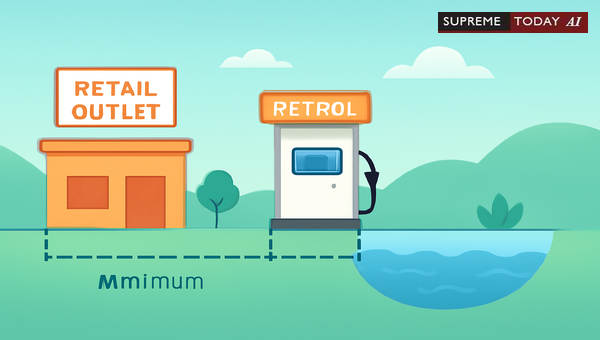
NGT Guidelines on Distance from Water Bodies for Retail Outlets
Setting up a retail outlet, especially petrol pumps, involves strict environmental compliance in India. One critical concern is proximity to water bodies, as contamination risks are high. A common question arises: What is the Distance of Water Bodies from a Retail Outlet According to NGT Guidelines? This post breaks down the National Green Tribunal (NGT) and Central Pollution Control Board (CPCB) rules, drawing from official guidelines and court judgments to help business owners and developers navigate these requirements.
While this information is based on established guidelines, it is general in nature and not specific legal advice. Always consult local authorities or legal experts for your project.
Understanding NGT and CPCB Guidelines
The NGT emphasizes protecting surface water bodies from pollution caused by activities like fuel retail outlets. The key document is the CPCB addendum to guidelines for petrol pump siting, which states: Retail Outlets shall not be located within a distance of 50 meters from the nearest point of water bodies. 2023 0 Supreme(Mad) 2418
This 50-meter minimum distance applies to new retail outlets where construction begins after the guidelines' issuance. It covers all surface water bodies, including:- Lakes- Ponds- Streams- Rivers- Wetlands- Canals- Creeks (as per revenue records)
The rule aims to prevent groundwater and soil contamination from fuel leaks. Similar affirmations appear in NGT orders: Therefore, retail outlets shall not be located within the distance of 50 meters from the nearest point of water bodies. In case of stream and rivers, the distance shall be considered from flood way.
C.DANIELRAJ VS 1. TAMIL NADU POLLUTION CONTROL BOARD REP.BY ITS DISTRICT ENVIRONMENTAL ENGINEER
C.DANIELRAJ VS 1. TAMIL NADU POLLUTION CONTROL BOARD REP.BY ITS DISTRICT ENVIRONMENTAL ENGINEER
How Distance is Measured
Measurement is precise to ensure compliance:- For streams and rivers: From the floodway; if undefined, from the firm banks or edge of the river. 2023 0 Supreme(Mad) 2418 2022 0 Supreme(Ker) 983- For other water bodies: From the nearest point, verified via revenue records.
In one case, a joint committee report noted an outlet at 58m from a lake bank, finding no violation due to compliance with Petroleum Act, 1934, and Petroleum Rules, 2002.
R CHANDRACOUMAR VS
Courts have clarified that minor or man-made ponds not in revenue records may not qualify as protected water bodies. For instance: It is evident that all the surface water bodies irrespective of utility shall be protected... new petrol pumps are not allowed within 50 metres from any surface water bodies included in the Revenue records. 2022 0 Supreme(Ker) 983
Additional Measures for 50-100 Meter Proximity
If a site is between 50 and 100 meters:- Secondary containment required, like double-walled tanks.- Monitoring of groundwater and soil quality mandated. 2023 0 Supreme(Mad) 2418
Further: In case of constraints in providing 50 meters distance, the retail outlet shall implement additional safety measures as prescribed by PESO. 2023 0 Supreme(SC) 224
No retail outlet can be closer than 50 meters without these safeguards, and even then, full compliance is scrutinized.
Relation to Other Regulations
NGT guidelines are activity-specific for petrol retail outlets and differ from others:- CRZ Regulations: 100-meter distance from high tide lines in coastal zones. 2021 0 Supreme(Ker) 602- Kerala Minor Mineral Concession Rules, 2015: 50 meters from reservoirs, tanks, etc., but for quarrying, not retail. 2021 0 Supreme(Ker) 517
Supreme Court and NGT judgments stress context-dependency: distances vary by activity. Oil marketing companies (OMCs) must verify sites, avoiding proximity to schools, hospitals, or water bodies. 2024 Supreme(Online)(NGT) 2007
In a writ petition, refusal of NOC was quashed when no water body existed within 50 meters, despite land classification debates: Going by the mandate in Ext.P13 guidelines, the prohibition to commission a retail outlet is only when there is a water body within 50 meters. 2025 0 Supreme(Ker) 2046
Case Studies from NGT and Courts
Real-world applications highlight enforcement:- Joint Committee Approval: An outlet 58m from a PWD lake was cleared, as no pollution risk under petroleum rules.
R CHANDRACOUMAR VS
-
NOC Disputes: Courts overturned refusals where
revenue records showed no water bodies within 50m, dismissing 'purayidam' land misinterpretations.
2025 0 Supreme(Ker) 2046-
Safety Directives: In challenges near schools, courts upheld NOCs but mandated traffic and safety measures, confirming CPCB compliance.
2022 0 Supreme(Mad) 2078NGT also directs OMCs to follow siting norms strictly, with powers under environmental acts to enforce but not impose unreasonable mandates like universal CTE/CTO. Related judgments modified broad NGT orders to focus on guideline adherence. 2023 0 Supreme(SC) 224
Exceptions and Limitations
- Applies primarily to new petrol pumps/retail outlets.
- Man-made ponds not in revenue records may be exempt. 2022 0 Supreme(Ker) 983
- Local laws or zones (e.g., coastal) may impose stricter rules.
- OMCs bear responsibility for site selection. 2024 Supreme(Online)(NGT) 2007
Recommendations for Compliance
To set up a retail outlet:1. Conduct a site survey using revenue records for water bodies.2. Ensure at least 50m distance; measure correctly for rivers.3. For 50-100m sites, plan secondary containment and monitoring.4. Obtain NOCs from pollution boards and PESO.5. Consult OMCs early, as they verify distances to hospitals, schools (minimum 30m), etc. 2023 0 Supreme(SC) 224
Key Takeaways
- Core Rule: Minimum 50 meters from surface water bodies for new retail outlets. 2023 0 Supreme(Mad) 2418
- Measurement: From nearest point or floodway/bank.
- Extra Safeguards: Needed up to 100m.
- Context-Specific: Not universal; check revenue records and local laws.
In conclusion, adhering to NGT/CPCB's 50-meter guideline protects the environment and avoids legal hurdles. As environmental scrutiny intensifies, proactive compliance is key for sustainable business operations.
References:- 2023 0 Supreme(Mad) 2418: CPCB Guidelines on 50m distance.- 2021 0 Supreme(Ker) 602: CRZ coastal rules.- 2021 0 Supreme(Ker) 517: Kerala mining rules.- Additional NGT orders:
R CHANDRACOUMAR VS
,
C.DANIELRAJ VS 1. TAMIL NADU POLLUTION CONTROL BOARD REP.BY ITS DISTRICT ENVIRONMENTAL ENGINEER
,
2025 0 Supreme(Ker) 2046,
2022 0 Supreme(Ker) 983, etc.
#NGTGuidelines #RetailOutletRules #EnvironmentalLaw