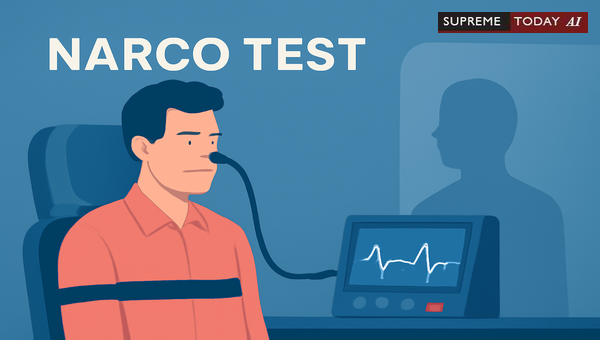
Narco Analysis Test in Krushi Bank Scam Case: What the Law Says
In high-profile financial fraud cases like the Krushi Bank Scam, investigative agencies often turn to scientific methods such as Narco Analysis Tests to uncover truths. But can courts force an accused to undergo such tests? The question Krushi Bank Scam Case on Narco Analysis Test highlights a critical intersection of technology, human rights, and criminal justice in India. This blog delves into the legal framework governing Narco Analysis, drawing from landmark judgments and recent cases to provide clarity.
Recent court orders in the Krushi Bank Scam, where a Sessions Court rejected the accused's request for the test due to objections, underscore longstanding principles. Let's break down the legal position.
Accused's Fundamental Right to Refuse Narco Analysis
The cornerstone of India's stance on Narco Analysis—also known as truth serum testing—is the protection of constitutional rights. The Supreme Court in Selvi and others v. State of Karnataka unequivocally ruled that no accused can be compelled to undergo the test against their will. This violates Article 20(3), which safeguards against self-incrimination, and Article 21, ensuring personal liberty and dignity. 2011 0 Supreme(Guj) 211
In the Krushi Bank context, the Sessions Court's rejection of the accused's own request—ironically, due to their objection—aligns perfectly with this principle. Courts have consistently upheld that forcing the test infringes on the right to silence. As one ruling notes, the order passed by the Sessions Court rejecting the request of the accused to undergo the test, due to their objection, aligns with this legal principle and is upheld as lawful.
Consent is Non-Negotiable
Even when an accused volunteers, consent must be voluntary and informed. Medical fitness is paramount; tests cannot proceed if health risks are present. Courts have flagged orders permitting tests despite health objections as questionable. 2020 0 Supreme(All) 1529 2010 0 Supreme(Bom) 1059
For instance, guidelines mandate a safe environment and prior health checks. Without these, any results risk being invalidated.
Admissibility of Narco Test Evidence: Limited Value
A major debate surrounds the scientific reliability and courtroom use of Narco Analysis revelations. Courts generally view these statements as inadmissible evidence because they are not voluntary and may lack reliability. 2021 0 Supreme(Ker) 923 2008 0 Supreme(AP) 408 2010 0 Supreme(AP) 334
The test serves as an investigative aid, not substantive proof. Self-incriminating or exculpatory statements cannot be used against the accused in trial. 2021 0 Supreme(Ker) 923
02800033303
In a POCSO case, the court emphasized: an accused, who is defending a case cannot unilaterally ask the witnesses or victims to subject themselves for Narco Analysis Test or Polygraphic Test to prove his defense case. 2024 0 Supreme(Ker) 754 The Special Judge dismissed such an application, reinforcing that tests require voluntary consent and aren't conclusive evidence.
Similarly, in another matter, petitioners seeking Narco Tests for defense were denied: evidence from Narco Analysis Tests is not direct and can create hazardous situations; thus, courts should not permit such tests indiscriminately. 2024 Supreme(Online)(RAJ) 29253
Judicial Guidelines and Restrictions
The Supreme Court in Selvi laid down strict protocols:- Voluntary consent via affidavit.- Presence of lawyer and doctor.- Video recording.- No use of results to extract confessions.
Narco Analysis isn't foolproof; false memories or drug-induced inaccuracies plague it. International standards, like those from the UN, also caution against coercive techniques. 2020 0 Supreme(All) 1529 2023 Supreme(Online)(ALL) 2756
In bail applications involving murder charges, courts scrutinized Narco reports alongside other evidence but didn't treat them as decisive. One case noted: From the material collected during investigation, before putting them to Narco test, involvement of applicants in commission of aforementioned crime is prima facie appearing. 2022 0 Supreme(Chh) 36 Yet, bail was denied based on broader evidence, not solely the test.
Insights from Related Cases
Other judgments echo these limits:- Accused Can't Compel Others: In a sexual assault case under POCSO, the accused's bid to test victims was rejected, citing Selvi and self-incrimination rights. 2024 0 Supreme(Ker) 754- Voluntary Requests Scrutinized: Even self-requested tests, like in a defense evidence stage, were deemed inadmissible: the evidence which is recorded in the course of the Narco Analysis Test or Polygraph Test is not an admissible... 2021 Supreme(Online)(MP) 8635- Hazardous and Indirect Evidence: High Courts have quashed orders allowing indiscriminate use, warning of risks. 2024 Supreme(Online)(RAJ) 29253- Investigation Tool Only: In murder probes, Narco was part of thorough checks (e.g., alongside brain mapping), but refusal to cooperate (like DNA samples) raised flags without overriding rights. 2015 0 Supreme(Del) 2453
In a missing persons case turned suspicious deaths, the Supreme Court stayed Narco Tests without court permission, stressing procedural safeguards. 2009 0 Supreme(J&K) 388
| Key Judicial Precedents on Narco Analysis ||-----------------------------------------|| Case | Ruling || Selvi v. State of Karnataka2011 0 Supreme(Guj) 211 | No compulsion; violates Arts. 20(3), 21 || POCSO Defense Application 2024 0 Supreme(Ker) 754 | Accused can't force witnesses || Petition u/s 482 CrPC 2024 Supreme(Online)(RAJ) 29253 | Not direct evidence; hazardous || Bail in Murder Case 2022 0 Supreme(Chh) 36 | Investigative aid, not conclusive |
When Courts Permit Narco Tests
Rarely, courts allow tests with full compliance—voluntary consent, protocols followed. Even then, results aid investigation, not trial proof. SURENDRA KOLI vs C.B.I. - Allahabad (2023)SURENDRA KOLI vs C.B.I. - Allahabad (2023)
For example, an accused volunteering in a Rajasthan High Court matter was considered, but only if no coercion was evident.
SUNIL BHATI vs STATE OF RAJASTHAN
Key Takeaways and Recommendations
- Accused cannot be forced: Uphold right to refuse, backed by Selvi. 2011 0 Supreme(Guj) 211
- Consent and safety first: Health checks mandatory. 2020 0 Supreme(All) 1529
- Investigative, not evidentiary: Results guide probes, not convictions.
- No compelling others: Witnesses/victims protected.
In the Krushi Bank Scam, the court's stance reflects these norms, prioritizing rights over investigative zeal.
Recommendations:- Adhere to protocols for any Narco application.- Rely on traditional evidence for trials.- Respect constitutional safeguards.
This post provides general insights based on judicial trends and is not legal advice. Consult a qualified lawyer for case-specific guidance.
#NarcoAnalysis #IndianLaw #CriminalJustice