Searching Case Laws & Precedent on Legal Query.....!
Analysing the retrieved Case Laws
Scanned Judgements…!



Searching Case Laws & Precedent on Legal Query.....!
Analysing the retrieved Case Laws
Scanned Judgements…!
Muslim Personal Law Does Not Recognize Adoption: Several sources, including Tyabji on Muslim Law (4th Ed., pp. 208-209), Mulla's Principles of Mohammedan Law, and judicial rulings, affirm that adoption is not recognized under Muslim Law. For instance, the 1911 case Niaz-Ud-D-Din Khan explicitly states that adoption cannot be made under Muslim Law.2023 0 Supreme(All) 1658,
Nesar Ahmed Khan VS State of Orissa - Crimes
, 2022 0 Supreme(Kar) 494, 2024 0 Supreme(Kar) 578, 2024 Supreme(Online)(KAR) 39591Legal Rejections of Muslim Adoption: Courts have consistently held that Muslim Law does not acknowledge adoption as a means of inheritance or succession. An example is the Aligarh Division's rejection of an adoption claim based on Muslim Law, emphasizing that such acts are void under Islamic principles.2023 0 Supreme(All) 1658, 2024 Supreme(Online)(KAR) 39591
Exceptions Based on Custom and Civil Law: In some cases, customary practices among Mahawat Muslims or specific regional customs have been recognized, but these are exceptions rather than the rule. The 2014 Supreme Court ruling (Union of India v. Ors.) clarifies that adoption rights for Muslims are primarily governed by civil statutes like the Juvenile Justice Act, 2015, and personal law, allowing some flexibility but not altering the fundamental Islamic stance.2024 0 Supreme(Kar) 578, 2024 Supreme(Online)(KAR) 39591
Legislative and Judicial Developments: The Juvenile Justice (Care and Protection of Children) Act, 2015, provides for adoption procedures applicable to Muslims, but this is an optional statutory framework, and personal law continues to exclude adoption as recognized in Muslim Law. The Court observed that Muslims are free to adopt under civil law but are not bound to do so according to their personal law.2024 0 Supreme(Kar) 578, 2024 Supreme(Online)(KAR) 39591
Implication for Succession and Inheritance: Since adoption is not recognized under Muslim Law, Muslims cannot claim inheritance rights or benefits through adoption. This is reinforced by judicial decisions denying such claims based on the absence of recognition in Islamic scriptures and law.2023 0 Supreme(All) 1658,
Nesar Ahmed Khan VS State of Orissa - Crimes
, 2022 0 Supreme(Kar) 494The prevailing legal stance is that adoption is not recognized under Muslim Personal Law, rooted in classical Islamic jurisprudence and reinforced by judicial rulings. While civil statutes like the Juvenile Justice Act provide a framework for adoption involving Muslims, these are statutory provisions that operate alongside, but do not alter, the fundamental Islamic legal position. Consequently, Muslims cannot legally adopt children in the traditional sense recognized by other personal laws, and any adoption claims based solely on Muslim Law are typically invalid. However, civil law offers an alternative route, allowing Muslims to adopt under statutory provisions, with the understanding that such adoptions do not confer inheritance rights under Islamic law.
References:- Union of India v. Ors, (2014) 4 SCC 1- Tyabji on Muslim Law (4th Ed.)- Mulla's Principles of Mohammedan Law (17th Ed.)- Exploitation of Children in Orphanages, In re, (2017) 7 SCC 578- Various judicial rulings affirming the non-recognition of adoption under Muslim Law
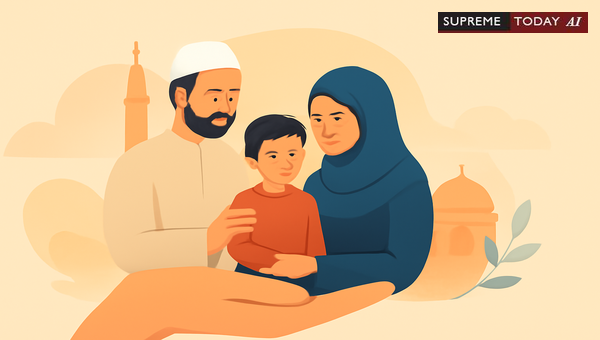
In a diverse nation like India, family laws vary significantly across religions, shaping how families form and grow. One pressing question for many is: Is adoption recognized under Muslim law? This issue often arises for Muslim couples seeking to provide a home for children in need, balancing personal faith with legal realities. While Hindu law has codified adoption under the , Muslim —governed by —takes a distinctly different approach. This blog post delves into the legal position, drawing from judicial precedents, statutes, and scholarly insights to clarify the stance on adoption among Muslims in India.
Disclaimer: This article provides general information based on legal sources and is not a substitute for professional legal advice. Consult a qualified lawyer for advice specific to your situation.
The core principle is clear: Islamic law does not recognize adoption as conferring or akin to biological children.2023 0 Supreme(SC) 1046 As stated in key documents, Islam does not recognize an adopted child to be at par with a biological child. According to the Board, Islamic Law does not recognize an adopted child to be at par with a biological child. 2023 0 Supreme(SC) 1046
This position stems from classical Islamic jurisprudence, affirmed by authorities like Tyabji on Muslim Law (4th Ed., pp. 208-209) and Mulla's Principles of Mohammedan Law. Courts have repeatedly upheld that Muslim excludes adoption. For instance, The of Muslims does not recognize adoption among Muslims. 2024 Supreme(Online)(MAD) 40533
Indian courts have consistently reinforced this non-recognition while navigating secular laws. In , the declined to declare the right to adopt a for Muslims: …elevation of the right to adopt or to be adopted to the status of a … will have to await a dissipation of the conflicting thought processes. 2023 0 Supreme(SC) 1046
High Courts echo this. The held that adoption by a person who is a muslim, cannot be pleaded as there is no concept of adoption known to muslim law. 2013 0 Supreme(Bom) 2291 Similarly, As per the Muslim Law ( Law), adoption is not permissible amongst the Muslims. 2024 Supreme(Online)(J&K) 196
In , the Court noted Muslims may adopt under civil statutes like the Juvenile Justice Act but not under , preserving 's primacy. 2024 0 Supreme(Kar) 578
While traditional adoption is absent, Islam provides , a guardianship-like system for child care without severing biological ties. The (JJ Act)—now —recognizes as an alternative form of child care, but not as adoption per se. 2023 0 Supreme(SC) 1046
Key distinctions:- : Child retains biological parentage and ; guardian provides care, education, and maintenance. Acknowledged by the UN Convention on the Rights of the Child. 2023 0 Supreme(SC) 1046- JJ Act Provisions: Muslims can adopt via this secular law, but their personal laws do not recognise adoption. 2021 0 Supreme(Del) 435 Adoption deeds or claims solely under Muslim law are unsustainable unless following JJ procedures, which conflict with . 2023 0 Supreme(SC) 1046
For passports or guardianship, courts may require orders, but adoption deeds among Muslims face scrutiny: As per common procedure, in the case of Muslims... 2015 0 Supreme(Mad) 3272
Rarely, courts recognize among specific Muslim communities, like Mahawat Muslims, but proof is required, and it's not the norm. No presumption exists without pleadings: Can a civil court presume the existence of the custom of adoption among Muslims... without any pleadings or proof? 2004 0 Supreme(J&K) 328
Without adoption recognition:- No Automatic Inheritance: Adopted children inherit per shares from biological kin, not adoptive parents. 2021 Supreme(Online)(CAT) 1422 2023 0 Supreme(All) 1658- Compassionate Appointments Denied: Claims as adopted son fail. 2021 Supreme(Online)(CAT) 1422- Guardianship via GWA: The , allows custody for Muslims, but not full adoption. 2024 0 Supreme(All) 1182
Muslims opting for JJ Act adoption gain parental rights under statute, but tensions with persist for succession. 2024 0 Supreme(Kar) 578
The JJ Act, , promotes adoption universally, enabling Muslims to participate. In , courts urged statutory compliance. Yet, prevails for religious matters. 2024 Supreme(Online)(KAR) 39591
Scholars like Tahir Mahmood note 's application under excludes adoption. 2023 0 Supreme(Ker) 217
In summary, Muslim does not recognize adoption as a legal institution conferring biological-like rights, prioritizing lineage preservation via . Secular laws like the JJ Act offer pathways, but claims under pure fail. This balance respects religious freedom while providing child welfare options.
Key Takeaways:- Adoption impermissible under Islamic law; is the faith-aligned alternative. 2023 0 Supreme(SC) 1046- Use JJ Act for legal adoption, but inheritance follows . 2021 0 Supreme(Del) 435- Courts reject unsubstantiated adoption claims. 2013 0 Supreme(Bom) 2291- Seek guardianship via GWA or court orders for practical needs.
For Muslim families, understanding these nuances is crucial. If considering adoption, explore JJ Act procedures and consult experts to align with faith and law.
References:1. 2023 0 Supreme(SC) 1046 - on Shabnam Hashmi and .2. 2014 1 Supreme 731 - Constitutional perspectives.3. 2024 Supreme(Online)(MAD) 40533, 2021 Supreme(Online)(CAT) 1422, 2024 Supreme(Online)(J&K) 196, 2021 0 Supreme(Del) 435, and others as cited.
#MuslimAdoption #IslamicLawIndia #AdoptionLaw


Union of India and Ors, (2014) 4 SCC 1, has extended adoption rights to muslims. The Court observed at paragraph no. (13), as follows: “13. ... In the present case, the adoption of the subject child by Muslims is solely regulated by the Juvenile Justice (Care and Protection of Children) Act, 2015 (JJ Act, 2015) and the Rules and Regulations framed thereunder. ... This provides Section 35 of the JJ Act, 2015, a comparable ....

Referring to Tyabji on Muslim Law (4th Ed.) page 208-209, para 228, it was observed, “Adoption is not known to Muslim Law”. 13. Similarly, Mulla's Principles of Mohammedan Law (17th Ed., page 328) states categorically that Mohamedan Law does not recognise adoption. ... The Additional Commissioner, Aligarh Division, Aligarh has rejected the petitioner's claim holding that under the Muslim....

) the rule of decision in cases where the parties are Muslims shall be the Muslim Personal Law (Shariat). ... Syed Ali: 1997 (1) RLR 757 Rajasthan High Court has held that the custom of adoption prevailed in Mahawat Muslims. Even thereafter it has been observed as under:— “(i) Adoption is not known to Muslim Law. ... applicable to all matters relating to Muslims. ... S....

The Personal Law of Muslims does not recognize adoption among Muslims. ... Adoption is not a subject enumerated under Section 2 of the Act, 1937 or the applicability of adoption for Muslims. ... Petitioners' Submission: 3.The learned counsel appearing for the petitioners would submit that the Muslim Personal Law has not recognized the adopt....

Application of personal law to Muslims. ... We extract S.2 of the Muslim Personal Law (Shariat) Application Act below: "2. Application of Personal Law to Muslims. ... Tahir Mahmood, in his book Statute-Law relating to Muslims in India (1995 Edn.), while dealing with the effect of the provisions of Section 125 CrPC on the 1986 Act and the Muslim Personal Law#HL....

It is a settled principle of Mohammedan Law that Mohammedan Law does not recognize adoption (see-Section 347 of Mulla Principles of Mahomedan Law, 20th Edition page 430)." 18. ... Admittedly, the appellant Nos.3 & 4 are the biological parents being Hindus and appellant Nos.1 & 2 are the adoptive parents being Muslims, have entered into an unregistered agreement (Ex.P.1) of an unborn child in the form of ....

Since the Muslim Personal Law does not recognize adoption, no Muslim can claim any benefit by way of adoption. Therefore the applicant cannot claim compassionate appointment on the basis of being the adopted son of the deceased employee.” ... (Shariat) Application Act, 2007, the rule of the decision in all question regarding to succession, inheritance etc. shall be the Muslim Personal Law (Shariat) in cases were parties ar....

Union of India and Ors, (2014) 4 SCC 1, has extended adoption rights to muslims. The Court observed at paragraph no. (13), as follows: “13. ... In the present case, the adoption of the subject child by Muslims is solely regulated by the Juvenile Justice (Care and Protection of Children) Act, 2015 (JJ Act, 2015) and the Rules and Regulations framed thereunder. ... This provides Section 35 of the JJ Act, 2015, a comparable s....

Adoption in India is regulated by three primary laws: the Hindu Adoption and Maintenance Act of 1956, which applies to Hindus, Buddhists, Jains, and Sikhs; the Guardian and Wards Act of 1890, which governs adoption for Muslims, Parsis, Christians, and Jews; and the Juvenile Justice (Care and Protection ... Considering the fact that the petitioner and her mother have decided to give up the child for adoption#HL_EN....

As per the Muslim Law (Shariat Law), adoption is not permissible amongst the Muslims. ... The adoption deed placed on record by respondent No.2 does not indicate that any such custom, permitting Muslims to go for adoption, was prevalent in the area amongst the Muslims. ... Adoption under Muslim Law : 27. ....

As HAMA excludes them, they cannot seek to adopt a child in terms of that Act, including by means of a registered document recording an adoption. In order to fulfil their desires of having a child through adoption, their only option is to come under the JJ Act. However, as far as Muslims and Christians are concerned, their personal laws do not recognise adoption.

A court order is necessary for guardianship and for allowing the child to be taken out of the country, before a passport is issued. Further, the Birth Certificate submitted by the petitioner along with her passport application was referred to the issuing authorities. Further, the petitioner has submitted the adoption deed dated 08.04.1993 duly registered with the Sub-Registrar Office, Velipattinam along with her passport application. As per common procedure, in the case of Muslims, C....

No.2262 of 2005 dated 26.10.2009, the question regarding adoption among muslims was considered, in which the Karnataka High Court held that adoption by a person who is a muslim, cannot be pleaded as there is no concept of adoption known to muslim law. In an unreported judgment of the Karnataka High Court, made in R.S.A.

Ex.D53 is the invitation card printed after the death of Kempamma inviting his relatives to the 11th day ceremony where the second defendant is described as the adoptive son of the said Kempamma. The essence of adoption under the Hindu Law is giving and taking the child in adoption. The natural father has deposed before the Courts saying on the date of adoption, the child was given a bath, he wore new dress and the child sat on the lap of Channapillegowda.

Thus, the provision provides that Law of Sharia will apply to Muslims in the following matters: - Can a civil court presume the existence of the custom of adoption among Muslims at village Handnd-Kulgam without any pleadings or proof in its favour? Matters relating to inheritance in this State are governed by the provisions of Sri Partap Jammu & Kashmir Laws Consolidation Act, 1977 Svt. which was enacted in the year 1920 A.D. Section 4(d) of the Act provides that, in question....


An indispensable Tool for Legal Professionals, Endorsed by Various High Court and Judicial Officers
Please visit our Training & Support
Center or Contact Us for assistance

Scan Me!
India’s Legal research and Law Firm App, Download now!


For Daily Legal Updates, Join us on :



 Back to top


