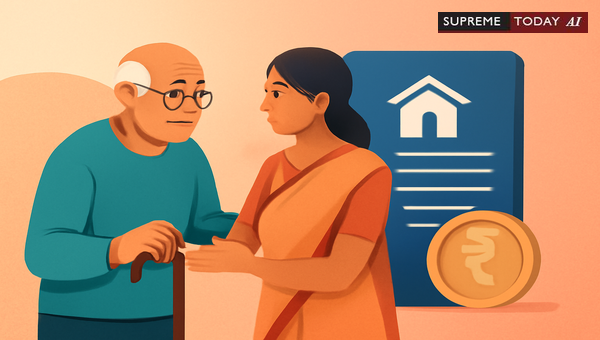
Senior Citizen Legal Aid in India: Key Rights Explained
In an aging population like India's, where over 138 million seniors call the country home, ensuring their dignity and welfare is paramount. Many seniors face challenges such as neglect by family, property disputes, and limited access to justice due to financial or health constraints. This is where Senior Citizen Legal Aid becomes crucial. But what does the law say about Senior Citizen Legal Aid? This blog dives deep into the Maintenance and Welfare of Parents and Senior Citizens Act, 2007 (the Act), constitutional provisions, court interpretations, and practical insights to empower elderly individuals and their advocates.
We'll cover rights to maintenance, property protections, legal representation, key court findings, and recommendations—drawing from landmark judgments and related cases. Note: This is general information and not specific legal advice. Consult a qualified lawyer for your situation.
Overview of the Maintenance and Welfare of Parents and Senior Citizens Act, 2007
The Act provides a robust framework for the maintenance and welfare of senior citizens (aged 60 and above) in India. It mandates children and relatives to support seniors unable to maintain themselves, ensuring they can lead a normal life. Beyond financial aid, it addresses property transfers conditioned on care, tribunals for quick redressal, and welfare measures like old age homes.
The legislation aligns with Article 39A of the Constitution, which directs the State to offer free legal aid, making justice accessible regardless of economic status 2019 0 Supreme(Guj) 143 2021 0 Supreme(Ker) 444. This constitutional mandate underscores that legal aid is not a privilege but a right, especially for vulnerable groups like seniors.
Key Legal Provisions: Right to Maintenance and Property Protection
Right to Maintenance (Section 4)
Under Section 4, a senior citizen unable to maintain themselves can claim maintenance from children or relatives—up to Rs. 10,000 monthly, though courts may award more based on needs. This ensures basics like food, shelter, clothing, and medical care for a normal life 2020 0 Supreme(Bom) 407.
Failure to provide maintenance can lead to tribunal orders. In practice, tribunals prioritize seniors' pleas, often granting interim relief swiftly.
Property Transfers and Reclamation (Section 23)
A pivotal provision: If a senior transfers property (via gift or sale) on the condition that the recipient provides basic amenities and maintenance, but the transferee reneges, the senior can seek to void the transfer 2024 0 Supreme(P&H) 65 2020 0 Supreme(Bom) 407. Courts have upheld this, allowing reclamation even after years, provided the condition is proven—typically via registered documents.
For instance, in property disputes, seniors have successfully canceled transfers due to non-fulfillment 2024 0 Supreme(P&H) 65 2023 0 Supreme(Mad) 3288. This protects against exploitation, common in family settings.
Legal Aid and Representation: Breaking Barriers
Access to justice hinges on representation. Article 39A mandates free legal aid for the needy, covering court fees, lawyers, and more 2019 0 Supreme(Guj) 143 2021 0 Supreme(Ker) 444.
Initially, Section 17 of the Act barred legal representation in tribunal proceedings to expedite matters, but this faced challenges as unconstitutional, clashing with the right to counsel under the Advocates Act 2014 0 Supreme(P&H) 1103 2021 0 Supreme(Ker) 444. Courts have since permitted lawyers, deeming the bar outdated.
Moreover, Section 16 appeals are open to any aggrieved party, not just seniors, reinforcing fair hearings 2014 0 Supreme(P&H) 1103. Legal aid societies and NGOs often step in, providing pro bono services.
Court Findings: Real-World Applications
Indian courts have shaped the Act through progressive rulings, emphasizing evidence-based protections.
Property and Maintenance Disputes: Tribunals and high courts consistently reclaim properties when maintenance conditions fail. One case highlighted a senior's success in voiding a transfer post-betrayal 2024 0 Supreme(P&H) 65 2023 0 Supreme(Mad) 3288.
Eviction Rights: Seniors in their own homes can evict unauthorized occupants (even relatives) via tribunals, but must show prima facie misconduct or maintenance neglect 2018 0 Supreme(P&H) 1573. Courts demand evidence, preventing misuse.
Broader Senior Protections: In rental disputes, senior landlords (e.g., a 73-year-old widow) have secured possession for reconstruction when premises were unsafe, as HDMC notices confirmed dilapidation. The court dismissed tenant objections, prioritizing the landlady's needs under rent laws 2019 0 Supreme(Kar) 1903. The petition premises is unsafe and HDMC Authorities have given notices to both the parties on 31.01.2005 and 05.05.2007. The petitioner is senior citizen, aged about 73 years.
In criminal appeals, courts consider seniors' age leniently. An appellant aged 72 was acquitted due to weak circumstantial evidence—no blood or semen on clothes—highlighting the prosecution's burden of proof beyond doubt 2019 0 Supreme(Bom) 1999 2019 0 Supreme(Bom) 2522. C.A. report does not support the case of the prosecution as no blood stains or semen were found on the clothes. The appellant is a senior citizen aged about 72 years.
Employment disputes also factor age: A senior appellant's proceedings were expedited with costs for delays, stressing fair play 2017 0 Supreme(P&H) 1183.
These rulings integrate the Act with rent laws, CrPC, and IPC, broadening senior safeguards.
Integrating Additional Protections and Certificates
Beyond the Act, seniors benefit from certificates aiding legal claims:- Senior Citizen Certificate: Essential for Act benefits, tribunals, and pensions.- Permanent Residence/SC/ST Certificates: Useful in welfare schemes or disputes 2019 0 Supreme(Megh) 72.
Courts urge quick issuance, treating provisional ones as final to avoid delays in justice.
Recommendations for Seniors and Advocates
Conclusion: Empowering Seniors Through Law
The Maintenance and Welfare of Parents and Senior Citizens Act, 2007, fortified by constitutional rights and judicial evolution, offers vital tools for senior citizen legal aid. From maintenance claims to property reclamation and eviction, seniors have enforceable remedies. Recent interpretations ensure legal representation, aligning with justice for all.
Key takeaways:- Claim maintenance under Section 4 if unsupported.- Void neglectful property transfers via Section 23.- Access free aid under Article 39A.- Tribunals provide speedy relief—act promptly.
Stay informed, document everything, and seek help early. For personalized guidance, contact local legal aid services.
References:2020 0 Supreme(Bom) 407 2024 0 Supreme(P&H) 65 2023 0 Supreme(Mad) 3288 2014 0 Supreme(P&H) 1103 2021 0 Supreme(Ker) 444 2018 0 Supreme(P&H) 1573 2019 0 Supreme(Kar) 1903 2019 0 Supreme(Megh) 72 2019 0 Supreme(Bom) 1999 2019 0 Supreme(Bom) 2522 2017 0 Supreme(P&H) 1183
#SeniorCitizenRights, #LegalAidIndia, #ElderlyLaw