Searching Case Laws & Precedent on Legal Query.....!
Analysing the retrieved Case Laws
Scanned Judgements…!



Searching Case Laws & Precedent on Legal Query.....!
Analysing the retrieved Case Laws
Scanned Judgements…!
Bail Bond Amount - The amount of bail bond imposed by a Judicial Magistrate varies based on case specifics, but generally ranges from Rs.15,000 to Rs.2,60,00,000 depending on the case severity and court discretion ["
D.K. Sudhir Kumar vs The State of T.S - Telangana
"], ["Jamaludheen Farooque VS Muneer Ahmed - Crimes
"].Factors Influencing Bail Amount - Courts consider case details, involved property value, and the nature of the offense. For example, in some cases, bail bonds of Rs.50,000 to Rs.2,00,000 are set, while in others, bonds can be significantly higher based on the circumstances ["2023 0 Supreme(Ker) 899"], ["2025 Supreme(Online)(Jhk) 4012"].
Legal Standards - Under Section 440 of the Cr.P.C., the bail bond amount should not be excessive and must be proportionate to the case. The purpose of bail bonds is to secure the accused’s presence, not to serve as a guarantee for the amount involved in the case ["2023 0 Supreme(P&H) 2506"].
Court Discretion - Magistrates have the authority to impose bail bonds with specific amounts and sureties, and they can also accept personal bonds or cash deposits as alternatives. The amount is at the court’s discretion, considering the accused's financial capacity and case details ["2024 0 Supreme(Raj) 519"], ["2023 0 Supreme(Del) 218"].
Impact on Poor Accused - Excessively high bail bonds can hinder poor accused persons from securing bail, emphasizing the need for reasonable and just bail amounts ["2023 0 Supreme(Del) 218"].
Analysis and Conclusion:A Judicial Magistrate has the authority to impose bail bonds typically ranging from Rs.15,000 to Rs.2,60,00,000 depending on case specifics, severity, and judicial discretion. The primary considerations include ensuring the bond is not excessive, aligns with the case's nature, and is feasible for the accused. Courts also have flexibility to accept personal bonds or cash deposits, aiming to balance the security of appearance with justice for the accused Section 440 Cr.P.C..
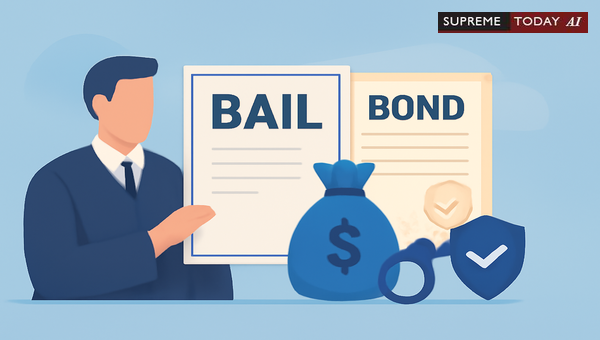
In the Indian criminal justice system, the question of whether a magistrate has power to grant bail in cases trial by sessions court often arises, especially in . This issue is critical as it intersects with the fundamental right to liberty under . While handle trials for serious offenses, magistrates play a pivotal role in initial bail decisions under (Cr.P.C.). However, any bail granted must come with , particularly regarding bond amounts, to avoid frustrating the accused's rights. This post delves into the legal framework, judicial precedents, and practical considerations, drawing from statutory provisions and case law. Note: This is general information and not specific legal advice; consult a qualified lawyer for your case.
Under , a Judicial Magistrate can grant bail in , even if the case is triable by a Sessions Court, provided the offense is not punishable with death or life imprisonment in certain circumstances. The amount of bail bond imposed must be reasonable, proportionate to the circumstances of the case, and not excessive or onerous, as mandated by 2021 0 Supreme(P&H) 729 2022 0 Supreme(P&H) 1239.
The law does not prescribe a fixed maximum or minimum amount for ; instead, the amount should be fixed with due regard to the circumstances of the case and the financial capacity of the accused. 2021 0 Supreme(P&H) 729 2022 0 Supreme(P&H) 1239. Courts may accept as proof of surety sufficiency 2012 3 Supreme 292. This ensures bail is accessible, preventing undue detention due to financial barriers.
and the have consistently ruled against excessively high or mechanically fixed bail amounts, deeming them arbitrary and oppressive, which can amount to a denial of bail. For instance, demanding a bond of Rs. 3 Crores without justification has been struck down as an abuse of discretion 2021 0 Supreme(P&H) 729.
In a notable observation, courts are urged to adopt a liberal and individualized approach, considering the accused’s ability to pay and the nature of the offense 1978 0 Supreme(SC) 224 1984 0 Supreme(SC) 168. The has emphasized that fixing an exorbitant bond amount is unjust and can amount to a denial of bail 1978 0 Supreme(SC) 224.
Imposing disproportionate bonds, such as Rs. 3 Crores for a minor offense under or requiring high cash security without basis, violates . Such practices lead to unjust incarceration 1978 0 Supreme(SC) 224 1992 0 Supreme(SC) 639. Flexibility in discretion is key, factoring in gravity of offense, financial status, community ties, and flight risk 2012 3 Supreme 292 2025 0 Supreme(SC) 1130.
Several judgments reinforce that bail conditions must not defeat the grant of bail. In one case, the court directed that the sureties offered are to be treated as sufficient for releasing the petitioner on bail, highlighting that the right to under is fundamental and cannot be frustrated by unreasonable conditions 2024 0 Supreme(Ker) 220. The sufficiency of sureties depends not just on solvency but on ensuring the accused's presence at trial.
The has famously stated, – To grant bail and thereafter to impose excessive and onerous conditions, is to take away with left hand what is given with right.2024 6 Supreme 239. In multi-state FIRs, the same sureties can be permitted across cases to balance liberty and accountability under Article 21.
Further, onerous preconditions like depositing 50% of alleged misappropriation (e.g., Rs. 2,32,600) were set aside, with courts directing modest bonds like Rs. 10,000 with one surety 2023 0 Supreme(Mad) 1288. Similarly, demands for multiple sureties or property documents without basis are arbitrary, especially for the poor who find it difficult to furnish bail even in a small amount 2023 0 Supreme(All) 579.
In scenarios, the right to furnish bonds persists post-charge sheet filing, as held in precedents like M. Ravindran vs. Intelligence Officer2024 0 Supreme(Gau) 290. Courts have also modified conditions to avoid mechanical approaches, allowing or single sureties where personal ones are unavailable 2017 0 Supreme(Mad) 835.
Higher bonds may apply in serious offenses or absconding risks, but must be justified with cogent reasons2021 0 Supreme(P&H) 729. Uniform schedules or rote responses neglect individualized assessments, as cautioned in recent rulings 2023 0 Supreme(All) 579.
To uphold justice:- Assess financial capacity and offense nature before fixing bonds.- Avoid excessive amounts to prevent detention; use affidavits over original documents.- Exercise discretion judiciously, aligning with constitutional principles.- For accused: Offer solvent sureties promptly; challenge unreasonable terms via higher courts.
Magistrates indeed possess the power to grant bail in sessions triable cases, but the cornerstone is reasonableness in bond amounts. As reiterated across precedents, the amount of bail bond imposed by a Magistrate must be reasonable, proportionate, and justified by the facts and circumstances of each case; fixed excessively high amounts are not permissible and can be challenged as arbitrary. 2021 0 Supreme(P&H) 729. This approach protects Article 21 rights while ensuring trial presence.
Key Takeaways:- must reflect case specifics and accused's means.- Excessive conditions frustrate bail and invite judicial review.- Seek professional advice to navigate bail applications effectively.
References:1. 2021 0 Supreme(P&H) 729 - Reasonableness of .2. 1978 0 Supreme(SC) 224 - Individualized approach.3. 2012 3 Supreme 292 - Cr.P.C. Sections 440, 441.4. 1984 0 Supreme(SC) 168 - Abuse of discretion.5. 2024 0 Supreme(Ker) 220 - Sufficiency of sureties.6. 2024 6 Supreme 239 - Excessive bail principle.
Stay informed on evolving bail jurisprudence to safeguard your rights.
#BailLawIndia, #MagistrateBail, #CrPCBail


(i) The petitioner/A-1 shatt be reteased on bail on his executing a personal bond to the tune of Rs.15,000/- (Rupees fifteen thousand onty) with two sureties each to the tike amount to the ... satisfact'ion of the XXlll Metropotitan Magistrate at MedchaL. ... The petitioner/A-1 is ready to abide by any condition that may be inposed by this Court in the event of his enlargement on bait. ... \ ]t ORDER CRL....

In this context, this Court is compelled to observe that the learned Additional Chief Judicial Magistrate, Thiruvananthapuram, ought to fix a reasonable bond amount, and in the circumstances, the sureties offered are to be treated as sufficient for releasing the petitioner on bail. ... The amount of the bail bond is provided as a measure of the quantum....

This discrimination arises even if the amount of the bail fixed by the Magistrate is not high, for a large majority of those who are brought before the Courts in criminal cases are so poor that they would find it difficult to furnish bail even in a small amount.” ... The poor find it difficult to furnish bail even without sureties because very often the amount of the #H....

amount. ... The only law point to be decided here in this petition is whether right of the petitioner to furnish bail bond, after granting of default bail by the learned Chief Judicial Magistrate, Dhubri on account of failing to submit charge sheet by the I.O. and to be released, exists after subsequent filing of ... It is to be noted here that vide impugned order dated 27.02.2023, the l....

The petitioner also submits that he has fulfilled the conditions of bail with respect to the order passed by the Learned Additional Chief Judicial Magistrate, Thalassery, Kerala in FIR No. 53 of 2020 registered at P.S. Pinarayi, Kerala. 6. ... Insofar as FIR No. 343 of 2020 is concerned, charge-sheet has been filed on 14.07.2022 for the offences under Sections 420, 406 and 506 of IPC against the petitioner before the Learned Additional Chie....

Considering the aforesaid aspects of the matter, the petitioner is directed to be released on bail by the concerned trial court fixing the amount of bail bond and number of sureties and other terms and conditions imposed by the Court. Petition Allowed. ... It is further submitted that the learned trial court has rejected the prayer for bail of the petitioner simply on the ground that huge amoun....

The learned Judicial Magistrate-IV, Salem has granted bail to the petitioner imposing a condition to deposit 50% of the alleged misappropriation amount i.e., Rs.2,32,600/- to the credit of Cr.No.02 of 2021. ... Accordingly, the petitioner is directed to be released on a condition that “the petitioner shall execute her own bond for a sum of Rs.10,000/- with one surety for a likesum to the satisfaction of t....

While granting bail, the Court can direct the accused to execute bail bond. As per Section 440 Cr.P.C., 1973 the bond amount should not be excessive. ... In anticipatory bail, the surety bail bonds have to be to the satisfaction of the Investigator/Arresting Officer, and the financial instruments for security must be drawn up in the name of the concerned Chief #HL_START....

(4) The Court of a Chief Metropolitan Magistrate shall have the powers of the Court of a Chief Judicial Magistrate and that of a Metropolitan Magistrate, the powers of the Court of a Magistrate of the first class. 15. ... , be released on bail to the satisfaction of the Magistrate, unless for reasons to be recorded in writing, the Magistrate otherwise....

ORDER The petitioners were accused Nos.2 to 4 in S.T.No.908 of 2019 of the Special Judicial First Class Magistrate (N.I. Act Cases), Kozhikode. ... State of Kerala, [2024 (2) KLT 698], it is argued that the conditions of bail and the amount fixed for bail bonds cannot become an unjust source of captivity or detention. 3. I heard the learned Public Prosecutor also. ... Surprisingly, by the same order, th....

i) The applicant shall provide his mobile number to the concerned IO/SHO and shall keep his mobile phone switched on at all times; The applicant is, therefore, directed to be released on bail on furnishing a bail bond for a sum of 25,000 with one surety of the like amount to the satisfaction of the learned Trial Court/ Duty Metropolitan Magistrate, subject to the following terms and conditions:

i) The applicant shall provide his mobile number to the concerned IO/SHO and shall keep his mobile phone switched on at all times; The applicant is, therefore, directed to be released on bail on furnishing a bail bond for a sum of 50,000 with two sureties of the like amount to the satisfaction of the learned Trial Court/Duty Metropolitan Magistrate, subject to the following terms and conditions:

(iv) The amount of bail bond, surety bond shall not be excessive and it should be reasonable. (v) It is made clear that production of property documents or V.A.O. Within 15 days from the date of receipt of a copy of this order, the petitioner shall execute the bail bond as per the terms and conditions of this Court order in Crl.O.P.No.2891 of 2017, dated 21.2.2017 and as per the directions of this order. Certificate, Tahsildar Certificate, Solvency Certificate, R.C. book shal....

6. Consequently, the petitioner above named is directed to be released on bail on furnishing bail bond of Rs.10,000/- (ten thousand) with two sureties of the like amount each to the satisfaction of the learned Principal Magistrate. Pakur in connection with Littipara P.S. Case No. 21 of 2011 corresponding to G.R. No. 399 of 2011 on giving undertaking by the father of the petitioner that the petitioner would not be allowed to come in association with the criminal.

7. In this view of the matter in case the appellants appear before the concerned Magistrate, they shall be enlarged on bail on their furnishing a personal bond in a sum of Rs. 15,000/- and a surety bond each in the like amount to the satisfaction of concerning Magistrate.


An indispensable Tool for Legal Professionals, Endorsed by Various High Court and Judicial Officers
Please visit our Training & Support
Center or Contact Us for assistance

Scan Me!
India’s Legal research and Law Firm App, Download now!


For Daily Legal Updates, Join us on :



 Back to top


