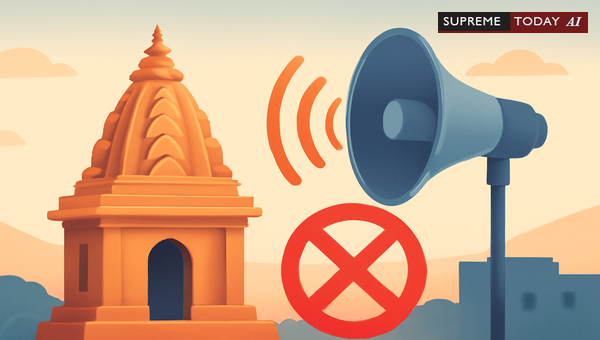
Loudspeakers in Temples: Legal Rules on Neighbor Disturbance
In bustling neighborhoods across India, the call to prayer or devotional songs from temples often fills the air. But what happens when the volume turns too high, disrupting sleep, work, or daily life for nearby residents? A common question arises: Whether Loud Speaker can be Used in Temples in a Loud Voice Causing Disturbments to the Neighbours?
This issue pits religious freedom against the right to a peaceful environment. While temples hold cultural and spiritual significance, excessive noise from loudspeakers can lead to complaints, legal battles, and court interventions. This post breaks down the legal framework, key rulings, and practical advice to help temples and residents navigate these regulations. Note: This is general information, not specific legal advice—consult a lawyer for your situation.
Legal Framework Governing Loudspeakers in Religious Places
India's laws strictly regulate the use of loudspeakers and public address systems to combat noise pollution, especially in residential areas. The primary rules stem from the Noise Pollution (Regulation and Control) Rules, 2000, and local bylaws enforced by authorities like police and municipal corporations.
1. Mandatory Permission Requirement
No loudspeaker can be used without prior written permission from the relevant authority. This is non-negotiable for public places, including temples. 2021 0 Supreme(Mad) 2218 2023 0 Supreme(Mad) 1587 As one source notes, a loudspeaker or a public address system shall not be used except after obtaining
M.Duraisamy vs The District Collector - Madras
. Temples must apply to district magistrates or police commissioners, specifying purpose, duration, and volume controls.
2. Strict Time Restrictions
Loudspeakers are banned at night—typically after 10 PM—except in closed premises like auditoriums during emergencies. 2021 0 Supreme(Mad) 2218 2023 0 Supreme(Mad) 1587 This prevents disturbances during rest hours. Courts have reinforced that religious activities cannot override these timings, even during festivals.
3. Noise Level Limits
The noise at the boundary of the premises must not exceed permissible decibels: usually 55 dB daytime in residential areas, dropping to 45 dB at night. Exceeding this constitutes a violation. 2016 0 Supreme(All) 348 Devices should be box type with sound limiters, especially outside temples. 2021 0 Supreme(Ker) 800 2021 Supreme(Online)(KER) 25623 2021 Supreme(Online)(MAD) 43457
4. Prohibition on Disturbances
Public worship must not interrupt solemnity or cause nuisance. Loudspeakers causing disturbances to neighbors are illegal. 2023 0 Supreme(Ker) 918 Courts emphasize balancing religious rights with others' peace: Religious practices cannot justify excessive noise that disrupts the peace of others. 2000 0 Supreme(Ker) 404 2018 0 Supreme(Mad) 1659
Key Court Rulings and Case Insights
Indian courts have repeatedly addressed loudspeaker misuse in temples, mosques, and churches, prioritizing community harmony.
Permission and Limits Upheld: In a Uttar Pradesh case, temples and mosques were allowed microphones/loudspeakers within permissible limit, but banned during exams and per state rules.
ABDUL KAYYUM vs SRI NEERAJ GUTPA PRIN. SECY. HOME LKO. AND 3 OTHERS - Allahabad
This shows conditional approval is possible.Nuisance from Religious Gatherings: Prayer meetings with 200-500 attendees using loudspeakers in residential areas were deemed a nuisance to the neighbours. Vehicles parking and blocking roads compounded issues. 2010 0 Supreme(Mad) 3138 2010 0 Supreme(Mad) 3114
Historical vs. Modern Use: Villages with longstanding temples and mosques saw peace until loudspeakers were added atop structures or trees. 2013 0 Supreme(All) 1492 Courts intervened to restore balance.
Exceptional Use Only: Loudspeakers should be used only as an exception, and the same should be permitted only in extreme cases of necessity. 2002 0 Supreme(Ker) 259 Religious institutions often claim minimal use (e.g., Sundays 8-10 AM), but violations lead to restraints. 2024 Supreme(Online)(KER) 53589 2024 Supreme(Online)(KER) 13346 2024 Supreme(Online)(Ker) 59644
Broader Noise Controls: Even generators near religious sites must meet standards, highlighting comprehensive regulation. 2005 0 Supreme(Del) 427
These cases illustrate that while religious expression is protected under Article 25 of the Constitution, it cannot infringe on others' rights under Article 21 (right to life and peaceful environment).
Common Complaints and Neighbor Rights
Residents frequently report early morning aartis or bhajans blaring at 130 dB, far above limits. 2024 Supreme(Online)(NGT) 3994 2024 Supreme(Online)(NGT) 3977 2021 Supreme(Online)(MAD) 43457 Photographs of loudspeakers on temple tops fuel disputes. 2013 0 Supreme(All) 1492 Authorities can seize equipment, impose fines (up to ₹1 lakh), or grant injunctions.
Temples counter that usage is limited and permissions obtained, but proof is key. Courts balance: religious freedom yes, but not at the cost of public health.
Practical Recommendations for Compliance
To avoid legal troubles:
Secure Permissions Early: Apply well in advance, detailing setup and controls. 2021 0 Supreme(Mad) 2218 2023 0 Supreme(Mad) 1587
Install Monitors: Use decibel meters and directional speakers to contain sound. Limit to box-type with limiters.
Adhere to Timings: No use post-10 PM; prefer mornings before 10 AM.
Alternatives: Microphones for indoors, community announcements via apps, or unamplified singing to preserve sanctity without disturbance. 2023 0 Supreme(Ker) 918
Community Dialogue: Engage neighbors via resident associations for mutual understanding.
Authorities enforce via patrols and apps for complaints. Temples fostering goodwill reduce litigation.
Conclusion and Key Takeaways
Loudspeakers in temples are permissible but heavily regulated. High volumes causing neighbor disturbances violate noise laws, permissions, timings, and decibel limits. Courts consistently rule against excessive use, as seen in multiple precedents. 2000 0 Supreme(Ker) 404 2018 0 Supreme(Mad) 1659
Key Takeaways:- Always obtain written permission. 2021 0 Supreme(Mad) 2218 2023 0 Supreme(Mad) 1587- Respect time and noise limits to avoid fines or shutdowns.- Prioritize peace—religious devotion thrives in harmony, not cacophony.- Religious rights end where neighbors' peace begins.
For tailored advice, contact local authorities or a legal expert. Stay informed, stay compliant.
Word count: 1028. References include court documents like 2021 0 Supreme(Mad) 2218, 2016 0 Supreme(All) 348, and others cited inline. This post draws from verified legal sources for educational purposes.
#TempleLoudspeakers, #NoisePollutionLaws, #ReligiousNoiseRules