


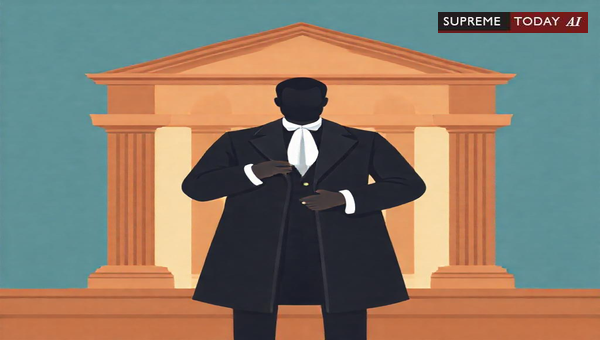
Whether an Advocate Must Wear a Gown in Kerala Courts and Before Tribunals and Authorities
One of the most frequently asked questions by young lawyers in the State is whether an advocate's gown is mandatory in Kerala. The short answer is that it depends on the forum. Before the and the High Courts, the gown is prescribed attire. Before subordinate courts, tribunals and quasi-judicial authorities in Kerala, however, judicial pronouncements have consistently treated the gown as optional, even though the black coat and white bands remain part of the prescribed dress.
The Statutory Framework:
The dress of advocates in India is governed by a division of powers under the :
- empowers the High Court to make rules laying down the conditions subject to which an advocate shall be permitted to practise in the High Court and in the courts subordinate to it.
- empowers the to frame rules prescribing the dress or robes to be worn by advocates.
Any dress code prescribed under these provisions must be reasonable and cannot override the 's rules. The exercised its power under Section 34 by framing rules dated , laying down the conditions for practising before the High Court and the courts subordinate to it 1989 0 Supreme(Ker) 160.
The Kerala Position: Gown Is Optional Before Tribunals and Authorities
A significant clarification on this question came from the itself. In a petition arising from the insistence by the Joint Commissioner of Excise, Trivandrum, that an advocate wear full robes before being heard in an Abkari appeal, the Court examined the dress regulations for advocates appearing before different forums 1989 0 Supreme(Ker) 160.
The Court held that the dress regulations for advocates appearing before tribunals and authorities did not mandate the wearing of bands and the Advocates' gown. It expressly described the insistence on wearing bands and the Advocates' gown before tribunals and authorities as 1989 0 Supreme(Ker) 160. For male advocates appearing before such forums, the rules require a specific type of black coat, white shirt, and bands or a black tie — with the Advocates' gown being optional 1989 0 Supreme(Ker) 160.
The View: Gown Optional Outside the and High Courts
This Kerala position finds support in a ruling from the dealing with a dress code imposed by the (NCLT). The Court quashed the Tribunal's order, holding that the NCLT lacked jurisdiction to prescribe a dress code and that the power under is not an enabling provision for that purpose when it conflicts with Bar Council rules 2023 Supreme(Online)(Mad) 49874.
The Court observed:
Thus, it could be inferred from the reading of the above-stated legal provisions that the before any courts other than the or the High Courts 2023 Supreme(Online)(Mad) 49874.
The Bar Council's own prescriptions are to the same effect: wearing of an advocate's gown shall be optional except when appearing in the or in High Courts, and except in the and High Courts, wearing of a black coat during summer is not mandatory 2023 Supreme(Online)(Mad) 49874 and 2025 Supreme(Online)(Guj) 6722.
Challenges to the Kerala Dress Code Itself
The broader dress code in Kerala — — has itself been challenged. In one writ petition, a lawyer argued that the rules framed by the and the Bar Council caused severe hardship, forcing advocates to wear heavy attire even during summer 2015 0 Supreme(Ker) 1276. The Court upheld the validity and reasonableness of the dress code rules, emphasizing the distinction and decorum they bring to the legal profession and holding them conducive to the dispensation of justice 2015 0 Supreme(Ker) 1276.
More recently, in a 2025 writ petition (, ), the Court noted that as regards lawyers appearing before it, the wearing of the gown alone is made optional, with certain modified provisions remaining valid only till 2025 Supreme(Online)(Ker) 21260. This reflects a continuing evolution of the rules on advocate attire in the State.
Related Principles from Other High Courts
Other decisions reinforce the framework:
- A High Court upheld dress rules under the , holding that it may regulate the in court even though the falls within the Bar Council's domain, and that refusal of audience for non-compliance with the dress code was lawful 1974 Supreme(Online)(All) 4.
- The has applied the same decorum requirements to virtual hearings, holding that advocates who fail to wear professional attire risk withdrawal of their 2025 Supreme(Online)(Guj) 6722.
- The origin of the gown itself has been traced to the gown of clergymen, since the Bar in England in its formative period consisted of clergy engaged in public service 2007 0 Supreme(All) 492.
Key Takeaways
- In the and High Courts (including the ): the gown forms part of the prescribed dress, though recent Kerala rules have made even the gown optional for lawyers appearing before the High Court, subject to time-bound modifications 2025 Supreme(Online)(Ker) 21260.
- Before tribunals, authorities and subordinate forums in Kerala: the gown is optional; insisting on it is misconceived, and the essential requirement is a black coat (or black tie alternative) with white shirt and bands 1989 0 Supreme(Ker) 160.
- Tribunals cannot impose their own dress codes: only the High Courts under and the under of the can regulate advocate attire 2023 Supreme(Online)(Mad) 49874.
- Compliance still matters: proper professional attire conditions the , and non-compliance may result in refusal of appearance 1974 Supreme(Online)(All) 4 and 2025 Supreme(Online)(Guj) 6722.
In summary, while the ceremonial black gown remains a symbol of the profession's heritage, it is generally not mandatory for advocates appearing before tribunals and authorities in Kerala. Practitioners should, however, verify the current notifications of the , as the rules have been revised from time to time. This article is general information and not a substitute for advice on a specific situation.
#AdvocateDressCode #KeralaHighCourt #AdvocatesAct #BarCouncilOfIndia #LegalProfession









