Searching Case Laws & Precedent on Legal Query.....!
Analysing the retrieved Case Laws
Scanned Judgements…!



Searching Case Laws & Precedent on Legal Query.....!
Analysing the retrieved Case Laws
Scanned Judgements…!
In some cases, dislocation of a tooth has been linked to more serious injuries like cervical vertebrae dislocation or death, underscoring the significance of dislocation as a potentially grievous injury ["2025 0 Supreme(Jhk) 1390"].
Analysis and Conclusion:
References:- ["2004 0 Supreme(AP) 1139"]- ["2016 0 Supreme(HP) 1223"]- ["1974 0 Supreme(All) 38"]- ["1969 0 Supreme(Pat) 116"]- ["2023 Supreme(Online)(KAR) 14707"]- ["MANGESH NANDA KHEDEKAR vs THE STATE OF MAHARASTHRA - Bombay"]- ["2018 0 Supreme(Jhk) 278"]- ["2023 Supreme(Online)(AP) 23984"]- ["2025 0 Supreme(Jhk) 1390"]
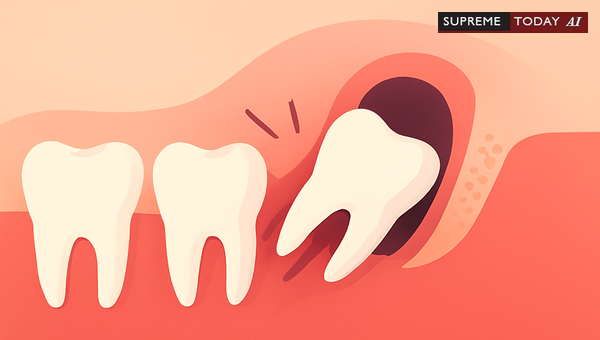
In personal injury cases, especially those involving assaults or accidents, dental injuries can play a pivotal role in determining the severity of harm—and thus the legal consequences. A common question arises: whether includes a shaken tooth? This distinction matters significantly under Indian law, particularly when classifying injuries as under . While a layperson might view a loose or shaken tooth as dislocated, legal and medical interpretations often draw a clear line.
This blog post delves into the nuances, drawing from judicial precedents and medical descriptions. Note that this is general information based on available case documents and should not be taken as specific legal advice. Consult a qualified lawyer for your situation.
typically refers to a physical displacement from its normal position in the socket. In legal contexts, this is not a vague term but one tied to observable, verifiable injury.
For instance, in one case, medical examination explicitly noted that tooth No. 31 was found dislocated from the socket by PW6 Dr. Kuldeep Sharma. 2010 0 Supreme(HP) 1161 Here, dislocation clearly means the tooth has been moved out of its socket, often requiring no further proof like X-rays if it's an absolute dislocation leading to removal of the tooth from the socket.
Under , clause (seventhly) defines as . 2019 0 Supreme(Del) 2476 2019 0 Supreme(Jhk) 885 2019 0 Supreme(UK) 183 2017 0 Supreme(Gau) 715 2016 0 Supreme(Del) 2223 This provision consistently emphasizes structural damage, such as displacement, rather than mere instability.
A shaken tooth, on the other hand, generally implies looseness or mobility without full displacement. It's a tooth that wobbles in its socket but remains in place. Legal documents rarely equate this with dislocation.
The provided materials distinguish between terms like loosened, dislocated, and implied shakiness. For example, injuries are described as dislocated or loosened, but the focus remains on displacement: fracture of left upper second incisor tooth and dislocated from the socket. 2005 1 Supreme 215 Mere looseness without the tooth being out of position does not meet the threshold.
In common medical parlance and inferred from cases, a shaken tooth might cause pain or require stabilization but lacks the defining feature of dislocation—actual movement from the socket.
outlines eight categories of , with clause (seventhly) directly relevant: . This is echoed across multiple judgments:
Courts interpret this strictly. A case notes that a case of dislocation of tooth would be covered under clause 'seventhly' of , but only where there's clear displacement, as in Central left upper incisor tooth was missing.
No X-ray is needed for obvious removal, underscoring that partial looseness doesn't qualify.
Adjacent clauses provide context:- Clause (sixthly): of the head or face.- Clause (eighthly): or causing 20 days of severe pain or inability to pursue ordinary pursuits. 2017 0 Supreme(Gau) 715 2016 0 Supreme(Del) 2223
A shaken tooth might fall under () unless it leads to prolonged effects under clause (eighthly), but not dislocation per se. 2017 0 Supreme(Gau) 715
This document highlights dislocation as the tooth being dislocated from the socket. The medical testimony leaves no ambiguity—it's a positional change, not just mobility. This sets a precedent that dislocation requires verifiable displacement.
The court examined fracture of left upper second incisor tooth and dislocated from the socket, focusing on whether it constitutes grievous injury. The emphasis on socket displacement reinforces that shakiness alone wouldn't suffice. 2005 1 Supreme 215
In
, variations in testimony about dislocation of one of the tooth and broken down another tooth which had fallen down highlight courts' scrutiny of exact injury descriptions, including bleeding and falling teeth, but not mere shaking.
Several cases modify convictions based on injury nature. For example, a conviction under (voluntarily causing ) was altered to when injuries didn't fully meet grievous criteria, relying on Section 320 definitions. 2019 0 Supreme(Del) 2476 2019 0 Supreme(UK) 183
In robbery and assault contexts, via tooth dislocation is upheld only with evidence of fracture or socket removal. 2016 0 Supreme(Del) 2223
This differentiation affects charges (e.g., Section 325 vs. 323 IPC), bail, sentencing, and compensation. Courts consistently require proof of displacement, not just looseness. Exceptions are rare and unaddressed in the documents for shaken teeth.
In personal altercations, precise documentation is key. One revision reduced sentence considering injury nature under Section 320. 2019 0 Supreme(UK) 183
For victims, lawyers, or medical professionals:- Document Precisely: Use terms like dislocated from socket vs. loosened/shaken. Include photos, X-rays if needed.- Assess : Check against IPC 320 clauses; shaken teeth may not qualify without further effects.- Legal Strategy: In assaults, argue displacement for stronger charges; defense may challenge looseness claims.
In cases like POCSO or robbery with dental injuries, consistent testimony and medical corroboration are crucial. 2019 0 Supreme(Del) 2476
Based on the analyzed documents, does not generally include a mere shaken tooth. Dislocation demands displacement from the socket, as seen in 2010 0 Supreme(HP) 1161 and 2005 1 Supreme 215, while shakiness implies mobility without that shift. This aligns with IPC Section 320's strict interpretation across precedents.
2019 0 Supreme(Jhk) 885
Key Takeaways:- Dislocation = via socket displacement.- Shaken = Likely ; specify for legal accuracy.- Always cite medical evidence and precise terminology.- Sentences may modify based on true injury nature. 2017 0 Supreme(Gau) 715
Understanding these subtleties can significantly impact case outcomes. For tailored advice, reach out to a legal expert familiar with IPC injury provisions.
#ToothInjuryLaw, #IPC320, #GrievousHurt


Under the "seventh category" of Section 320 "fracture or dislocation of a bone or tooth" may come under the heading and designated as "grievous" hurt. ... Manipur Administration while dealing with the aspect of fracture or dislocation of tooth the Manipur Judicial Commissionerobserved that:". . . . . . . . . . . THAT the teeth were originally not loose and that they became dislocated as a result of the injury. ... If there had been dislocation of tooth causing grievous hurt, it would n....

With deep pervasive falsity, for reasons aforesaid seeping into the genesis of the prosecution case qua victim Sanjeev Sood suffering dislocation of his tooth sequelled by his standing belaboured by the accused, rears also a concomitant effect of the ascription of an incriminatory role, in its entirety ... of tooth of victim Sanjeev Sood. ... In the absence of the expert opining qua the disjointed tooth of the victim placed inside a sealed bottle belonging to him, this Court is constrained to conclude of the purported #H....

It cannot be positively inferred, in the absence of the fuller report, whether the conviction for grievous hurt was based on the dislocation of one of her teeth or the biting off the tip of her nose, and whether the dislocation of one of her teeth was due to the biting or some other cause. ... The question, therefore, is whether tooth is 'instrument', within the meaning of Section 326 which says that whoever voluntarily causes grievous hurt by means of any instrument for cutting, shall....

Dislocation of tooth which amounts to grievous injury. ... (Seventhly) —Fracture or dislocation of a bone or tooth. ... The definition for the above said offence, seventhly indicates the fracture or dislocation of a bone or tooth. ... 3) Swelling of upper lip – Dentist opinion – as mild dislocation – suggesting – non-liability of tooth – Grievous Injury.” ... However, as per the opinion of the dentist, mild dislocation....

It is, of course, not very clear from this line alone as to whether the biting on the tip of the nose was considered as a grievous injury caused by teeth or whether the dislocation of one of her teeth was caused by some other instrument. ... is caused by tooth. ... ... The question is whether tooth is an instrument for cutting within the meaning of Sec.324 of the Penal Code. There is no authority on the point either way, Some indication of it is to be found in an unreported decision o....

– Fracture or dislocation of a bone or tooth. Eighthly. ... A perusal of the aforesaid definition shows that a case of dislocation of tooth would be covered under clause 'seventhly' of Section 320 IPC. ... A case where an injury results in absolute dislocation leading to removal of the tooth from the socket would not require X-Ray examination to ascertain the said physical condition. ... Central left upper incisor tooth was missing. Blood was present i....

of one of the tooth and broken down another tooth which had fallen down. ... of one of the tooth and breaking of another tooth, which fell down and this blow led to a bleeding upper four tooth on left side and PW 3 also confirm that tooth of There is also a variation about the version of dislocation
of a bone or tooth. ... Counsel further submits that for the purpose of confirmation of dislocation of a bone and tooth, the x-ray report are required but in the present case those reports were never exhibited. ... After going through the records of the case and argument of the counsel for the petitioner, it is clear that weapons used are there as Ext.1 and Ext. ½ but the confirming report about the fracture or dislocation of a bone or tooth are not there. 6. ... he has been convicted and sentenced unde....

Therefore we are really driven to the question whether the words ' dental operation' are sufficiently large to include such work as this. ... These are very important elements to consider whether the accused was merely selling artificial teeth or if he went further and did the acts which would appear to come within the words " dental service ". ... went there and found Punchiappu with a tooth fixed in the gap. ... Further if he took half an hour to fit the tooth, I cannot understand why the Inspector did not effec....

It is, of course, not very clear from this line alone as to whether the biting on the tip of the hose was considered as a grievous injury caused by teeth or whether the dislocation of one of her teeth was caused by some other instrument. ... ... The question is whether tooth is an instrument for cutting within the meaning of section 324 of the Penal Code. There is no authority on the point either way. ... There is a difference of opinion whether the tooth is a weapon....

(Eighthly) —Any hurt which endangers life or which causes the sufferer to be during the space of twenty days in severe bodily pain, or unable to follow his ordinary pursuits.” (Seventhly) —Fracture or dislocation of a bone or tooth. (Sixthly) — Permanent disfiguration of the head or face.

Sixthly-Permanent disfiguration of the head or face. Sevently-Fracture or dislocation of a bone or tooth. Eightly-Any hurt which endangers life or which causes the sufferer to be during the space of twenty days in severe bodily pain, or unable to follow the ordinary pursuits.

(Sixthly) — Permanent disfiguration of the head or face. (Seventhly) — Fracture or dislocation of a bone or tooth. Any hurt which endangers life or which causes the sufferer to be during the space of twenty days in severe bodily pain, or unable to follow his ordinary pursuits.”

(Eighthly) —Any hurt which endangers life or which causes the sufferer to be during the space of twenty days in severe bodily pain, or unable to follow his ordinary pursuits. (Seventhly) —Fracture or dislocation of a bone or tooth. (Sixthly) — Permanent disfiguration of the head or face.

(Eighthly) —Any hurt which endangers life or which causes the sufferer to be during the space of twenty days in severe bodily pain, or unable to follow his ordinary pursuits. (Sixthly) — Permanent disfiguration of the head or face. (Seventhly) —Fracture or dislocation of a bone or tooth.


An indispensable Tool for Legal Professionals, Endorsed by Various High Court and Judicial Officers
Please visit our Training & Support
Center or Contact Us for assistance

Scan Me!
India’s Legal research and Law Firm App, Download now!


For Daily Legal Updates, Join us on :



 Back to top


