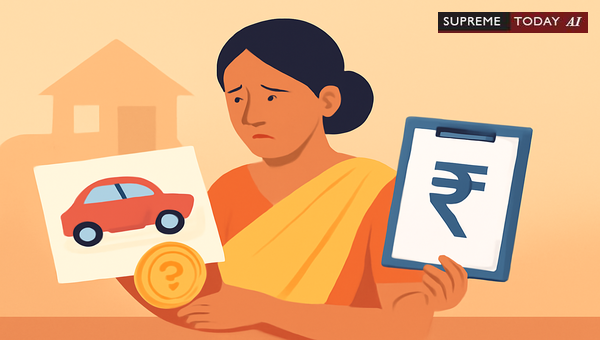
Assessing Housewife Income in Accident Compensation Cases
In the realm of personal injury and motor accident claims, one often overlooked yet critical aspect is valuing the contributions of a housewife. When a housewife suffers injury or death due to an accident, determining her income for compensation purposes becomes pivotal. Courts in India have evolved precedents recognizing that a housewife's role—managing household, caregiving, and more—warrants significant valuation, typically benchmarked against minimum wages for skilled labor. This guide explores house income for the accident case, drawing from key judgments to help claimants understand fair compensation strategies.
Note: This article provides general information based on legal precedents and is not specific legal advice. Consult a qualified lawyer for your case.
Overview of Housewife Income Assessment
Traditionally undervalued, a housewife's contributions are now assessed using notional income—a hypothetical earning capacity reflecting her multifaceted role. Courts emphasize that equating her to an unskilled laborer undervalues her skills in cooking, child-rearing, budgeting, and household management. Instead, her income is often pegged at least at the minimum wage for Class IV employees or skilled workers in the relevant area. 2017 0 Supreme(P&H) 1853 2019 0 Supreme(P&H) 645
For instance, judgments highlight: the multifaceted role of a housewife cannot be equated to that of an unskilled laborer or daily wage worker. 2017 0 Supreme(P&H) 1853 This shift acknowledges modern economic realities where spousal incomes supplement household needs. 2023 0 Supreme(Bom) 797 As noted, in this day and age, considering the cost of living, the income of both the husband and wife are equally important for running the house, as they supplement each others income. 2023 0 Supreme(Bom) 797
Key Principles for Income Valuation
Minimum Wage Benchmark
Courts consistently direct assessing a housewife's income at par with minimum wages for skilled labor:- Pre-2003 accidents: Notional income of Rs. 5,000 per month, adjustable for inflation to Rs. 6,000–9,000. 2016 0 Supreme(HP) 2411 2018 0 Supreme(P&H) 2973- 2013 accidents: Rs. 9,000 per month, reflecting rising recognition. 2018 0 Supreme(P&H) 2973 2019 0 Supreme(P&H) 2553
In absence of evidence, courts adopt state legal service authority figures, e.g., Rs. 5,500 monthly for 2010 accidents. 2020 0 Supreme(Kar) 1264 Similarly, for potential earnings without strict proof, standards of living are considered. 2024 Supreme(Online)(HP) 6523 Monthly income at Rs. 10,000 was upheld, yielding over Rs. 14 lakhs compensation. 2024 Supreme(Online)(HP) 6523
Future Prospects and Multipliers
To account for career growth, courts add 15%–50% for future prospects on assessed income. 2017 0 Supreme(P&H) 1853 2018 0 Supreme(P&H) 2973
Multipliers based on age further calculate loss:- Age-aligned multipliers (e.g., 17 for younger claimants). 2016 0 Supreme(Mad) 3165 2020 0 Supreme(Kar) 1264- Example: Rs. 36,000 annual income with 15%–75% loss yields Rs. 5,400–27,000 annual future loss, multiplied accordingly. 2016 0 Supreme(Mad) 3165 2014 0 Supreme(Mad) 1619
Precedents like National Insurance Co. Ltd. v. Pranay Sethi (2017) guide enhancements for prospects, especially where contributions span matrimonial and parental families. 2023 0 Supreme(Bom) 797
No Deductions for Personal Expenses
A landmark principle: In death cases, no deductions for personal expenses from notional income. Her invaluable role justifies full dependency valuation. 2017 0 Supreme(P&H) 1720 2016 0 Supreme(P&H) 3462
This contrasts injury cases, where partial deductions (e.g., 50% for unmarried) may apply post-100% disability assessment. 2014 0 Supreme(Chh) 169 Courts stress: potentiality to earn and existing standards of living must be considered in absence of documentation. 2024 Supreme(Online)(HP) 6523
Integrating Medical and Family Contribution Evidence
Compensation isn't just income-based; it incorporates:- Permanent Disability: 15%–100% loss of earning capacity, per medical evidence and Rajkumar v. Ajaykumar principles. 2014 0 Supreme(Mad) 1619 2016 0 Supreme(Mad) 3165- Family Contributions: Enhanced awards where deceased aided both matrimonial and parental families. 2023 0 Supreme(Bom) 797- Other Heads: Pain, suffering, amenities loss, treatment costs—e.g., enhanced from Rs. 2.15 lakhs based on grievous injuries. 2020 0 Supreme(Kar) 1264
In one case, a businesswoman-student's Rs. 1.5–2.1 lakhs annual income led to Rs. 22.4 lakhs total, applying Sethi principles. 2023 0 Supreme(Bom) 797
Tribunals must proactively assess truth, ensuring victims aren't shortchanged. 2014 0 Supreme(Mad) 626 Strict proof isn't mandatory; preponderance of probabilities suffices. 2016 0 Supreme(Mad) 3165
Practical Recommendations for Claims
For your house income for the accident case:1. Benchmark Income: Start at Rs. 6,000–9,000 monthly, adjusted for accident year and local wages.2. Add Prospects: 15%–50% uplift.3. No Personal Deductions: Argue full notional value in death claims.4. Document Thoroughly: Medical reports, family affidavits, wage notifications.5. Cite Precedents: Reference cases like those valuing skilled labor parity. 2019 0 Supreme(P&H) 645
Insurance appeals often challenge quantum, but courts uphold fair awards if evidenced. 2014 0 Supreme(Mad) 1619
Conclusion and Key Takeaways
Valuing a housewife's income in accident cases has progressed toward equity, recognizing her as a skilled economic contributor. Key takeaways:- Minimum Rs. 6,000–9,000/month notional income, no unskilled equation. 2018 0 Supreme(P&H) 2973- Future prospects: 15%–50% addition. 2017 0 Supreme(P&H) 1853- Zero personal deductions in death scenarios. 2017 0 Supreme(P&H) 1720- Holistic Assessment: Include disability, family aid, per Sethi and related rulings.
Claimants should leverage these precedents for just compensation. While outcomes vary by facts, strong documentation bolsters success. Always seek professional legal counsel tailored to your situation.
References
#HousewifeCompensation, #AccidentClaims, #NotionalIncome