Searching Case Laws & Precedent on Legal Query..!
Scanned Judgements…!



Searching Case Laws & Precedent on Legal Query..!
Scanned Judgements…!
RTI Appeal Against Which Authority? - Appeals under the RTI Act are filed against the Public Authority's Public Information Officer (PIO) or the First Appellate Authority (FAA). If the applicant is dissatisfied with the response from the PIO/FAA, they can further appeal to the Central Information Commission (CIC) or State Information Commission (SIC). The sources indicate that appeals are typically filed against the Public Authority's designated officers or authorities responsible for the initial response or decision (e.g., appeal filed before the Appellate Authority or second appeal before CIC) ["2025 Supreme(Online)(CIC) 4390"], ["2024 0 Supreme(Gau) 1754"], ["2023 0 Supreme(Del) 2816"], ["2023 0 Supreme(Del) 2019"], ["2023 0 Supreme(Telangana) 250"], ["2023 Supreme(Online)(CIC) 4123"], ["2025 Supreme(Online)(CIC) 3810"], ["2025 Supreme(Online)(CIC) 2728"].
Main Points:
Repetitive or frivolous RTI applications can be discouraged, and the RTI Act emphasizes providing available, existing information rather than requesting new or repetitive queries ["2025 Supreme(Online)(CIC) 4022"], ["2025 Supreme(Online)(CIC) 3810"].
Insights:
The scope of appeal includes disputes over non-disclosure, incomplete information, or delays, with the CIC/SIC acting as the adjudicating authority ["2025 Supreme(Online)(CIC) 4390"], ["2024 0 Supreme(Gau) 1754"].
References:
Summary:Appeals under the RTI Act are filed against the Public Authority’s Public Information Officer or First Appellate Authority. If dissatisfied, the applicant can escalate the matter to the Central or State Information Commission through a second appeal. The CIC/SIC can direct authorities to furnish information or reconstruct records, but enforcement relies on compliance. Appeals generally concern non-disclosure, delays, or incomplete information, with provisions to discourage frivolous or repetitive applications.
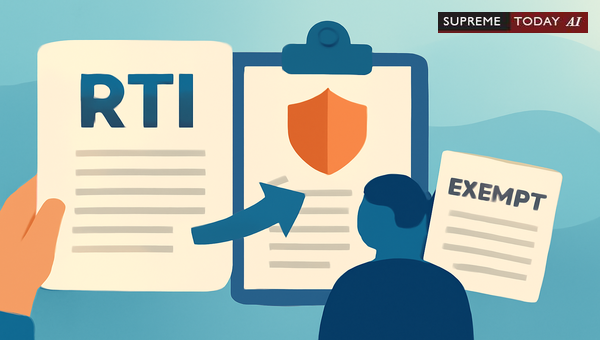
In today's transparent governance era, the , empowers citizens to seek vital public records. But what happens when a (PIO) fails to provide requested information, or the second appeal lingers undecided? Many applicants face this frustration, leading to questions like: Writ Filed for Not Providing Information in RTI Application and Also Not Decided RTI Second Appeal. This blog explores the appeal process, legal remedies, and strategic steps to enforce your RTI rights.
Whether you're a concerned citizen or activist, understanding these mechanisms can turn delays into disclosures. We'll delve into key provisions, real case insights, and practical recommendations, drawing from .
The RTI Act establishes a structured grievance redressal system to ensure accountability. If a PIO denies information or misses the 30-day response deadline, you can escalate:
First Appeal (Section 19(1)): File with the (FAA) within 30 days. The FAA can direct the PIO to provide the information. 2021 0 Supreme(Del) 551
Second Appeal/Complaint (Section 19(3)): If unsatisfied, approach the (CIC) or (SIC) within 90 days. The Commission acts as a with powers to penalize non-compliance under Section 20. 2012 0 Supreme(SC) 614 2018 0 Supreme(UK) 160
In one instance, an appeal was returned due to missing self-attested copies of the RTI application and PIO response, deemed arbitrary by the petitioner. 2021 0 Supreme(Del) 551
Gaurav Bhutani vs Principal District and Sessions Judge Head-Quarters - Delhi (2021)
Several sections safeguard or exempt information:
Section 19(1): Grants the right to appeal PIO decisions, including non-provision within time limits. The FAA holds directive powers. 2021 0 Supreme(Del) 551
Section 8(1)(j): Exempts personal information unless public interest overrides privacy. Courts often uphold denials here if no larger interest is shown. For example, such information will not in any way serve public interest. 2022 0 Supreme(Gau) 1158
Section 8(1)(e) & (g): Protects and info endangering life/safety. Disclosure of interview board members was quashed as it breached confidentiality without sustainable public interest. 2015 0 Supreme(Del) 412
These exemptions aren't absolute. allows High Courts to issue writs if authorities act arbitrarily. In a Nagaland case, the dismissed a writ challenging CIC orders, noting personal info on appointments could be disclosed only if public interest is overwhelming. 2022 0 Supreme(Gau) 1158
Appeals often fail due to procedural lapses:
Incomplete Documentation: FAA returned an appeal lacking self-attested RTI copies and PIO reply. Always attach these. 2021 0 Supreme(Del) 551
Gaurav Bhutani vs Principal District and Sessions Judge Head-Quarters - Delhi (2021)
Sealed Records: Voter lists in sealed election records can't be accessed via RTI without court permission, as Commissions lack control. Only such information, which is accessible and held by or in the control of the public authority can be supplied. 2015 0 Supreme(P&H) 415
Duplicate Access: If info is available under other rules (e.g., court certified copies), RTI isn't for duplication. A party to proceedings can directly apply for records. 2018 0 Supreme(Kar) 805
In banking selection disputes, appeals revealing interview marks were scrutinized, but courts refused interference absent . 2014 0 Supreme(Del) 2536 2015 0 Supreme(Del) 412
Exhaust RTI appeals first, but if the second appeal remains undecided or is mishandled, approach the via writ:
Grounds: Arbitrary rejection, procedural violations, or undue delay. For instance, FAA dismissal without hearing merits writ challenge. 2022 0 Supreme(Gau) 1158
:
Writs succeed when authorities flout Section 20 penalties or ignore appeals. 2012 0 Supreme(SC) 614
To navigate denials effectively:
Perfect Your First Appeal: Include all docs, cite Section 19(1), demand reasons for denial.
Second Appeal Strategy: File with SIC/CIC, highlight arbitrary FAA actions. Request penalties if delay persists. 2018 0 Supreme(UK) 160
Pre-Writ Checklist:
Argue public interest overrides exemptions.
Leverage Alternatives: For court-related info, use Rules of Practice instead of RTI. 2018 0 Supreme(Kar) 805
Monitor Timelines: Commissions must decide within months; delays justify writs.
In election disputes, RTI couldn't unlock sealed records without civil court nod, underscoring limits. 2015 0 Supreme(P&H) 415
Courts reinforce RTI's balance:
Public vs. Private Interest: Information sought for may relate to personal information but if public interest involved in it is so overwhelming, then information sought for has to be given. 2022 0 Supreme(Gau) 1158
Selection Confidentiality: No disclosure of board details sans overriding interest; protects processes. 2015 0 Supreme(Del) 412 2014 0 Supreme(Del) 2536
No Judicial Overreach: Courts won't re-evaluate selections unless arbitrary. 2014 0 Supreme(Del) 2536
These cases illustrate writs as a final safeguard, not routine bypass.
RTI empowers, but procedural adherence is key. From first appeal to writs under Article 226, structured escalation ensures accountability. Typically, include complete docs, assert public interest, and exhaust remedies before courts.
Key Takeaways:- File first appeal within 30 days; second within 90.- Challenge arbitrary rejections at Commissions.- Writs for delays or violations post-exhaustion.- Respect exemptions like Section 8(1)(j).
This is general information based on precedents like 2021 0 Supreme(Del) 551 Gaurav Bhutani vs Principal District and Sessions Judge Head-Quarters - Delhi (2021)
Stay informed, file smart—your right to know awaits enforcement.
#RTIAct #WritPetition #LegalRemedies


, including internet, so that public does not have to resort to the use of RTI Act to obtain basic information. ... As per RTI Act if the applicant is not satisfied with the reply of PIO / CPIO he can file an Appeal before The First Appellate Authority and if the applicant is not satisfied with the ....

A scenario is not difficult to envisage that even after a direction passed by the Central Information Commission or the State Information Commission to furnish information to an applicant in a second appeal preferred under Section 19 [3] of the RTI Act the public authority does not to furnish information#HL....

c) The information which public Authority does not hold cannot be given. d) An RTI applicant has no right to ask the same question's or substantially same question's with slightly altered sentences. ... The Appellant has filed numerous RTI Applications seeking similar information in his RTI Applications apparently t....

An appeal under Section 19(1) of the RTI Act, 2005 was filed by the Petitioner before the Appellate Authority and in the said appeal, the RTI applicant stated as under: "Sir, In this regard it is submitted that the information I have sought is in public interest, because it ... Thereafter, on 18th February, 2016, the Petitioner #HL_ST....

The said reply was appealed by the RTI Applicant/Respondent No.2 before the first appellate authority which observed that the decision of the CPIO, JJ Board is satisfactory and hence upheld the same. Thereafter, the RTI Applicant/Respondent No.2 filed a second appeal before the CIC. ... The Respondent-Juvenile Justice Board is accordingly directed to reconstruct the file by seeking relevant documents from....

To initiate proceeding as per Sec.20 of RTI Act 2005 as deem and proper.” (4) The First Appellate Authority heard the appeal and dismissed the same by order dated 17/12/2020. ... Moreover, such information will not in any way serve public interest. As such, the direction of the Information Commission given in the order dated 27/07/202....

may be, in each public authority”. ... information or has not been given a response to a request for information or access to information within the time-limits specified under the Act [Section 18(1)(c)]. ... Assistant Public Information Officer or State Assistant Public Information#HL_END....

The appellant has filed the instant appeal dated 18.10.2021 inter alia on the grounds that reply given by the CPIO was not satisfactory. The appellant requested the Commission to direct the CPIO to provide the complete information and take necessary action as per Section 20 (1) of the RTI Act. ... Succinctly facts of the case are that the appellant filed#HL_....

We submit that the Central Public Information Officer & Income Tax Officer (HQ)(Coord) disposed our RTI application and if we desires to file an appeal against this order to the Appellate Authority & Addl. ... (1) CIC/CCACH/A/2024/112432 Relevant facts emerging from appeal: RTI application filed on : 16.11.2023 CPIO replied on : 11.12.2023 First #HL_S....
Thereafter, Sri Mahadev Das filed an appeal dated 28.01.2024 mentioning “I had been filed a RTI on dated 26.12.2023 to the Central Public Information Officer which RTI letter attached with this appeal letter but not any information provided by the concerned public servant. ... Thereafter, Sri Mahade....

An appeal was duly filed by the petitioner against the rejection of the RTI Application. However, the appeal was returned by the Appellate Authority on the ground that the appeal did not have a self-attested copy of the RTI Application and the reply of the Public Information Officer. This, according to Mr. Nanda, was an arbitrary stand taken by the respondent to deny the petitioner of the information he sought.

3. Being aggrieved by the order of State Public Information Officer, the respondent No.2 herein filed an appeal before the Appellate Authority i.e., Registrar (Judicial), High Court of Karnataka under Section 19(1) of the RTI Act which came to be numbered as RTI. Pursuant to the applications, the State Public Information Officer had issued endorsements dated 25.06.2012 and 21.06.2012 in W.P.No.26762/2013 and W.P.No.26763/2013, respectively.

6. Respondent No.2 filed first appeal before the Appellate Authority under the RTI Act for non-supply of information at point (a). The said appeal was dismissed on 25.10.2010 while holding that the marked copy of the voter list is a part of the sealed record, and as per the instructions issued by the State Election Commission, Haryana dated 25.6.2010, only the Civil Court is the competent authority to order the opening of the sealed votes and marked voters list for which resp....
3. Aggrieved by the denial of this information, the respondent filed an appeal under Section 19 of the RTI Act dated 21.06.2010 before the Appellate Authority, Joint Secretary (R-II), Union Public Service Commission, Shahjahan Road, New Delhi. Vide Order dated 16.07.2010 the Appellate Authority disposed of the appeal of the appellant for the reasons, inter alia that the individual identity of the members of the Interview Board are strictly confidential and cannot be revealed.
In the said appeal, the respondent No.2 Bank had given a reply dated 26.3.2012 and in para 3 thereof, it had stated as under: “3. 6. Aggrieved by the information furnished by the respondent No.2 Bank under the RTI Act, the petitioner had filed an appeal before the Appellate Authority. Please note that for the purpose of selection for Interview, the aggregate marks obtained in written test is taken into account, whereas for final selection after Interview, Interview marks are ....


An indispensable Tool for Legal Professionals, Endorsed by Various High Court and Judicial Officers
Please visit our Training & Support
Center or Contact Us for assistance

Scan Me!
India’s Legal research and Law Firm App, Download now!


For Daily Legal Updates, Join us on :



 Back to top


