Searching Case Laws & Precedent on Legal Query!
Scanned Judgements…!



Searching Case Laws & Precedent on Legal Query!
Scanned Judgements…!
Approach to Lowest Available Forum First - The Supreme Court and various High Courts have consistently emphasized that litigants should exhaust the appropriate and efficacious lower or alternative remedies before approaching higher courts like the High Court or the Supreme Court directly. Several judgments explicitly discourage bypassing the proper forums, especially when tribunals, lower courts, or authorities are available for redressal. For instance, in 2025 Supreme(Online)(Cal) 4674, the Court held that once a tribunal or a specific forum is established for redressal, a person cannot jump directly to the High Court. Similarly, in 2025 Supreme(Online)(Kar) 10238, the Court stressed the importance of exhausting remedies under the Administrative Tribunals Act, 1985, before approaching the High Court under Article 226. 2025 Supreme(Online)(Cal) 4674, 2025 Supreme(Online)(Kar) 10238
Legal Doctrine of Relegation and Doctrine of Exhaustion - Courts have reiterated the principle that litigants must first approach the designated or lowest forum available, such as tribunals, police authorities, or lower courts, before seeking intervention from higher courts. The rationale is to promote judicial discipline, avoid forum shopping, and ensure that issues are resolved at the appropriate stage. For example, 2024 Supreme(Online)(DEL) 16594 highlights that if two forums are available, the petitioner should approach the lower one first, and only if that remedy is exhausted or unavailable can the higher court intervene. 2024 Supreme(Online)(DEL) 16594
Judicial Disapproval of Direct Approach to High Courts - Several judgments, including INDRI00000019713, 2024 Supreme(Online)(Guj) 27343, and NAVNEET SHARMA AND ANOTHER vs STATE OF PUNJAB AND OTHERS - Punjab and Haryana_HC_PHHC011255612023, explicitly disapprove of litigants approaching the High Court directly without first utilizing the statutory remedies or forums provided by law. These courts have emphasized that such practice is discouraged unless exceptional circumstances exist. The courts have also noted that direct approach without exhausting remedies can lead to unnecessary judicial interference and forum shopping.
INDRI00000019713
, 2024 Supreme(Online)(Guj) 27343,NAVNEET SHARMA AND ANOTHER vs STATE OF PUNJAB AND OTHERS - Punjab and Haryana
Exceptions and Discretionary Relief - While the general rule favors exhausting remedies, courts sometimes leave the door open for direct intervention if the petitioner can demonstrate exceptional circumstances or if the remedy at the lower forum is ineffective or unavailable. However, this is the exception rather than the norm.
HARI NIVAS TYAGI Vs State - Allahabad
Analysis and Conclusion:The jurisprudence across Indian courts consistently advocates that individuals should approach the lowest or most appropriate forum available for redressal before filing petitions directly in the High Court or Supreme Court. This principle aims to ensure proper judicial hierarchy, prevent forum shopping, and promote effective dispute resolution. The courts have explicitly stated that bypassing the prescribed forums is generally discouraged, and relief should be sought first from tribunals, lower courts, or authorities designated by law. Only in exceptional circumstances can a person bypass these forums and approach higher courts directly.
References:- 2025 Supreme(Online)(Cal) 4674- 2025 Supreme(Online)(Kar) 10238- 2024 Supreme(Online)(DEL) 16594- INDRI00000019713- 2024 Supreme(Online)(Guj) 27343- NAVNEET SHARMA AND ANOTHER vs STATE OF PUNJAB AND OTHERS - Punjab and Haryana_HC_PHHC011255612023- HARI NIVAS TYAGI Vs State - Allahabad
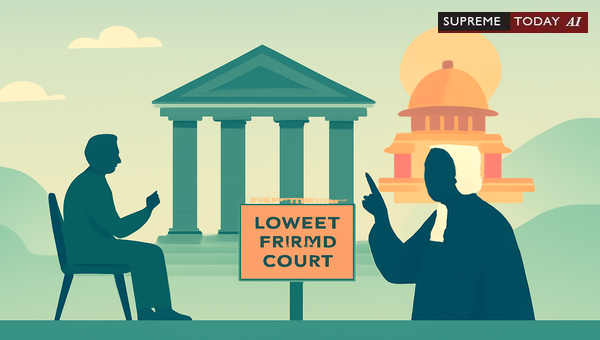
In the Indian judicial system, navigating the right court can make or break your case. A common question arises: Is there any Apex Court Judgements which States that a Person should Approach the Lowest Forum of Court Available Rather than Approaching the Directly? The short answer is yes— precedents strongly emphasize the principle of exhaustion of remedies, urging litigants to start at the appropriate lower forum. However, this rule is flexible, with key exceptions. This blog explores the doctrine, landmark cases, and practical insights to help you understand when direct access is viable.
Note: This is general information based on judicial precedents and not specific legal advice. Consult a qualified lawyer for your situation.
The doctrine requires aggrieved parties to exhaust all before seeking judicial intervention, promoting , , and respect for legislative intent. It's not an ironclad rule but a , convenience, and discretion2020 0 Supreme(All) 1271.
As held in , the requirement to exhaust remedies is a and discretion, not of law, and courts can bypass it in appropriate cases 2020 0 Supreme(All) 1271. This prevents and ensures issues are first addressed by specialized forums like or lower courts.
High Courts under wield discretion but typically decline jurisdiction if efficacious remedies exist elsewhere 2020 0 Supreme(All) 1271.
The has repeatedly deprecated direct approaches to High Courts, insisting on the lowest available forum:
: Availability of remedies doesn't bar writs if are at stake, orders lack jurisdiction, or is violated 2020 0 Supreme(All) 1271. Yet, it reinforces exhaustion as the norm.
: Reaffirms exceptions but stresses general requirement 2024 0 Supreme(Jhk) 318.
: Adequate remedies are a factor, but not absolute bar 2020 0 Supreme(All) 1271.
Other precedents echo this:
The litigant cannot avoid the non compliance of approaching the Tribunal which requires the prescription of fee and use of constitutional remedy as an alternative. The Apex Court has also deprecated the practice of approaching the ... 2024 Supreme(Online)(MP) 55981.
In 2025 Supreme(Online)(Cal) 4674, courts held litigants cannot bypass established directly to High Courts 2025 Supreme(Online)(Cal) 4674. Similarly, 2025 Supreme(Online)(Kar) 10238 mandates exhausting Administrative Act remedies first 2025 Supreme(Online)(Kar) 10238.
High Courts routinely dismiss direct petitions, directing parties to lower forums:
Be that as it may, in my opinion, the petitioners ought to have availed other available legal remedies... before directly approaching this Court
- 2023 Supreme(Online)(P&H) 5823
.SCC 277 wherein the practice of directly approaching the for police inaction has been deprecated... It is, however, open to the petitioner to approach the appropriate forum 2024 Supreme(Online)(ORI) 1452.
The should discourage the practice of filing a petition... simply because a person has a grievance that his FIR has not been registered
.
In my opinion, the petitioners ought to have availed other available legal remedies... before directly approaching this Court 2024 Supreme(Online)(RAJ) 358.
The compels petitioners to the designated forum, avoiding 2024 Supreme(Online)(DEL) 16594. Courts in 2024 Supreme(Online)(Guj) 27343 and others disapprove such practices unless exceptional 2024 Supreme(Online)(Guj) 27343.
While exhaustion is standard, exceptions allow direct access:
.
Summary Table of Principles:
| Principle | Explanation | Key References ||-----------|-------------|----------------|| Exhaustion generally required | Promotes efficiency | 2020 0 Supreme(All) 1271, 2001 0 Supreme(All) 35 || Exceptions: , etc. | Direct access allowed | 2020 0 Supreme(All) 1271, 2024 0 Supreme(Jhk) 318 || discretion | Case-specific | 2020 0 Supreme(All) 1271, 2024 0 Supreme(Jhk) 318 || Not absolute rule | Policy-based | 2020 0 Supreme(All) 1271, 2024 0 Supreme(Jhk) 318 |
In civil matters, statutes often prescribe appeals/reviews—exhaust these first unless inequitable 2020 0 Supreme(All) 1271. For administrative issues like police inaction or FIR registration, approach magistrates or
2024 Supreme(Online)(RAJ) 358.
(cited in sources) advises criminal complaints before higher courts 2024 Supreme(Online)(RAJ) 358.
Disputed facts? Lower forums resolve; pure legal issues may go higher 2020 0 Supreme(All) 1271.
Apex Court jurisprudence clearly mandates approaching the lowest forum to uphold hierarchy and efficiency. Direct petitions are discouraged, as seen in State of U.P. v. Mohd. Nooh and others, but exceptions safeguard rights 2020 0 Supreme(All) 1271 2024 0 Supreme(Jhk) 318.
Key Takeaways:- Start low: Exhaust first.- Know exceptions: , jurisdiction, .- Avoid : Courts penalize bypasses.- Seek advice: Judicial discretion varies.
By respecting this principle, you streamline justice. For tailored guidance, consult legal experts.
References:- 2020 0 Supreme(All) 1271, 2024 0 Supreme(Jhk) 318, 2001 0 Supreme(All) 35, 2024 Supreme(Online)(MP) 55981,
- 2023 Supreme(Online)(P&H) 5823
, 2024 Supreme(Online)(ORI) 1452,, 2024 Supreme(Online)(RAJ) 358, 2025 Supreme(Online)(Cal) 4674, 2025 Supreme(Online)(Kar) 10238, 2024 Supreme(Online)(DEL) 16594, 2024 Supreme(Online)(Guj) 27343,
#ExhaustionOfRemedies, #SupremeCourtIndia, #LowestForumFirst


The moment, the Tribunal is set up for redressal of the specified grievance, it is not open to the litigant to jump such forum and approach the Court directly. Even the constitution Bench of the Apex Court in L. Chandra Kumar vs. ... The cumulative effect of the said constitution Bench Judgment has conveyed the manifest intention that though the litigant can approach t....

In the case of Shivaprasad Biradar’s, the division bench of this Court relied on the several judgements of the Hon’ble Apex Court at paragraph No.8 has held as under : Administrative Tribunals Act, 1985 (for short, ‘the Act, 1985’), rather than approaching this Court under Article 226 of the Constitution of India. ... Therefore, he contends that when there is an alterna....

The petitioner is appearing in person and states that since the jurisdiction under Section 397 Cr.P.C. provides concurrent jurisdiction to the High Court and Sessions Court, they have chosen to file the present petition before this court. ... The court considers that in the instant case no special circumstances which required the petitioner to by-pass the foru....

The litigant cannot avoid the non compliance of approaching the Tribunal which requires the prescription of fee and use of constitutional remedy as an alternative. The Apex Court has also deprecated the practice of approaching the High Court for consideration of an offer by the borrower. 13. ... In catena of judgments, the Apex Court has held that ....

Be that as it may, in my opinion, the petitioners ought to have availed other available legal remedies for the redressal of their grievance before directly approaching this Court. ... Petitioners are, however, at liberty to approach the appropriate forum for redressal of their grievance, as aforesaid. 7. Pending application(s), if any, shall also stand disposed of. ... Ordinarily, in the cas....

(2016) 6 SCC 277 wherein the practice of directly approaching the High Court for police inaction has been deprecated, this Court considers it proper not to interfere in the CRLMP by issuing any direction to OP. 7. ... It is, however, open to the petitioner to approach the appropriate forum in accordance with law for redressal of his grievance. ... The High#HL_....

And the aggrieved person who approaches the High Court directly without approaching the Sessions Court in the first instance cannot be refused relief on the ground that unless special circumstances are made out, the Revision Application cannot be entertained because he had failed to approach the Sessions ... , if he makes the choice to go before the Sessions Judge who r....
The High Court should discourage the practice of filing a writ petition or petition under Section 482 CrPC simply because a person has a grievance that his FIR has not been registered by the ... In a case where an FIR is registered and where the Police is in the process of conducting an investigation, for which the aggrieved person/the petitioner herein feels that the same is not proper, such a pers....

Police Station Khekada, District- Bagpat, he has an efficacious remedy to approach the appropriate Authority/Forum, but instead of approaching the appropriate Authority/Forum he has directly preferred the present ... However, leave is always open to the petitioner to approach the appropriate Authority/ Forum. ... The party shall file computer gene....

In my opinion, the petitioners ought to have availed other available legal remedies for redressal of their grievance, before directly approaching this Court. ... Not only that, an aggrieved party may also choose to file a criminal complaint before the competent Court, if so advised. Reference may be had to Apex Court judgment in Sakiri Vasu Vs. State of U.P. and others [(2008) 2 SCC 409]....


An indispensable Tool for Legal Professionals, Endorsed by Various High Court and Judicial Officers
Please visit our Training & Support
Center or Contact Us for assistance

Scan Me!
India’s Legal research and Law Firm App, Download now!


For Daily Legal Updates, Join us on :



 Back to top


