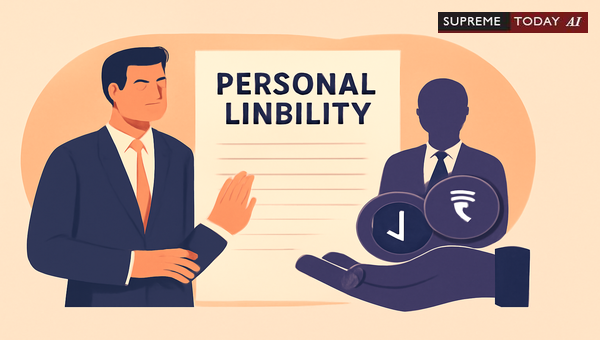
Director Liability for Cooperative Society Debts: What You Need to Know
Running or serving on the board of a cooperative society can be rewarding, but it raises a critical question: Is a Director Board Member of a Cooperative Society personally liable for the debts of the society? This concern is common among directors, members, and creditors alike, especially amid financial challenges faced by many cooperatives. Understanding this issue is vital for protecting personal assets while fulfilling fiduciary duties.
In this post, we'll break down the general rule, key legal precedents, exceptions, and practical recommendations based on established case law and statutes. Note that this is general information and not specific legal advice—consult a qualified attorney for your situation.
The Separate Legal Entity Principle
Cooperative societies are typically registered under specific state or national cooperative societies acts, granting them separate legal entity status. This means the society itself bears responsibility for its debts and liabilities, shielding individual members and directors from personal exposure.
As established in legal precedents, members, including office-bearers, are not personally liable for the society’s liabilities unless there is a specific statutory provision or undertaking that creates such liability 1994 0 Supreme(Ker) 76. In the landmark case of Punalur Paper Mills Ltd. v. District Collector, Quilon, the court held that a former office-bearer's liability for tax dues was solely the society's, reinforcing this principle 1994 0 Supreme(Ker) 76.
This separation mirrors corporate law principles, where directors of companies aren't personally liable absent fraud or misconduct. Similarly, for cooperatives: The society is a separate legal entity with its own liability, and members or directors are not personally liable for the society’s debts 1994 0 Supreme(Ker) 76.
Key Statutory Provisions Supporting Limited Liability
Various statutes underscore this limited liability:
- Section 95 of relevant cooperative acts directs disputes over society business to the Registrar or Co-operative Arbitration Court, affirming the society's distinct identity 1995 0 Supreme(SC) 828.
- Provisions like Section 33(1) emphasize that management and liabilities rest with the society, not individuals, unless specified otherwise 2000 0 Supreme(Ker) 657.
These rules apply across jurisdictions, though specifics vary by state acts (e.g., Kerala Co-operative Societies Act, Maharashtra Co-operative Societies Act).
Exceptions: When Personal Liability May Arise
While the general rule protects directors, exceptions exist. Courts have outlined scenarios where personal liability could attach:
In deposit guarantee schemes, boards oversee refunds but aren't automatically personally liable unless revival packages fail 2025 0 Supreme(Ker) 2776.
Insights from Additional Case Law
Other precedents provide nuance:
- In election disputes, disqualified directors lose board eligibility but not retroactive debt liability unless misconduct proven 2024 0 Supreme(Kar) 94.
- Multi-state cooperatives bar ineligible board members (e.g., absenteeism), but this ties to eligibility, not debt liability 2021 0 Supreme(Del) 220.
- Managing committee members aren't personally liable like company directors post-Salomon v. Salomon, absent ouster of jurisdiction 2011 0 Supreme(Bom) 524.
These cases highlight that while societies handle debts (e.g., winding up sugar cooperatives 2022 Supreme(Online)(Guj) 4207), individual roles are scrutinized for exceptions.
Practical Recommendations for Directors and Societies
To minimize risks:- Review Bylaws and Agreements: Ensure no unintended personal guarantees; clarify liability clauses.- Target Society Assets for Recovery: Creditors should pursue society property first 1994 0 Supreme(Ker) 76.- Document Duties: Maintain records to defend against misconduct claims.- Seek Revival Schemes: For distressed societies, use statutory funds like Kerala Co-operative Deposit Guarantee Scheme 2025 0 Supreme(Ker) 2776.- Disqualifications Awareness: Defaults or absences can bar board service, indirectly affecting liability exposure 2022 0 Supreme(Bom) 1617 2021 0 Supreme(Del) 220.
In winding-up or disputes, exhaust statutory channels before personal actions 2025 0 Supreme(HP) 436.
Conclusion: Key Takeaways
Generally, directors and board members of cooperative societies enjoy limited personal liability for society debts, thanks to separate entity status. However, exceptions via undertakings, statutes, fraud, or misconduct can impose responsibility—always verify specific circumstances.
Key Takeaways:- No personal liability absent specific provisions 1994 0 Supreme(Ker) 76.- Exceptions require proof of personal involvement or guarantees.- Consult statutes like Sections 95, 33(1) and local acts.- Prioritize society-level resolutions for debts.
Stay informed, govern responsibly, and protect your interests. For tailored advice, reach out to a legal expert familiar with cooperative laws.
References:1. 1994 0 Supreme(Ker) 76 - Core precedent on non-liability.2. 1995 0 Supreme(SC) 828 - Dispute resolution.3. 2000 0 Supreme(Ker) 657 - Management provisions.4. 2022 0 Supreme(Ker) 572 - Jurisdiction scope.5. Other integrated sources as cited.
#CooperativeLaw, #DirectorLiability, #SocietyDebts