Searching Case Laws & Precedent on Legal Query.....!
Analysing the retrieved Case Laws
Scanned Judgements…!



Searching Case Laws & Precedent on Legal Query.....!
Analysing the retrieved Case Laws
Scanned Judgements…!
Conviction Despite Low Light Conditions - Accused can still be convicted even when the incident occurs in poor lighting conditions, provided the identification is reliable. Witnesses may identify the accused through available light sources such as torches or lamps, but caution must be exercised as identification in poor light can be unreliable. For example, witnesses identified accused using torch light in cases where the light was sufficient, but courts also acknowledge the risks of wrongful identification under such circumstances ["2023 0 Supreme(P&H) 1083"], ["2022 0 Supreme(Pat) 675"], ["
PUBLIC PROSECUTOR vs SYED MUHAMAD FAYSAL BIN SYED IBRAHIM
"], ["2023 0 Supreme(Gau) 821"].Reliability of Witness Testimony in Low Light - Witnesses' identification must be scrutinized carefully, considering factors like duration of observation, distance, light source, and whether the witness knew the accused beforehand. Multiple witnesses recognizing the accused through torchlight or other light sources can strengthen the case, but courts remain cautious as even convincing witnesses can be mistaken ["2022 0 Supreme(Pat) 675"], ["
PUBLIC PROSECUTOR vs SYED MUHAMAD FAYSAL BIN SYED IBRAHIM
"], ["2023 0 Supreme(Gau) 821"].Legal Precedents Affirming Convictions in Low Light - Courts have upheld convictions where witnesses identified accused using available light sources, such as torches or lamps, especially when the identification was deemed credible and corroborated by other evidence. Conversely, courts have set aside convictions when identification was based solely on poor lighting, or when the prosecution failed to establish the presence of sufficient light or reliable identification conditions ["2023 0 Supreme(P&H) 1083"], ["2023 0 Supreme(Gau) 821"], ["2024 Supreme(SRI)(SC) 12647"].
Caution Against Sole Reliance on Identification in Darkness - Courts emphasize that identification in darkness or poor lighting should not be the sole basis for conviction unless the circumstances strongly support the reliability of the identification. The absence of proper light sources or failure to conduct proper identification procedures can render such evidence doubtful and lead to acquittal or setting aside of convictions ["2024 Supreme(SRI)(SC) 12647"], ["2022 0 Supreme(Telangana) 609"].
Analysis and Conclusion:Convictions in low light conditions are permissible when the identification is credible, supported by multiple witnesses, and corroborated by other evidence. Courts recognize that witnesses may identify accused using available light sources like torches or lamps, but they also stress the importance of evaluating the circumstances under which identification occurred. When identification relies solely on poor light or is inconsistent, courts tend to be cautious and may set aside convictions to prevent miscarriage of justice. Therefore, the presence of some light, proper identification procedures, and corroborative evidence are crucial for sustaining convictions in low light scenarios.
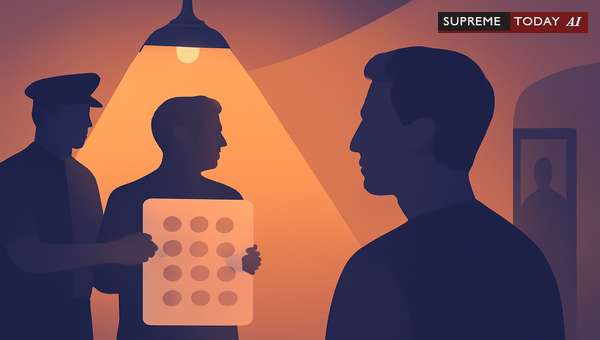
In criminal trials, the phrase In Low Light Accused can Still be Convicted raises a pivotal question about the boundaries of justice. Imagine a nighttime assault or robbery where witnesses claim to identify perpetrators under dim streetlights or moonlight. Can such testimony alone secure a conviction, or does poor visibility create reasonable doubt? This blog delves into Indian legal principles, case law, and practical insights, showing that while low light often undermines identifications, convictions remain possible under specific circumstances. Generally, courts scrutinize visibility rigorously, but familiarity or can tip the scales. Note: This is general information, not legal advice—consult a qualified attorney for your case.
forms the backbone of many prosecutions, especially in stranger crimes. However, when events unfold in low light—dusk, night, or poorly lit areas—the reliability of such testimony comes under intense judicial scrutiny. Courts emphasize the need for clear visibility and adequate opportunity for observation during the incident. Insufficient light typically renders identification shaky and lacking , failing the prosecution's burden to prove guilt . 2016 7 Supreme 419 2006 0 Supreme(Chh) 28
As one ruling notes: The identification of accused persons in low light conditions is a critical issue in criminal trials. 2016 7 Supreme 419 This principle underscores that dim conditions alone don't acquit but demand heightened proof.
Sufficiency of Evidence: Prosecutions must furnish cogent and acceptable evidence. In poor lighting, courts often deem evidence unreliable without backups like forensics or multiple witnesses. For instance, in cases of nocturnal crimes, lack of leads to acquittals. 2013 0 Supreme(Chh) 32 1983 0 Supreme(Raj) 306
Witness Credibility: Testimonies claiming recognition in dim light face rigorous testing. Courts assess factors like distance, duration, and prior familiarity. Unreliable IDs cannot sustain convictions. 2014 3 Supreme 746 2008 0 Supreme(Bom) 116
: The prosecution bears the onus to eliminate doubt. The prosecution must prove its case ; insufficient evidence led to the acquittal of the accused. 2025 0 Supreme(Raj) 1688
These tenets ensure fairness, preventing miscarriages from flawed perceptions.
Indian courts have navigated low light challenges across murders, robberies, and assaults. While many cases favor acquittals, exceptions exist.
Trial courts acquitting due to unacceptable low light IDs warrant deference absent perversity. In instances where the trial court finds identification unacceptable due to low light, the should refrain from interfering with the acquittal unless there is a clear error. 2014 3 Supreme 746 This upholds trial-level assessments of visibility.
Villagers or locals accustomed to dim conditions may reliably identify known faces. Local witnesses, familiar with low light conditions (e.g., villagers), may be deemed capable of identifying individuals even in dim light. Yet, this requires case-specific evaluation. 2006 0 Supreme(Ori) 688
Other precedents reinforce this nuance:- In a robbery-gang rape case, witnesses noted lights were switched off, yet convictions held on the second charge via other evidence. When questioned about the light condition, he has stated that there was a light, but the 1st accused wanted it to be switched off. 2024 Supreme(SRI)(CA) 297- Night assaults highlight parade flaws: The incident took place in the night and Pw.17 was the only eye witness... no accused can be convicted unless he has been properly identified by following prescribed procedure. 2020 0 Supreme(Bom) 1312 2020 0 Supreme(Bom) 922
Flawed parades exacerbate low light doubts. Police shown accused persons to said witness in police station before going to the ... When accused were paraded for identification which was against guidelines. 2020 0 Supreme(Bom) 1312 Courts acquit if procedures falter, as in a murder where evidence was insufficient. 2023 Supreme(SRI)(CA) 482
In assaults under , convictions occurred despite night settings via totality of evidence: medicals, recoveries, and reliable witnesses. Minor discrepancies didn't discard material proof. 2020 0 Supreme(Bom) 1312 The court convicted two accused, fining them Rs. 1,10,000 each, stressing: minor discrepancies and lapses in investigations should not be the reason to discard other material evidence. 2020 0 Supreme(Bom) 1312
Conversely, a murder acquittal under IPC 302 stemmed from contradictions and unsubstantiated recoveries like a battery light. 2025 0 Supreme(Raj) 1688
Low light intersects with consent, corruption, and abetment, but core themes persist:- Documentary Backing: Even sans eyewitnesses, docs can convict. Thus, on the basis of documentary evidence, the accused can still be convicted. 2012 0 Supreme(Raj) 1604- Totality Approach: In assaults, non-examined witnesses or parade lapses don't negate complainant/medical evidence. 2020 0 Supreme(Bom) 922- Burden Nuances: Illustrations clarify proof standards in low-visibility defenses. 2023 Supreme(SRI)(SC) 20750
These cases illustrate: Low light weakens but doesn't doom prosecutions if corroborated.
Convictions in low light hinge on robust, corroborated witness IDs. Typically, poor visibility invites doubt, but local knowledge or extras like recoveries can sustain guilt. Key takeaways:- Prioritize visibility proof. 2016 7 Supreme 419- Scrutinize credibility rigorously. 2014 3 Supreme 746- High Courts respect trial acquittals sans error. 2014 3 Supreme 746- Use totality: Minor flaws don't eclipse strong evidence. 2020 0 Supreme(Bom) 1312
References: 2014 3 Supreme 746 2013 0 Supreme(Chh) 32 2006 0 Supreme(Chh) 28 2016 7 Supreme 419 2008 0 Supreme(Bom) 116 2006 0 Supreme(Ori) 688
1983 0 Supreme(Raj) 306 2024 Supreme(SRI)(CA) 297 2023 Supreme(SRI)(CA) 482 2025 0 Supreme(Raj) 1688 2023 Supreme(SRI)(SC) 20750 2020 0 Supreme(Bom) 1312 2020 0 Supreme(Bom) 922 2012 0 Supreme(Raj) 1604
This analysis draws from established precedents, offering insights into a nuanced area. For tailored advice, engage legal experts.
#LowLightConviction #CriminalLaw #WitnessID


It is alleged that accused fired 5-7 shots in the air with the firearm and when HC Baghel Singh and HC Vinod told him not to fire, as they were police officials, accused still fired two more shots towards them with intention to kill them. ... Accused faced trial for offences under Sections 307, 336, 506, 353 & 186 of the IPC and Section 27 of the Arms Act, as per the charge-sheet but has been convicted on....

However, both of them were convicted of the 2nd charge in the indictment, namely the charge of robbery. The 2nd accused was also convicted of the 5th charge preferred against him, namely the charge of aiding and abetting to commit gang rape. ... When questioned about the light condition, he has stated that there was a light, but the 1st accused wanted it to be switched off, and on his ....

In the light of the deposition of P.W.4, P.W.5 and P.W.6, it was one of the accused persons namely Brahamdeo Dome, who was carrying the torch light and the witnesses have identified the accused persons in the light of the said torch light. ... P.W.6 in paragraph 1 of her deposition (examination-in chief) has stated that he identified the accused persons in the #HL_START....
After the trial, The Learned High Court Judge Convicted the 2nd Accused for murder and was sentenced to death and the other two were acquitted. Being aggrieved by the said conviction the Accused has appealed to this court. ... In this instance, the Learned High Court Judge has convicted the Accused of the murder of the Deceased primarily based on PW1's evidence. However, we find that this evidence is ins....
He was further convicted of an offence of ss 411 and 201 of the Penal Code. The other accused Ranglall was acquitted under charges of ss 302 and 201 of the Penal Code but convicted for an offence of s 411 of the Penal Code. ... You may have a ray of light so feeble that by itself it will do little to elucidate a dark corner. ... still for the court as the trier of fact to draw an inference and the weight ....

In light of the foregoing, I am of the view that the learned Judges of the Court of Appeal have correctly convicted the 3rd accused on the 4th Count, by proper evaluation of the case and upon considering the omission that was inadvertently overlooked by the High Court. ... Poisons, Opium and Dangerous Drugs Ordinance After trial, by his judgement dated 14.12.2007, the learned High Court Judge convicted the 1st #HL_START....

When the evidence reflects that a lamp was burning in the room, it was not necessary for PW-1 to flash on her torch light for identification of the miscreants. The trial court relied on the statements of the witnesses under Section 161 Cr.P.C and convicted the appellant. ... The evidence of the prosecution clearly reveals she is not closely acquainted with the accused and the CICL and in such a situation, it is not possible for her recogniz....

Therefore, they have prayed that criminal appeal filed by the appellant-State and the revision petition filed by the petitioner-complainant may be allowed and the accused-respondent may be convicted and sentenced for alleged offence. 6. ... So far as recovery of article i.e. batter light at the instance of accused-respondent is concerned, a perusal of Ex.P/13 showed that said battery light was recovered i....

When the question of law raised on behalf of the Accused is viewed in the light of the observations made by the learned High Court Judge referred to above, I answer the question of law referred to in sub-paragraph (b) of paragraph 11 of the petition in the negative. ... The illustration (b) of that section sheds further light as to the burden of proof and reads; “A, accused of murder, alleges that, by grave and sudden pro....

A1 was convicted and sentenced for the offence under Section 412 of IPC, without there being any substantial evidence on record. The Court below ought not have convicted A1 of the offence under Section 412 of IPC without there being any cogent and convincing evidence on record. ... Altogether, there are seven accused in this case. ... A2, A3, A5, A6 of the offence under Section 396 of IPC and convicted A1 of the offence un....

Moreover, police shown accused persons to said witness in police station before going to the identification parade. In the said matter before Hon’ble Apex Court, the incident took place in the night and Pw.17 was the only eye witness and was not knowing accused persons. It is further held that no accused can be convicted unless he has been properly identified by following prescribed procedure of law.” 3 and 4, it is held thus: “When accused were paraded for identification whi....

Moreover, police shown accused persons to said witness in police station before going to the identification parade. 3 and 4, it is held thus: "When accused were paraded for identification which was against guidelines prescribed under Criminal Manual could not be considered as incriminating piece of evidence against accused. In the said matter before Hon'ble Apex Court, the incident took place in the night and Pw.17 was the only eye witness and was not knowing accused persons. It is ....
Thus, on the basis of documentary evidence, the accused can still be convicted. The same principle would be applicable to the present case.

In another case of Harjit Singh v. State of Punjab [2006 (I) MPWN 125 = (2006) 1 SCC 463] it is observed by the apex Court that the argument that when the charge under section 304-B of IPC is framed and if the accused cannot be convicted for that offence, he can still be convicted under section 306 of IPC, cannot be accepted. Such plea cannot be allowed to be raised for the first time before the Court unless charge under section 306 of IPC is made out from materials on record....
On this aspect also, accused cannot be convicted. " It seems to be a case of breach of promise to marry rather than a case of false promise to marry.


An indispensable Tool for Legal Professionals, Endorsed by Various High Court and Judicial Officers
Please visit our Training & Support
Center or Contact Us for assistance

Scan Me!
India’s Legal research and Law Firm App, Download now!


For Daily Legal Updates, Join us on :



 Back to top


