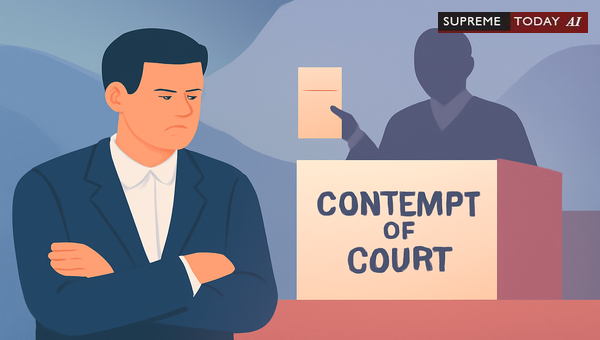
Contemnor Cannot Act as Appellate Authority: Key Rulings
In the realm of Indian jurisprudence, maintaining the sanctity of court orders is paramount. A pressing legal question often arises: Can a contemnor seat as an appellate authority over the direction passed by a court? The resounding answer from judicial precedents is no. This principle upholds judicial hierarchy and the separation of powers, ensuring that no party, especially one accused of contempt, can usurp the judiciary's role in reviewing its own orders.
This blog post delves into the core legal findings, key precedents, and related insights to provide a comprehensive understanding. Whether you're a legal professional, litigant, or simply interested in constitutional law, here's what you need to know—note that this is general information and not specific legal advice. Consult a qualified lawyer for your situation.
Main Legal Finding
A contemnor cannot act as an appellate authority over directions passed by a court. The judicial hierarchy and principles of separation of powers strictly prohibit a party from exercising appellate or quasi-judicial review over the court's orders, particularly in contempt proceedings. The authority to review or modify court orders lies exclusively with the courts or appellate forums, not with parties or contemnors.2018 3 Supreme 397
Contempt jurisdiction is sui generis, limited to punishing disobedience or interference with court orders. It does not extend to re-interpreting or sitting in judgment over the court's directions. Courts have consistently held that allowing a contemnor such a role would undermine judicial authority. 2010 1 Supreme 765 2022 1 Supreme 464
Key Principles at Play
Judicial Hierarchy and Separation of Powers
Legal jurisprudence firmly establishes that interpreting, modifying, or reviewing court directions is the judiciary's exclusive domain. No party, including a contemnor, can assume this role. This is reinforced across multiple judgments, emphasizing that parties cannot exercise appellate functions over court orders. 2017 2 Supreme 20
In contempt proceedings, which are quasi-criminal, procedural safeguards must be followed. Contempt is not a forum for re-judging merits or appealing orders—it's solely for upholding court dignity. The weapon of contempt cannot be used for executing decrees or re-interpreting orders. 2010 1 Supreme 765
Limits of Contempt Jurisdiction
Courts repeatedly affirm that contempt jurisdiction addresses only willful disobedience. This court will only look at whether the direction of this court has been willfully and deliberately violated or not. In contempt proceedings, courts do not review the correctness, veracity, or sufficiency of compliance orders. 2025 Supreme(Online)(Cal) 2719
Mere delay or extenuating circumstances do not constitute contempt unless willfulness is proven. Contempt requires willful disobedience of a court order.2024 0 Supreme(Bom) 818
Judicial Precedents: Landmark Holdings
Several cases crystallize this principle:
2018 3 Supreme 397: Clarifies that contempt proceedings punish disobedience but do not allow the contemnor to sit as an appellate authority. Directions on merits are outside contempt scope unless directly tied to punishment, and even then, no appellate powers for the contemnor.
2010 1 Supreme 765: Held that contempt is quasi-criminal; contemnors cannot treat it as an appellate forum. The weapon of initiating contempt proceedings could not be used for execution of a decree or implementation of an order.
2017 2 Supreme 20: Explicitly states contempt is limited to willful disobedience. A contemnor cannot be permitted to act as an appellate authority over the directions issued by the court. No violation found in the specific directions of a 2013 judgment.
2022 1 Supreme 464: Affirms a contemnor cannot act as an appellate authority over the direction passed by court, as it undermines judicial authority.
These rulings form a consistent judicial stance: contemnors must comply, not review.
Insights from Related Cases
Related precedents reinforce these limits:
In 2025 Supreme(Online)(Cal) 2719, the court dismissed contempt, noting no willful violation and refusing to overturn a reasoned compliance order. The law is well-settled that the correctness, veracity or sufficiency of reasons of the said impugned order which has been passed in compliance of the.... Parties must challenge via appropriate forums, not contempt.
2024 0 Supreme(Bom) 818 emphasized constitutional respect for High Courts in contempt matters. Apologies aren't automatic, and third parties can't intervene. Contempt is between the court and the contemnor and no third party can involve itself into the same. Delays due to elections weren't willful.
2025 Supreme(Online)(Cal) 5408: Compliance via reasoned orders closes contempt if records show adherence. The jurisdiction of contempt Court is very limited.
Appeals under Section 19 of the Contempt of Courts Act, 1971, are maintainable against any contempt order, not just punitive ones. However, this doesn't empower contemnors to review merits during proceedings. 2024 0 Supreme(All) 1195 2024 0 Supreme(P&H) 1188
Other cases highlight courts' reluctance to act as appellate authorities over administrative decisions, mirroring contempt limits. For instance, 2020 0 Supreme(Kar) 1251 states: The Court cannot sit as an appellate authority also over the decision taken by respondent No.2. Similarly, subordinate authorities must comply with appellate orders without delay, absent stays. 2020 0 Supreme(Bom) 810
Application and Potential Counterarguments
Contemnors' roles are confined to compliance. Attempting to modify or interpret orders violates separation of powers. Counterarguments—that disobedience implies review—are dismissed; remedies lie in appeals or reviews, not contempt. Even incidental directions linked to punishment don't grant appellate powers.2018 3 Supreme 397
Exceptions and Limitations
- Exceptions are narrow: directions incidental to contempt punishment, but contemnors still can't exercise review—only face accountability for disobedience.
- No modification of court directions via contempt.
Recommendations for Practice
- Courts: Confine contempt to disobedience, preventing appellate creep.
- Parties: Use appeals/reviews for challenges, not contempt.
- Judicial Officers: Vigilantly curb contemnors assuming appellate roles.
Conclusion and Key Takeaways
In summary, a contemnor lacks standing to act as an appellate authority over court directions. This preserves judicial hierarchy and separation of powers, as affirmed in precedents like 2022 1 Supreme 464 and 2017 2 Supreme 20. Key takeaways:- Contempt punishes willful non-compliance, not merits.- Review authority is judicial only.- Pursue proper appellate remedies.
This principle ensures the rule of law endures. For tailored advice, consult legal experts.
References:1. 2018 3 Supreme 3972. 2010 1 Supreme 7653. 2017 2 Supreme 204. 2022 1 Supreme 4645. 2025 Supreme(Online)(Cal) 27196. 2024 0 Supreme(Bom) 818
(Word count: approx. 1050. General insights based on public judgments; not legal advice.)
#ContemptOfCourt #JudicialHierarchy #LegalPrecedents