Searching Case Laws & Precedent on Legal Query.....!
Analysing the retrieved Case Laws
Scanned Judgements…!



Searching Case Laws & Precedent on Legal Query.....!
Analysing the retrieved Case Laws
Scanned Judgements…!
Definition of Obscenity - The provisions under Sections 292 and 294 of the Indian Penal Code (IPC) outline the legal understanding of obscenity. According to Section 292(1), words or materials must be lascivious, appeal to prurient interests, or tend to deprave and corrupt individuals to qualify as obscene. The Supreme Court has emphasized that the definition cannot be based solely on personal opinions but must adhere to a 'Community Standard Test' to determine what constitutes obscenity (2025 Supreme(Online)(Del) 7349).
Words and Expressions - Abusive, humiliating, or defamatory words, even if offensive or unparliamentary, do not automatically amount to obscenity under the law. As observed in Kerala High Court rulings, such words are not considered obscene unless they evoke lasciviousness or sexual depravity (2021 0 Supreme(Chh) 18, IND_CHH00000025874). For example, to attract penal provisions under Sections 294 or 292, the words must be capable of arousing sexually impure thoughts or have a tendency to deprave and corrupt those susceptible to immoral influences (State of Kerala, 2008 (2) KLT 745).
Legal Tests and Standards - The courts have adopted the 'Community Standard Test' to assess obscenity, focusing on whether the material tends to deprave or corrupt individuals, especially those open to immoral influences (2024 Supreme(Online)(Ker) 81971, 2025 Supreme(Online)(Del) 7349). The test is whether the words or material have a sexual or lascivious connotation capable of arousing impure thoughts, not merely their offensive nature (2021 0 Supreme(Chh) 18).
Vagueness and Overbreadth - Certain statutes, such as the US obscenity laws, have been criticized for vagueness, which risks infringing on protected speech by turning subjective judgments into legal standards. The inclusion of terms like vulgar can extend beyond constitutional limits, capturing speech that is merely vulgar rather than obscene (2025 Supreme(US)(ca11) 81, 2025 Supreme(US)(ca4) 35).
Case Law and Judicial Interpretation - Courts have consistently held that mere abusive or offensive language does not constitute obscenity unless it meets the specific criteria of sexual explicitness or depravity. For instance, in cases involving artistic or literary expressions, such as sketches or drawings, the context and intent are critical in determining obscenity (2024 Supreme(Online)(Bom) 6580).
Conclusion - The BNS provisions on obscenity emphasize a nuanced legal approach, requiring that words or materials be lascivious, appeal to prurient interests, or have a tendency to deprave and corrupt. The law distinguishes offensive speech from obscene material, focusing on the potential to arouse sexual impurity or moral depravity, guided by community standards and judicial interpretations to prevent overreach and protect free speech.
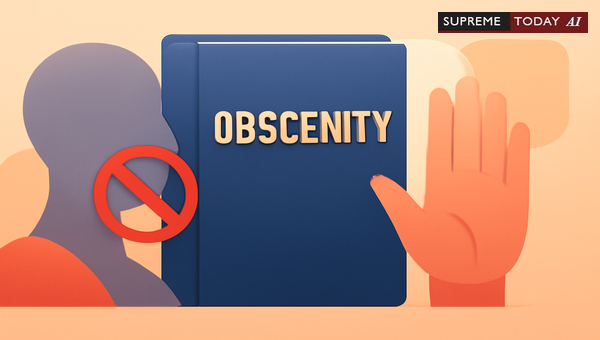
In an era of digital content explosion, questions about what constitutes are more relevant than ever. Creators, artists, and everyday users often wonder: What is the standard of , and does it differ from person to person and from society to society? This blog delves into Indian law's approach, primarily governed by the Sections 292 and 294, now transitioning to the . We'll explore judicial tests, community standards, and why isn't a one-size-fits-all concept. Note: This is general information, not legal advice—consult a lawyer for specific cases.
India's legal framework for relies on Sections 292 and 294 of the IPC. Section 292 prohibits the sale, distribution, or possession of obscene books, pamphlets, or objects, while Section 294 targets obscene acts or songs in public places causing annoyance. 2022 0 Supreme(SC) 1243 2022 0 Supreme(SC) 211
lacks a statutory definition, leaving it to courts. The foundational test stems from the British case Queen v. Hicklin (), adopted in India via . This '' asks if material tends to those whose minds are open to such immoral influences. 2022 0 Supreme(SC) 1243
A key evolution is the '' test. is judged by an average person's view, per prevailing societal norms—not isolated individuals. This answers our core question: Yes, the standard can differ across societies and evolve over time, but it's not purely subjective or person-to-person. It's an objective assessment based on community mores. 2016 8 Supreme 592 2014 1 Supreme 535
For instance, the in Ranjit D. Udeshi emphasized viewing material as a whole, considering context like art or education. Mere isn't enough; it must arouse lustful desires or impure thoughts with a tendency to corrupt. 2006 9 Supreme 458
Recent cases reinforce this. In a ruling, it was held: Abusive words or humiliating words or defamatory words will not as such amount to as defined under the law. The words must be lascivious.
Similarly, noted: the test of under is whether the tendency of the matter charged as is to those, whose minds are open to such immoral influences. 2025 Supreme(Online)(Mad) 39027
Courts distinguish from mere abuse:
Lascivious Element Required: In , the clarified that words under Section 294(b) must have a : the words must have a lascivious element to attract the provisions under Section 294(b) IPC. 2022 0 Supreme(SC) 1243 1985 0 Supreme(SC) 316 Echoed in multiple rulings, like : abusive or humiliating or defamatory words will not in as such amount to ... even if the words used by accused are in fact highly abusive. 2019 0 Supreme(Ker) 903
Not Person-Specific: The test applies to the 'average person' in the community, not hypersensitive individuals. This prevents subjective variance person-to-person. 2014 1 Supreme 535
Artistic Freedom vs. Public Morality: under protects art, but not if it debases . Courts balance this, as in cases where educational context mitigates claims. 2015 4 Supreme 641 1964 0 Supreme(SC) 194
Other precedents highlight and context. In a case quashing proceedings, no was found without lascivious words: No allegation anywhere in the as to what exactly was the alleged obscene words. 2019 0 Supreme(Ker) 903 U.S. influences appear in discussions, but Indian law prioritizes local standards. 2025 Supreme(US)(ca11) 81
Person to Person: No, it's not individualized. Courts reject claims based on personal offense alone. Abusive language offending one person isn't obscene unless it meets the deprave/corrupt test for the average mind. 2024 Supreme(Online)(Chh) 19774 2025 0 Supreme(SC) 260
Society to Society: Yes, it evolves with community standards. What was obscene decades ago may not be today due to shifting morals. Urban vs. rural or regional variations could influence, but national courts apply a broad 'Indian community' lens. 2016 8 Supreme 592
For example, in digital contexts under overlaps, claims for fail without lasciviousness. 2019 0 Supreme(SC) 1351 2025 Supreme(US)(ca4) 35
Violations attract imprisonment (up to 2-5 years) and fines. 2006 8 Supreme 219 Exceptions include:- Contextual Mitigation: Art, science, or literature. 1964 0 Supreme(SC) 194- Vagueness Critique: Lack of definition leads to arbitrary enforcement. 2006 8 Supreme 219- No : Mere possession without intent isn't penalized. 2025 0 Supreme(Telangana) 473
In , courts stressed proving intent. Recent BNS cases quash FIRs lacking provocation or elements. 2025 0 Supreme(Telangana) 473
India's standard hinges on the —objective, contextual, and dynamic. It doesn't vary wildly person-to-person but adapts to societal shifts, balancing morality and expression. Key takeaways:- requires to deprave/corrupt. 2022 0 Supreme(SC) 1243- Abusive words alone aren't obscene.
- Consult professionals; laws evolve.
Stay informed on cases like Ranjit D. Udeshi and BNS transitions. References: 2022 0 Supreme(SC) 1243 2022 0 Supreme(SC) 211 2016 8 Supreme 592 2014 1 Supreme 535 2006 9 Supreme 458 1985 0 Supreme(SC) 316 2015 4 Supreme 641 1964 0 Supreme(SC) 194 2006 8 Supreme 219
2025 Supreme(Online)(Mad) 39027 2024 Supreme(Online)(Chh) 19774 2025 0 Supreme(SC) 260 2019 0 Supreme(Ker) 903.
This post provides general insights based on public legal resources. For advice tailored to your situation, contact a qualified attorney.
#ObscenityLawIndia, #IPC292, #CommunityStandards


It was observed in paragraph 5 as under: - “5. Abusive words or humiliating words or defamatory words will not as such amount to obscenity as defined under the law. ... State of Kerala, 2014 (2) KLT 987, held that under Sections 292(1) and 294 of the IPC, abusive words or humiliating words or defamatory words will not as such amount to obscen....

words will not as such amount to obscenity as defined under the law. ... In the definition of obscenity under Section 292(1) of the IPC, the words used must be in sense lascivious or it must obscenity as defined under the law. ... It was observed in paragraph 5 as under: - “5. ... Abusive words or humiliating words or defamatory span

As we explain, the Act is substantially overbroad. Two provisions—a vague restriction on prohibitions of certain “de- pict[ions of] . . . lewd conduct” and a fine-grained yet ambiguous standard of what speech is appropriate for which children—make it so. ... Pullman, 312 U.S. at 500, 61 S. Ct. at 645. ... In other words, whatever indi- vidual lawmakers may have claimed, Florida’....

Thus sub-section (1) to S.292 IPC gives a clear idea as to what is meant by obscenity under the law, punishable under Sections 294(2), 293 and 294 IPC. 5. Abusive words or humiliating words or defamatory words will not as such amount to obscenity as defined under the law. ... Of course there is no doubt that the words alleged to have been used by the revision petitioner are in fact abusi....

State of Maharastra and ors, in which the Hon'ble Supreme Court of India held that the test of obscenity under Section 296(b) of BNS is whether the tendency of the matter charged as obscenity is to deprave and corrupt those, whose minds are open to such immoral influences. ... This Court finds that the words uttered in this case have such a tendency. The words are defamatory about the complainant but thi....

In Bilal Ahmed Kaloo (supra), the Apex Court at paragraph Nos.12 and 24 held as under:- BNS . Even perusal of the contents of the FIR lacks the ingredients of the added Sections 61 (2), 353(1) (b), 356 (1), 171, 174, 175 of BNS .

The Petitioner, in paragraph 23 of the Petition, has referred to F N Souza, in 1979, expressing his frustration with customs authorities several years ago in the following words: - …how do they [customs] function there? ... The Petitioner, in paragraph 24 of its Petition, has referred to the exasperation of Shrikant Verma, a Poet, Author, and Rajya Sabha, in his address before the Rajya Sabha, on learning that the Assistant Collector of Cus....
$500. ... Because our analysis will return several times to a few of the ordinance’s provisions, we start by laying them out. ... Even if such an interpretation were defensible as a matter of statutory interpretation, it would not render the ordinance’s definition of vulgar co-extensive with the constitutional definition of obscenity because “sex and obscenity are not synon....

It would also be relevant to consider the provisions of Section 294 of BNS , 2023 which corresponds to Section 292 of the Indian Penal Code, 1860. The said provision reads as under: Bharatiya Nyaya Sanhita, 2023 (hereinafter “ BNS , 2023”). 7. ... , (2014) 4 SCC 257 has discussed the law on obscenity and taken a view that the definition of obscenity cannot be based upon personal opini....

It was observed in paragraph 5 as under: - “5. Abusive words or humiliating words or defamatory words will not as such amount to obscenity as defined under the law. ... State of Kerala, [2014 (2) KLT 987], held that under Sections 292(1) and 294 of the IPC, abusive words or humiliating words or defamatory words will not as such amount to obsc....

7. It is to be noted that the test of obscenity under Section 294(b)IPC is whether the tendency of the matter charged as obscenity is to deprave and corrupt those whose minds are open to such immoral influences. The following passage from the judgment authored by K.K. Mathew, J. (as his Lordship then was) reported in P.T. Chacko v. Nainan Chacko [P.T. Chacko v. Nainan Chacko, 1967 SCC OnLine Ker 125 : 1967 KLT 799] explains as follows : (SCC OnLine Ker paras 5-6) 6. This test has been uniforml....
In the definition of obscenity under Section 292(1) of the IPC, the words used must be in sense lascivious or it must appeal to the prurient interest or deprave and corrupt person. In order to make it obscene punishable under Section 294 of the IPC, it must satisfy the definition of obscenity as envisaged in Section 292(1) of the IPC. Thus, the elements of obscenity as referred to in Section 294 of the IPC has to be understood from the definition of obscenity as pro....

Therefore, it could be reasoned that it having been found, he had not committed the offence under Section 67 of the Act, having regard to Section 81, the prosecution under Section 292 of the IPC, may not stand since special provisions have overriding effect. That explains the statement of the law contained in paragraph 37 of the judgment, viz., “when the Act in various provisions deals in obscenity in other forms, it covers the offence under Section 292 of the IPC.
It is now well settled by a series of rulings as in Latheef v. State of Kerala [2014 (2) KLT 987], P.T.Chacko v. Nainan Chacko [1967 KLT 799] and Sangeetha Lakshmana v. State of Kerala [2008 (2) KLT 745], that abusive or humiliating or defamatory words will not in as such amount to obscenity as defined in law and that even if the words used by accused are in fact highly abusive, humiliating and defamatory in nature. Inorder to make such words obscene, punishable under Sec.294(b) of t....

shall be punished on first conviction with imprisonment of either description for a term which may extend to two years, and with fine which may extend to two thousand rupees, and, in the event of a second or subsequent conviction, with imprisonment of either description for a term which may extend to five years, and also with fine which may extend to five thousand rupees.” At the same, time, by judicial pronouncements the word 'obscenity' has been attempted to explain by laying down tests to i....


An indispensable Tool for Legal Professionals, Endorsed by Various High Court and Judicial Officers
Please visit our Training & Support
Center or Contact Us for assistance

Scan Me!
India’s Legal research and Law Firm App, Download now!


For Daily Legal Updates, Join us on :



 Back to top


