SupremeToday Landscape Ad

AI Overview

AI Overview...

  • Sri P. Masthan Rao - Land Boundary Dispute and Boundary Corrections Main points and insights:
  • In a boundary clarification case, the court noted that both parties agreed the Southern boundary was the land of Sri V. Masthan Rao, leading to no objection for boundary correction ["2024 Supreme(Online)(AP) 16150"].
  • The boundary dispute involved adjusting boundaries to reflect the land of Masthan Rao or others, emphasizing the importance of accurate boundary descriptions ["2024 Supreme(Online)(AP) 16150"]. Analysis and conclusion:
  • The case underscores the significance of mutual agreement on boundaries, facilitating boundary corrections without dispute, especially when the Southern boundary is common ground ["2024 Supreme(Online)(AP) 16150"].

  • Land Ownership and Devolution involving Sri Masthan Rao Main points and insights:

  • Land was devolved on Siddabathuni Masthan Rao, who sold it multiple times, with the current claimant’s predecessor acquiring the property through a series of transactions, culminating in a relinquishment deed in favor of the petitioner ["2023 Supreme(Online)(AP) 16557"].
  • The chain of title shows clear transfer history, but there was a counter affidavit claiming eviction proceedings from the predecessor, indicating ongoing legal disputes over ownership ["2023 Supreme(Online)(AP) 16557"]. Analysis and conclusion:
  • The case highlights the importance of documented title transfers and the potential for disputes despite clear chains of ownership, requiring careful legal scrutiny ["2023 Supreme(Online)(AP) 16557"].

  • Transfer and Service Cases Involving Masthan Shaik Main points and insights:

  • Several cases involve employees and teachers named Masthan Shaik or similar, with petitions seeking mutual transfers or service-related relief, indicating the commonality of the name in administrative matters ["2025 Supreme(Online)(Tel) 75278"], ["2025 Supreme(Online)(Tel) 48729"].
  • Petitions for transfer mention Masthan Shaik explicitly, reflecting administrative procedures and personal requests linked to this name ["2025 Supreme(Online)(Tel) 75278"], ["2025 Supreme(Online)(Tel) 48729"]. Analysis and conclusion:
  • The recurring mention of Masthan Shaik in service petitions suggests his prominence in administrative circles, but these cases are unrelated to land boundary or ownership disputes.

  • Judicial Decisions Referencing Masthan Rao Main points and insights:

  • Judicial judgments cite cases involving Masthan Rao, including disputes over property titles and administrative responses, with references to judgments like Jajula Koteshwar Rao vs. Ravulapalli Masthan Rao ["2025 Supreme(Online)(AP) 5837"], ["2023 Supreme(Online)(Kar) 30151"].
  • The Masthan Rao case in criminal or administrative contexts illustrates the legal complexities in property and service disputes, emphasizing the importance of proper documentation and legal procedures ["2025 Supreme(Online)(AP) 5837"]. Analysis and conclusion:
  • These references reflect the legal significance of Masthan Rao's name in various disputes, highlighting the need for precise documentation to resolve ownership or service issues effectively ["2025 Supreme(Online)(AP) 5837"].

  • Transfer Requests and Legal Proceedings Related to Masthan Shaik Main points and insights:

  • Petitioners sought mutual transfers citing Masthan Shaik, with orders directing authorities for compliance, indicating administrative processes involving individuals with this name ["2025 Supreme(Online)(Tel) 75278"], ["2025 Supreme(Online)(Tel) 48729"].
  • Court orders show active engagement with service transfer requests, though these are administrative and not directly related to land or property disputes ["2025 Supreme(Online)(Tel) 75278"].

Summary:Sri P. Masthan Rao appears prominently in land boundary disputes, with cases involving boundary corrections and title transfers emphasizing the importance of accurate land descriptions and documented ownership ["2024 Supreme(Online)(AP) 16150"], ["2023 Supreme(Online)(AP) 16557"]. The name Masthan Shaik frequently appears in administrative and service transfer petitions, reflecting his involvement in various official matters, though these are separate from property disputes. Judicial references to Masthan Rao highlight the legal complexities in property and administrative cases, underscoring the need for precise documentation and adherence to legal procedures ["2025 Supreme(Online)(AP) 5837"], ["2023 Supreme(Online)(Kar) 30151"].

Challenging Tax Notices Served at Defunct Premises After Document Destruction

Challenging Improper Service of Tax Notices: Insights from Sri P.M. Rao Case

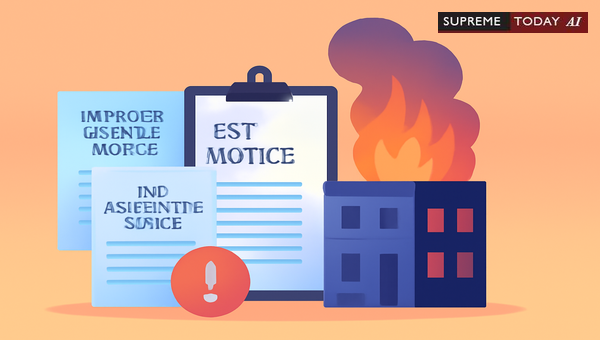
In the complex world of tax litigation, the validity of service of notices can make or break a case. Imagine closing your business due to a devastating fire, only to face tax assessments served at a defunct premises. This is the scenario faced by Sri P.M. Rao (also referred to as Sri P. Masthan Rao) in his challenge against Central Sales Tax (CST) show-cause notices and assessment orders for 2002-03 to 2005-06. The question at the heart of this dispute—Sri P m Rao P Masthan Rao—highlights critical issues of proper service, business disruptions, and evidentiary burdens in tax proceedings. This blog delves into the legal analysis, key arguments, precedents, and broader implications, drawing from court documents and related cases.

Background of the Dispute

Sri P.M. Rao's business premises were destroyed in a fire in 2008, leading to its permanent closure and the loss of all records. Despite the assessing authority knowing his residential address, show-cause notices and assessment orders were allegedly affixed only at the now-vacant business location. The petitioner argues this renders the service invalid, preventing any meaningful response or defense. 2018 0 Supreme(AP) 2

The fire incident not only destroyed physical records but also severed any operational tie to the business premises, making affixture there improper. As the petitioner notes, the assessing authority failed to send show-cause notices and assessment orders to his known residential address after he closed his business in 2008 due to a fire that destroyed all records. 2018 0 Supreme(AP) 2

This case underscores how life-altering events like fires can intersect with tax compliance, emphasizing the need for authorities to adapt service methods to changed circumstances.

Core Issue: Validity of Service of Notices

Improper Affixture at Closed Premises

Proper service is foundational in administrative law, ensuring due process. Here, the petitioner contends that affixing notices at non-operational premises post-2008 closure is legally flawed, especially since his residential address was known. This failure allegedly violated principles of natural justice, as he could not access or respond to the notices timely.

  • Key Argument: No presence at business since 2008; affixture invalid without residential service. 2018 0 Supreme(AP) 2
  • Impact of Fire: Destruction of records hampered verification, amplifying prejudice from poor service. 2018 0 Supreme(AP) 2

Courts generally require service at the last known correct address, particularly when authorities possess updated information. Failure to do so may vitiate proceedings.

The Sri P. Masthan Rao Connection

A pivotal twist involves service on Sri P. Masthan Rao for the 2002-03 notice. The petitioner denies any link, asserting no employment or association. The burden shifts to respondents to prove connection, which they failed to do. The petitioner denies any connection to Sri P. Masthan Rao, who was allegedly served with the show-cause notice for the year 2002-03. The petitioner argues that the burden of proof lies with the respondents to establish that Sri P. Masthan Rao was an employee or associated with him, which they failed to do. 2018 0 Supreme(AP) 2

Without evidence, service on a third party lacks validity, potentially nullifying assessments.

Respondents' Counterarguments

The assessing authority counters that the petitioner did not dispute service until a 2018 reply affidavit, implying prior acknowledgment. They claim he sought time to verify orders without initial objection. 2018 0 Supreme(AP) 2

However, petitioners can highlight contextual delays due to record loss and unawareness from improper service.

Guiding Legal Precedents

The Supreme Court in Bharat Singh (1988) 4 SCC 534 rules that new pleas not in the original writ cannot be entertained without opponent response. The Supreme Court ruling in Bharat Singh (1988) 4 SCC 534 indicates that pleas not raised in the original writ petition cannot be entertained if they are introduced later without giving the opposing party a chance to respond. 2018 0 Supreme(AP) 2

This precedent cautions against late-stage arguments but supports timely challenges to service validity.

Insights from Related Cases

Similar naming and service themes appear in other judgments, reinforcing procedural rigor. For instance, in a case involving Vajja Srinivasa Rao, S/o Masthan Rao, proceedings under Section 482 CrPC were deferred, emphasizing fair hearings. 2025 Supreme(Online)(AP) 13851

In another, involving Shaik Chinna Masthan, the court extended interim orders under Section 151 CPC for justice's sake, highlighting discretion in procedural matters. 2025 Supreme(Online)(AP) 9033

A notable reference is Jajula Koteshwar Rao vs. Ravulapalli Masthan Rao 2016 (1) ALT 134, cited in a civil revision petition, where counsel relied on it for procedural validity. 2023 Supreme(Online)(Tel) 27868

These cases, while distinct, illustrate courts' focus on evidence and proper process, akin to the evidentiary gap here regarding Masthan Rao's connection.

In SARFAESI contexts, like possession warrants, courts stress time limits and proper execution: Once time specified in warrant has elapsed, possession of property in question cannot be taken over under same warrant.

Mangalagiri Textile Mills Private Limited VS State Bank of India

This analogy bolsters arguments against outdated service methods.

Additionally, compliance with court orders is paramount, as seen in mandamus petitions for payments, where non-compliance invites consequences. 2025 Supreme(Online)(AP) 8286

Strategic Recommendations

For similar disputes:- Emphasize Known Addresses: Demand proof of residential service attempts.- Document Disruptions: Use fire affidavits or closure proofs to explain non-response.- Shift Burden: Challenge third-party service without linkage evidence.- Counter Delays: Contextualize late objections with prejudice shown.- Leverage Precedents: Cite Bharat Singh judiciously; file motions early.

The petitioner has a strong argument regarding the improper service of notices, particularly due to the lack of evidence from the respondents to establish the connection with Sri P. Masthan Rao and the failure to send notices to the known residential address. 2018 0 Supreme(AP) 2

Conclusion and Key Takeaways

The Sri P.M. Rao case exemplifies how improper notice service can undermine tax assessments, especially post-business closure. Authorities must ensure accessible service, while taxpayers should proactively document changes. Related cases affirm procedural sanctity, from CrPC quashings to CPC extensions.

Key Takeaways:- Service at defunct premises may be invalid if residential address known. 2018 0 Supreme(AP) 2- Prove third-party links or risk null service.- Timely challenges preserve rights; delays need justification.- Fire/record loss strengthens prejudice claims.

This analysis is for informational purposes only and does not constitute legal advice. Consult a qualified attorney for case-specific guidance. Outcomes may vary based on facts and jurisdiction.

#TaxLawIndia, #ServiceOfNotices, #LegalAnalysis
Chat Download
Chat Print
Chat R ALL
Landmark
Strategy
Argument
Risk
Chat Voice Bottom Icon
Chat Sent Bottom Icon
SupremeToday Portrait Ad
logo-black

An indispensable Tool for Legal Professionals, Endorsed by Various High Court and Judicial Officers

Please visit our Training & Support
Center or Contact Us for assistance

qr

Scan Me!

India’s Legal research and Law Firm App, Download now!

For Daily Legal Updates, Join us on :

whatsapp-icon Back to top