Searching Case Laws & Precedent on Legal Query..!
Scanned Judgements…!



Searching Case Laws & Precedent on Legal Query..!
Scanned Judgements…!
Onus of Proof for Sound Mind - The propounder must initially provide prima facie evidence that the testator was of sound mind at the time of will execution, demonstrating understanding of the nature and effect of the will, and that the signature was voluntary ["2023 0 Supreme(SC) 1301"], ["2023 0 Supreme(Del) 2371"], ["2023 0 Supreme(Cal) 778"], ["2023 0 Supreme(HP) 13"], ["2025 0 Supreme(All) 2171"], ["2025 0 Supreme(Ker) 1915"], ["2025 0 Supreme(HP) 566"], ["
SINNAPODIAN v. MUTTAN et al.
"].Criteria for Sound Mind - Section 59 of the Indian Succession Act defines a person of sound mind as someone capable of understanding the nature of the act, its effects, and free from unsoundness or mental incapacity. The testator must be of legal age and possess mental capacity at the time of making the will ["2023 0 Supreme(Del) 2371"], ["2023 0 Supreme(HP) 13"], ["2025 0 Supreme(All) 2171"].
Evidence Required - The propounder must prove that the testator understood the content and consequences of the will, and that the signature was made voluntarily and in a sound state of mind. Evidence can include affidavits from witnesses, medical reports, or circumstantial proof ["2023 0 Supreme(SC) 1301"], ["2023 0 Supreme(Del) 2371"], ["2024 0 Supreme(Kar) 629"], ["2023 0 Supreme(Cal) 778"], ["2023 0 Supreme(HP) 13"], ["2025 0 Supreme(All) 2171"], ["2025 0 Supreme(Ker) 1915"], ["2025 0 Supreme(HP) 566"].
Burden of Proof and Shifting - Initially, the burden lies with the propounder to establish the testator's capacity and proper execution. If suspicious circumstances or doubts arise, the burden shifts to the opponent to prove incapacity or undue influence ["2023 0 Supreme(SC) 1301"], ["2023 0 Supreme(Del) 2371"], ["2023 0 Supreme(HP) 13"], ["2023 0 Supreme(Cal) 778"], ["2025 0 Supreme(All) 2171"].
Suspicious Circumstances - The presence of suspicious circumstances surrounding the execution of the will, such as mental illness, undue influence, or lack of understanding, can shift the burden to the opponent to prove incapacity. Mere assertions of soundness are insufficient without supporting evidence ["2025 0 Supreme(All) 2171"], ["2025 0 Supreme(Ker) 1915"].
Conclusion - The primary responsibility for proving that a testator was of sound mind at the time of will execution rests with the propounder, who must satisfy the court with satisfactory evidence that the testator understood the nature and effect of the disposition, signed voluntarily, and was free from undue influence. When doubts or suspicious circumstances are present, the burden shifts to the opposing party to prove incapacity or undue influence ["2023 0 Supreme(SC) 1301"], ["2023 0 Supreme(Del) 2371"], ["2023 0 Supreme(HP) 13"], ["2023 0 Supreme(Cal) 778"], ["2025 0 Supreme(All) 2171"], ["2025 0 Supreme(Ker) 1915"], ["2025 0 Supreme(HP) 566"], ["
SINNAPODIAN v. MUTTAN et al.
"].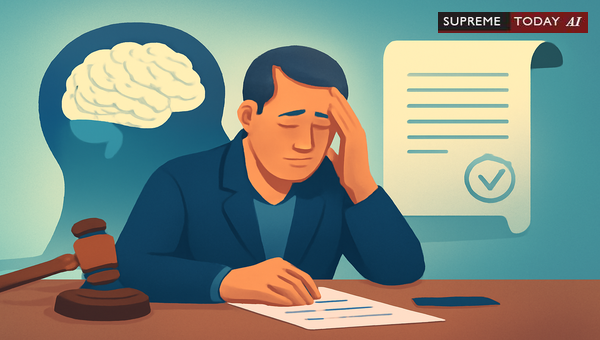
In estate planning and probate disputes, one critical question often arises: Onus for Proving that Testator was of Sound Mind. Challenging a will's validity frequently hinges on the testator's mental capacity at the time of execution. Under Indian law, particularly the , this issue determines whether a will stands or falls. Understanding the burden of proof— who must prove what and when—can make or break .
This blog explores the legal principles governing , the initial and shifting onus, , and judicial precedents. Note that this is general information based on established case law and should not be considered specific legal advice. Consult a qualified lawyer for your situation.
The law starts with a strong : every person is presumed sane until proven otherwise. As stated in 1940 0 Supreme(Nagpur) 99, The law presumes sanity in the testator, and where the Will is not challenged, it is enough for the purpose of establishing the Will that it was duly executed by the testator, that he was not a minor, and was otherwise capable of making a Will. Similarly, 1995 0 Supreme(Mad) 335 emphasizes: The law presumes to be sane having a mental capacity to make a valid Will until contrary is proved.
The (the person seeking to enforce the will, often the executor or beneficiary) bears the initial onus. They must prove:- The testator was of at execution.- The testator understood the nature and effect of the dispositions.- Proper execution, including signatures and attestation.
This standard is not mathematical certainty but the satisfaction of a prudent mind. Evidence like , medical records, and the testator's conduct is key. In 2023 0 Supreme(Cal) 679 and 1969 0 Supreme(Raj) 224, courts held that proof of and proper execution suffices in the absence of suspicion.
Without red flags, the 's task is straightforward. Witnesses' testimony and execution circumstances often discharge the burden. For instance, in 2021 0 Supreme(Mad) 234, No evidence was adduced to show that the testator was not in sound state of mind and in fact, the finding is that he was of sound mind. No evidence has been led in by the respondents to show the exercise of any fraud or at the time of execution of the Will.
Another case, 2016 0 Supreme(Tri) 67, reinforces: No evidence has been led in by the respondents to show the exercise of any fraud or at the time of execution of the Will. No evidence was adduced to show that the testator is not in sound state of mind and in fact, the finding is that he was of sound mind.
Here, the 's evidence satisfied the court's conscience, leading to probate grants.
Suspicion changes everything—shaky signatures, unnatural bequests, 's heavy involvement, or . Once raised, the onus shifts back to the to dispel doubts convincingly.
notes: The presence of makes the initial onus very heavy and, unless it is satisfactorily discharged, courts would be reluctant to treat the document as the last will of the testator.
Precedents like Jaswant Kaur v. Amrit Kaur () 1 SCC 369 and Venkatamuni v. C.J. Ayodhya Ram Singh () 13 SCC 449 stress proving free and voluntary execution. In 2005 1 Supreme 684, In the absence of , proof of and proper execution is sufficient to discharge the onus.
From other rulings, mere beneficiary presence isn't suspicious: 2021 0 Supreme(Mad) 234 clarifies, The mere presence of the beneficiary at the time of the execution of the Will, by itself, would not be a factor to hold that the Will in question is shrouded with .
Landmark cases outline the framework:- Initial burden on : H. Venkatachala Iyengar, AIR SC 443 1940 0 Supreme(Nagpur) 99.- Shift upon suspicion: Prove capacity and voluntariness Madhukar D. Shende () 2 SCC 85.- : Bharpur Singh v. Shamsher Singh, (3) SCC 687.
defines sound mind, with illustrations for 2023 0 Supreme(Del) 965: Section 59 provides that every person of sound mind, not being a minor, may dispose of his property by will and the three illustrations to this section indicate what is meant by the expression 'a person of sound mind' in the context.
In 2014 0 Supreme(Del) 335, The testator was admittedly of . There is no circumstance to show that any coercion, force or pressure was brought upon the testator to execute the said Will.
Certain scenarios heighten scrutiny:- Adjudged lunatic or certified mentally ill: Onus shifts to prove sanity during execution 1940 0 Supreme(Nagpur) 99, 1955 0 Supreme(Cal) 194.- Medical evidence: Hyponatremia or illness may raise flags, but context matters 2010 0 Supreme(Del) 1126: The onus to prove that the testator was in , was upon the appellant, viz., the of the Will.- Age/physical ailments: Insufficient alone without mental deterioration proof.- Unnatural dispositions: Like excluding close heirs, but explainable if rational 2012 0 Supreme(Del) 2059.
In probate grants, courts verify execution and attestation under , ensuring free volition 2016 0 Supreme(Tri) 67.
To succeed:- Secure credible .- Gather medical records showing stability.- Document testator's conduct pre/post-execution.- Proactively address suspicions with explanations.
Courts evaluate the totality of evidence. In one probate case, exclusion of children was upheld as the wife proved capacity and no fraud 2014 0 Supreme(Del) 335.
Generally, the starts with proving sound mind, but suspicions demand rigorous rebuttal. This balances fairness while upholding valid wills. Key takeaway: Early evidence collection is vital.
For estate matters, professional guidance ensures compliance. Stay informed on evolving precedents to protect legacies.
References include 1940 0 Supreme(Nagpur) 99, 1995 0 Supreme(Mad) 335, 2023 0 Supreme(Cal) 679, 1969 0 Supreme(Raj) 224, , 2005 1 Supreme 684, 1955 0 Supreme(Cal) 194, 2023 0 Supreme(Del) 965, 2021 0 Supreme(Mad) 234, 2016 0 Supreme(Tri) 67, 2014 0 Supreme(Del) 335, 2010 0 Supreme(Del) 1126, 2012 0 Supreme(Del) 2059.


The onus is discharged by the propounder adducing prima facie evidence proving the competence of the testator and execution of the will in the manner contemplated by law. ... Whether a will has been executed by the testator in a sound and disposing state of mind is purely a question of fact, which will have to be decided in each case on the circumstances disclosed and the nature and qual....

Notably, on the other hand, all the four daughters of the testator have filed their affidavits stating that at the time of execution of the Will, the testator was of sound health and disposing mind. ... Section 59 provides that every person of sound mind, not being a minor, may dispose of his property by will and the three illustrations to this section indicate what is meant by the expre....

Section 59 provides that every person of sound mind, not being a minor, may dispose of his property by will and the three illustrations to this section indicate what is meant by the expression "a person of sound mind" in the context. ... Therefore, it is crucial that the person making a Will and disposing the property (ies) must be of sound mind. ... -A person who is ordinarily insane ma....

, that the testator at the time when he subscribed his signature on to the will had a sound and disposing state of mind and memory and ordinarily, however, the onus is discharged as regards the due execution of the will if the propounder leads evidence to show that the will bears the signature and mark ... (3) Whether the testator was in a sound state of mind at the ti....

In this manner, the defendants miserably failed to discharge the onus of proving sound disposing mental condition of the testatrix. 20. ... Such burden is required to be discharged by proving the due execution of the Will in accordance with Sections 67 and 68 of the Indian Evidence Act and simultaneously the Will needs to be proved having been executed while having sound disposing mind, ....

In proving a will, the initial onus is on the propounder who has to prove by disinterested, satisfactory and sufficient evidence the signature of the testator, the sound and disposing state of his mind, his understanding of the nature and effect of his dispositions and finally the free and voluntary ... The onus on propounder to prove the Will shall stand discharged if the following elem....

That suspicion cannot be removed by the mere assertion of the propounder that the will bears the signature of the testator or that the testator was in a sound and disposing state of mind and memory at the time when the will was made, or that those like the wife and children of the testator who would ... It requires to consider factors such as awareness of the testator as to the content a....

He is never re- quired to close his mind to the truth”. It would sound platitudinous to say so, but it is nevertheless true that in discovering truth even in such cases the judicial mind must always be open though vigilant, cautious and cir- cumspect.” ... The propounder has to show that the will was signed by the testator : that he was at the relevant time in a sound disposing state of mind#HL....

Thus, to be a valid Will it should have been executed by a person of sound mind and at the time of its execution the testator should be in such state of mind that he is not in a position to know what he is doing. 20. ... The propounder is also required to prove that the testator has signed the will and that he had put his signature out of his own free will having a sound disposition of #....
was of sound mind at the time of execution. ... When, however, it is impeached and the whole case is before the Court on evidence, the Court must pronounce against the validity of the will unless the evidence on the whole is sufficient to establish affirmatively - that the testator was of sound mind at the time of execution." ... Where the validity of a last will is contested on the ground of the m....

No evidence was adduced to show that the testator was not in sound state of mind and in fact, the finding is that he was of sound mind. No evidence has been led in by the respondents to show the exercise of any fraud or undue influence at the time of execution of the Will. Thus, the evidence adduced by the appellant propounder is sufficient to satisfy the conscience of the court of law that the Will was duly executed by the testator. The finding recorded by the High Court and....

..No evidence has been led in by the respondents to show the exercise of any fraud or undue influence at the time of execution of the Will. No evidence was adduced to show that the testator is not in sound state of mind and in fact, the finding is that he was of sound mind. In our opinion, the evidence adduced by the appellants/profounders are sufficient to satisfy the conscience of the Court of law that the Will was duly executed by the testator.”
The testator was admittedly of sound disposing mind. There is no circumstance to show that any coercion, force or pressure was brought upon the testator to execute the said Will. In the facts of this case the valid execution of the Will has been proved.
District Judge establishes that the testator was of sound mind. The suspicious circumstance alleged is that nothing has been given by the testator to his wife in will dated 19.07.1991.

In this backdrop submitted the learned Senior counsel, the onus to prove that the testator was in sound disposing mind, was upon the appellant, viz., the propounder of the Will. It was for him to satisfy the conscience of the Court that the instrument so propounded is the last Will of a free and capable testator. Reference was made under Section 59 of the Indian Succession Act and particularly Explanation 4 thereof, as per which no person can make a Will while he is in such s....


An indispensable Tool for Legal Professionals, Endorsed by Various High Court and Judicial Officers
Please visit our Training & Support
Center or Contact Us for assistance

Scan Me!
India’s Legal research and Law Firm App, Download now!


For Daily Legal Updates, Join us on :



 Back to top


