Searching Case Laws & Precedent on Legal Query..!
Scanned Judgements…!



Searching Case Laws & Precedent on Legal Query..!
Scanned Judgements…!
Analysis and Conclusion: - Banks cannot be parties in PWDV Act petitions as respondents unless they are directly involved in the domestic relationship or specific circumstances warrant their inclusion. The Act's provisions and judicial interpretations focus on individuals in domestic relationships, not financial institutions. - Reliefs are generally sought against persons in the domestic sphere (family members, spouses, in-laws), and the Act does not envisage reliefs directly against banks or similar entities.
Analysis and Conclusion: - Reliefs under the PWDV Act are primarily directed at individuals involved in domestic relationships. - Reliefs against institutions like banks are generally not permissible unless the bank is directly involved in the domestic violence or related proceedings. - The scope of reliefs is to protect the rights of the aggrieved woman within the domestic sphere, not against third-party financial institutions.
References:- Section 2(q) and Section 26 of the PWDV Act clarify the scope of parties and proceedings.- Judicial interpretations and case law (e.g., Sheeja Antony, Sneha Ahuja) emphasize that respondents are persons in domestic relationships, not institutions.- The case law cited (
Omana Somanadhan VS Deepu Soman - Crimes
, 2024 0 Supreme(Del) 108, 2024 0 Supreme(Ker) 1324, etc.) consistently show that reliefs are targeted towards individuals, and entities like banks are not recognized as respondents or beneficiaries unless directly involved.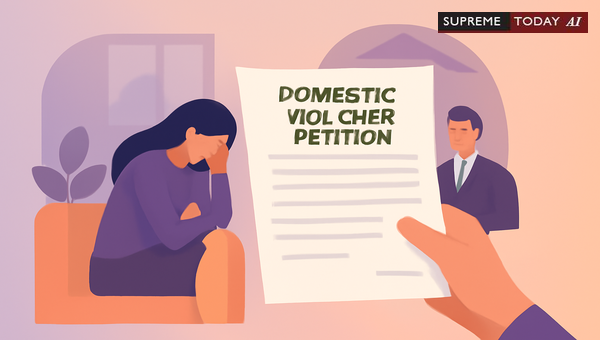
The () is a crucial legislation aimed at safeguarding women from domestic abuse. It provides remedies like , , and . But what happens when a financial institution like a bank gets entangled? Can a bank be named as a party—specifically a —in a petition? And can any relief be sought against it in such proceedings?
These questions often arise in complex cases involving family disputes, property, or finances. This article breaks down the legal position, drawing from statutory provisions, judicial interpretations, and case law. Note: This is general information and not specific legal advice. Consult a qualified lawyer for your situation.
The focuses on 'domestic relationships' and 'shared households.' defines a as one between an and a who is or has been in a through marriage, kinship, or domestic cohabitation. specifies the as any adult male person who is, or has been, in a with the .
Courts have consistently held that these definitions target individuals in familial or intimate settings, not corporate entities. For instance, the case 2023 0 Supreme(Ori) 203 clarifies that mere residence in the same household does not establish a without a . The court quashed proceedings against petitioners lacking such a relationship, emphasizing personal ties. 2023 0 Supreme(Ori) 203
Generally, no. A bank, as a corporate entity, does not fit the Act's definition of a . It lacks the capacity for a '' unless extraordinarily involved in the domestic sphere—such as acting in a personal capacity akin to a family member or cohabitant, which is rare and untested.
reinforce this: of the defines '' as any adult male person who is, or has been, in a with the .
National Small Industries Corp. Ltd. VS Punjab National Bank - Consumer
, relief was directed at a bank in a consumer context, but not under PWDV: whatever relief can be sought, it can only be sought from the opposite party bank. This was unrelated to domestic violence.National Small Industries Corp. Ltd. VS Punjab National Bank - Consumer
Exceptional Scenarios: If a bank official resides in the or is alleged to perpetrate violence personally, it might be arguable—but the bank itself remains outside scope.
Even if a bank could hypothetically be named, what reliefs apply? Sections 18-22 offer:
allows these in any civil, family, or criminal proceeding affecting the . As noted in 2017 0 Supreme(Ker) 263, reliefs available under Sections 18 to 22 can be sought in any legal proceeding... before civil, family, or criminal courts. However, this hinges on the being within the Act's ambit. 2017 0 Supreme(Ker) 263
Against a Bank? Typically Not. Reliefs are for domestic disputes. Other sources confirm:
: Discusses (1)(f) for residence alternatives, but within domestic benevolence, not corporate liability.
In 2022 0 Supreme(Cal) 1209, relief was denied against a private opposite party (father-in-law), underscoring personal scope: The petitioner cannot claim any relief under the from the private OP. 2022 0 Supreme(Cal) 1209
(3) mandates disclosure of other reliefs. Cases like
Sandeep Aggarwal vs Viniti Aggarwal - Delhi
quote: (3) of the clarifies that if a relief under ... allowing concurrent remedies, but again, against proper parties.Sandeep Aggarwal vs Viniti Aggarwal - Delhi
For banks, alternative forums like consumer courts or civil suits are better.
National Small Industries Corp. Ltd. VS Punjab National Bank - Consumer
highlights bank-specific collections under URC 522, irrelevant to PWDV.National Small Industries Corp. Ltd. VS Punjab National Bank - Consumer
Key Takeaway from Sources: Reliefs target domestic actors. Banks are excluded unless directly enmeshed.
In summary, banks generally cannot be parties (respondents) in petitions due to lacking domestic relationships. Reliefs under Sections 18-22 are unavailable against them, reserved for personal disputes. Courts prioritize the Act's protective intent for individuals. 2017 0 Supreme(Ker) 263 2023 0 Supreme(Ori) 203
Key Takeaways:- Respondents: Adult males in domestic ties ().- Reliefs: Protection, residence, monetary—via .- Banks: Seek other remedies.
For tailored advice, consult a legal expert. Stay informed on evolving jurisprudence.
#PWDVAct, #DomesticViolenceLaw, #LegalInsights



When clause (f) of Subsection (1) of Section 19 of the PWDV Act contemplates an alternative to the previous clauses, it cannot be said that clause (f) can be invoked only in a case where a shared household is not available. ... No doubt, the provisions in the PWDV Act are benevolent and intending to protect the interest of aggrieved persons. That does not mean that while granting an order under the #HL_ST....

It is also argued that a wife who deserts her husband is not entitled to get any relief under Section 12 of PWDV Act. ... As regards another prayer in this petition i.e. quashing of complaint filed under Section 12 of PWDV Act, this Court notes that quashing has been sought on similar grounds on which the re-call of order dated 21.07.2012 was sought be....

It is only ancillary that a party in favour or against whom a decision is rendered by a civil court in respect of a monetary claim is debarred from prosecuting a petition for the same claim before the Magistrate under the PWDV Act. ... The petitioners now pursue the relief of return of gold ornaments said to have been misappropriated by the 2nd respondent alone. Relief ....

Act enables a party to seek relief available under Ss. 18 to 22 of the D.V. Act in any legal proceeding before the civil court or Family Court or criminal court affecting the aggrieved person, whether such proceeding was initiated before or after the commencement of the D.V. Act. ... The issue raised in the present petition hinges on the interpretation of Section 26 of ....
Section 26 (3) of the PWDV Act clarifies that if a relief under Section 26 of the PWDV Act, which reads as under: "26. Relief in other suits and legal proceedings.
Act enables a party to seek relief available under Ss. 18 to 22 of the D.V. Act in any legal proceeding before the civil court or Family Court or criminal court affecting the aggrieved person, whether such proceeding was initiated before or after the commencement of the D.V. Act. ... The issue raised in the present petition hinges on the interpretation of Section 26 of ....

PWDV Act. ... Section 2(q) of the PWDV Act defines 'respondent' as any adult male person who is, or has been, in a domestic relationship with the aggrieved person and against whom the aggrieved person has sought any relief under the ... Section 26 of the PWDV Act provides that any relief available under Sections 18, 1....

The application ought to be dealt with on merits by the learned Trial Court in order to decide whether the opposite party is entitled to the relief sought. 11. ... Learned counsel for the petitioner has sought dismissal of the proceeding under the PWDV Act solely on the ground of material suppression of facts by the opposite party. 3. ... By the order ....

The application ought to be dealt with on merits by the learned Trial Court in order to decide whether the opposite party is entitled to the relief sought. 11. ... Learned counsel for the petitioner has sought dismissal of the proceeding under the PWDV Act solely on the ground of material suppression of facts by the opposite party. 3. ... By the order ....

Thus the application for getting relief under the PWDV Act cannot be entertained. (2) The petitioner cannot claim any relief under the PWDV Act from the private OP as private opposite party is the father-in-law of the petitioner. ... The petitioner filed an application U/s 12 read with Section- 18,20,22,23 of the Protection of Women from Domestic Viole....

The said principle was held to be over-arching on other principles. The relevant paragraphs of the said judgment read as follows: “40. The relevant portions of the said judgment need to be reproduced to examine as to whether the relief sought in the present writ petition can be granted. The Court has noted that India is not yet a signatory to the Hague Convention of 1980 on “Civil Aspects of International Child Abduction”.
Thus, whatever relief can be sought, it can only be sought from the opposite party bank. It is further seen that the universal rules for collections i.e. URC 522 has been framed by International Chamber of Commerce and these rules are mainly in connection with the collection of payments in the international business i.e. in respect of exports and imports. The complainant is a consumer of the opposite party bank for availment of service as collecting bank. The opposite party h....

This is clearly impermissible by way of modification Petition. Therefore, no action for contempt could be initiated against the Revenue Department. 6. The prayer sought for in the modification Petition has been carefully worded, and, on a closure scrutiny, it is seen that, what the Department seeks to do is to review the order passed in the Writ Petition. However, it has to be seen, as to whether the relief sought for in the modification Petition can be granted.

In view of these rival submissions, it is required to be considered whether the present petition can be entertained and whether the petitioners can claim any relief in the present petition on the grounds stated in the petition.

However, the question in the present case is not one of review of the order passed earlier by this Bench in a petition under Section 561-A Cr.PC or that of such order passed by the Co-ordinate Bench. The question is whether a second petition under Section 561-A Cr.PC can be maintained by a co-accused seeking same relief as sought in the first petition.


An indispensable Tool for Legal Professionals, Endorsed by Various High Court and Judicial Officers
Please visit our Training & Support
Center or Contact Us for assistance

Scan Me!
India’s Legal research and Law Firm App, Download now!


For Daily Legal Updates, Join us on :



 Back to top


