Searching Case Laws & Precedent on Legal Query.....!
Analysing the retrieved Case Laws
Scanned Judgements…!



Searching Case Laws & Precedent on Legal Query.....!
Analysing the retrieved Case Laws
Scanned Judgements…!
Balance of Evidence - The concept involves weighing the evidence presented to determine credibility or truthfulness. For example, a magistrate may assess whether a balance (scale) is true or fair, but it must itself be tested against standards before being used as proof (
OSSEN v. SIADORIS
). Similarly, in criminal law, the defendant must prove certain defenses (like diminished responsibility) on the balance of probabilities, which is the civil standard of proof, not beyond reasonable doubt (2024 Supreme(HK)(HKCFA) 20).OSSEN v. SIADORIS
, 2024 Supreme(HK)(HKCFA) 20Proof Standards - In civil cases, the standard of proof is on the balance of probabilities, meaning the fact is more likely than not. Courts have held that even in allegations of fraud or conspiracy, this civil standard applies unless explicitly specified otherwise (
MRCB ENGINEERING SDN BHD vs MAC CONSTRUCTION CONSULTANT SDN BHD & ANOR - High Court Malaya Kuala Lumpur
).MRCB ENGINEERING SDN BHD vs MAC CONSTRUCTION CONSULTANT SDN BHD & ANOR - High Court Malaya Kuala Lumpur
Application in Disputes - The balance of evidence is used to establish claims such as unpaid balances in property transactions or financial disputes. For instance, in a house sale, the plaintiff must prove the unpaid amount, even if the defendant claims payment was made, by presenting credible evidence (
JAGANADAN PILLAI v. PERERA
).JAGANADAN PILLAI v. PERERA
Judicial Directions - Judges may instruct juries to assess whether the evidence supports a story or version of events, such as in a rape trial where the jury must be satisfied on the balance of evidence regarding consent (
KING v. BALAKIRIYA alias WADU BALAYA
).KING v. BALAKIRIYA alias WADU BALAYA
Disciplinary and Administrative Contexts - Courts and tribunals consider whether proceedings should continue or be quashed based on the balance between factors like delay and seriousness of charges, emphasizing the importance of fair and efficient administration (2025 Supreme(Online)(MP) 9817). 2025 Supreme(Online)(MP) 9817
Legal Burdens in Defenses - In criminal law, certain partial defenses (e.g., diminished responsibility) require the defendant to prove on the balance of probabilities that they suffered from an abnormality of mind, reversing the usual burden of proof (2024 Supreme(HK)(HKCFA) 20). This shifts the focus to the defendant to support their claim with evidence. 2024 Supreme(HK)(HKCFA) 20
Financial and Transactional Evidence - In financial disputes, the balance of monies is verified through recounts and machine counts, confirming the amount involved (
PP vs MOHD ZIN PENGCHENG & ORS - Magistrate Court Kuala Lumpur
,PP vs MOHD ZIN PENGCHENG & ORS - Magistrate Court Kuala Lumpur
). Such evidence supports claims regarding the existence and sufficiency of funds, crucial in cases of misappropriation or breach of trust.PP vs MOHD ZIN PENGCHENG & ORS - Magistrate Court Kuala Lumpur
,PP vs MOHD ZIN PENGCHENG & ORS - Magistrate Court Kuala Lumpur
Analysis and Conclusion:The balance of convenience or balance generally refers to the weighing of evidence, considerations, or factors to determine the most just or appropriate outcome. In legal contexts, it often involves assessing whether the evidence sufficiently supports a claim or defense on the balance of probabilities, which is the standard in civil cases. The concept underscores the importance of credible, tested evidence, whether in proof of claims, defenses, or procedural decisions, ensuring fairness and justice in judicial and administrative processes.
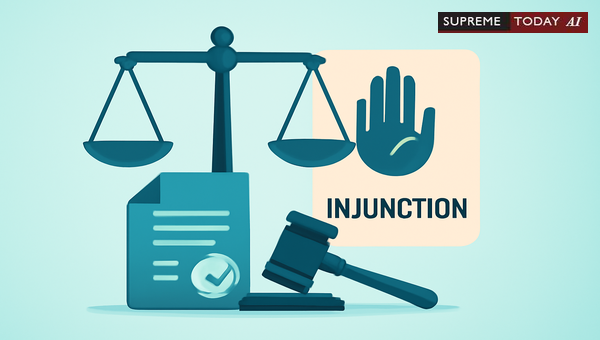
In legal disputes, time is often of the essence. Imagine a business facing imminent harm from a competitor's actions or a property owner seeking to halt unauthorized construction. Courts frequently turn to to maintain the until a full trial. But when do courts grant such relief? The answer lies in the —a pivotal principle that weighs the scales of justice. This post delves into , explaining its role, components, and application in Indian courts, drawing from established jurisprudence.
Note: This article provides general information based on legal principles and is not specific legal advice. Consult a qualified lawyer for your situation.
The serves as the primary legal criterion for granting interlocutory injunctions. Courts meticulously weigh the relative hardships and benefits to the parties involved. As outlined in key precedents, this involves assessing whether granting or refusing the injunction would cause greater inconvenience to one side. 1958 0 Supreme(Ker) 252 1993 0 Supreme(Cal) 86 2003 0 Supreme(UK) 172 2016 0 Supreme(HP) 478 2024 Supreme(Online)(MP) 855
This principle ensures , preventing irreparable damage while avoiding undue prejudice to the respondent. It's not a mere formality but a judicious exercise of judicial power across civil, property, intellectual property, and public interest matters.
To decide on an injunction, courts evaluate a triad of factors, with at the heart:
These elements form the foundational test, often referenced in and rulings.
The is versatile, applying to diverse scenarios:
Courts emphasize that is paramount, tipping the scales toward the party facing disproportionate hardship. For instance, in labor disputes, parties might be referred to as Management and Workers for ease of convenience, simplifying procedural analysis. 2025 Supreme(Online)(Mad) 59884
Granting injunctions is discretionary, but not arbitrary. Courts must ensure the favors the applicant; otherwise, relief is denied. 1958 0 Supreme(Ker) 252 2024 Supreme(Online)(MP) 855 2003 0 Supreme(UK) 170
This discretion demands evidence-backed arguments. Judges consider if alternative remedies exist or if public interest overrides private claims.
Not every application succeeds. Injunctions may be refused if:
In selection processes or administrative matters, courts note where two other considerations weigh in balance, such as participation in proceedings or interpretive vagueness, refusing interference lightly. 2022 0 Supreme(Guj) 651 2021 0 Supreme(Jhk) 143 2020 0 Supreme(Jhk) 524 2020 0 Supreme(Sikk) 12 2019 0 Supreme(SC) 1370
While governs injunctions, it's distinct from the —the civil standard of proof where claims must be more likely than not. In evidence assessment, courts weigh credibility, as in fraud cases or defenses like diminished responsibility.
OSSEN v. SIADORIS
2024 Supreme(HK)(HKCFA) 20MRCB ENGINEERING SDN BHD vs MAC CONSTRUCTION CONSULTANT SDN BHD & ANOR - High Court Malaya Kuala Lumpur
For example:- Balance of Evidence: Testing scales for fairness before use, mirroring how courts verify claims in property or financial disputes.
OSSEN v. SIADORIS
- Defenses: Defendants prove partial defenses on this standard, shifting evidentiary burdens. 2024 Supreme(HK)(HKCFA) 20- Administrative Contexts: Balancing delay against charge seriousness in disciplinary proceedings. 2025 Supreme(Online)(MP) 9817
Financial cases verify balance of monies through recounts, underscoring evidence's role.
PP vs MOHD ZIN PENGCHENG & ORS - Magistrate Court Kuala Lumpur
PP vs MOHD ZIN PENGCHENG & ORS - Magistrate Court Kuala Lumpur
Though related—both involve weighing— is equitable and interim-focused, while probabilities are proof-oriented.
In transactional snippets, retaining a balance after payments highlights precise accounting in disputes.
When seeking or opposing injunctions:
Courts align with these principles across Indian jurisprudence. 1958 0 Supreme(Ker) 252 1993 0 Supreme(Cal) 86 2003 0 Supreme(UK) 172
The embodies fairness in interim relief, ensuring justice isn't delayed by irreparable harm. By weighing prima facie cases, injuries, and hardships, courts safeguard rights judiciously. Whether in copyright battles or property feuds, understanding this principle empowers better legal strategies.
Key Takeaways:- Prioritize evidence on all three prongs.- Courts exercise discretion cautiously, favoring where balanced.- Distinguish from proof standards like for holistic advocacy.
Stay informed, but always seek professional counsel. For more legal insights, subscribe to our blog!
#BalanceOfConvenience #InjunctionLaw #LegalInsights


For the ease of convinence, the parties are referred to as Management and Workers. 3. The short facts necessary for disposal of the writ petitions are that the workmen were initially appointed in Coimbatore District Co- operative store.
There was a balance in Court, with regard to which the Magistrate notes that the scales were perfectly fair. I assume it to be a true balance. A balance may, however, appear to be just without being so at all, and it should be tested before it is applied as a test itself. ... He does not condescend to say by how much either of appellant's weights fall short of the standard 1-lb. and 1/2-lb. weights, nor does he say whether, or how, he ....

It is this: that at law, there are only two standards of proof, namely, beyond reasonable doubt for criminal cases, while it is on the balance of probabilities for civil cases. As such, even if fraud is the subject of a civil claim, the standard of proof is on the balance of probabilities. ... I hold that the plaintiff has discharged its burden of proof on the balance of probabilities. [1981] 1 MLJ 139 , FC observed that it was all a matter....
Plaintiff thereupon proved by witness and documents that the balance claimed was not really paid. After plaintiff's case was closed defendant proposed to call evidence in rebuttal. ... THE plaintiffs alleged that they conveyed a house and grounds to the defendant for Rs. 3,000 and were paid Rs. 2,500, and they raised the present suit to recover the balance Rs. 500. The defendant pleaded payment. ... In an action raised to recover the bal....
On page 6 of the charge the learned Judge has told the jury as follows : " You must be satisfied by the balance of evidence with his story that he had intercourse with the consent of the complainant ". ... Where in a charge of rape the presiding Judge directed the jury as follows: - " You must be satisfied by the balance of evidence with his story that he had intercourse with the consent of the complainant."

Ultimately, the court is to balance these two diverse considerations. 20. ... Before adverting to the facts of the case, this Court thinks it apposite to quote Rule 26 and 30 of the Rules which for ready reference and convinence is as under: 26. ... While serious charges may warrant continuation, prolonged delay without justification tilts the balance in favor of quashing the proceedings. 10. The employer must conduct proceedings diligent....
Both Scottish common law and the Homicide Act 1957 in England placed a legal burden on the defendant to establish the partial defence on a balance of probabilities. ... That is to say, instead of requiring a defendant to prove diminished responsibility on a balance of probabilities, as a legal burden would require him to, it should be sufficient for the defendant to disclose and proffer evidence to support the issue of diminished responsibility, thereafter r....
P at the request of E, and that with the consent of the latter he kept the balance, which was not sufficient to obtain a discharge of Welsh's bond. E denied having given authority to the accused to pay Mrs. P or to use the balance. ... Pollocks Rs. 750 out of the money remaining in his hands with the consent of Edirisinghe, and the balance left was not sufficient to obtain a discharge of Mr. Welsh's bond. ... Pollocks Rs. 750 out of th....
After that sum was taken out, SP2 re-counted the monies and the balance sum totalled up to RM5.9 million. This balance was also counted by SP6 using the bank note counting machine where the total added up to RM5.9 million. ... This was due to the fact that SP6 testified that she had checked the balance sum from the received RM6.5 million using the bank note counting machine. ... SP1 further testified that he did not need any particular agre....
After that sum was taken out, SP2 re-counted the monies and the balance sum totalled up to RM5.9 million. This balance was also counted by SP6 using the bank note counting machine where the total added up to RM5.9 million. ... This was due to the fact that SP6 testified that she had checked the balance sum from the received RM6.5 million using the bank note counting machine. ... SP1 further testified that he did not need any particular agre....

Moreover, two other considerations weigh in balance. The High Court noted in the impugned judgment that the interpretation of Rule 6 was not free from vagueness. There was in other words no glaring or patent illegality in the process adopted by the High Court. The appellants participated in the selection process.

Moreover, two other considerations weigh in balance. The High Court noted in the impugned judgment in Anurag Verma v. State of Bihar that the interpretation of Rule 6 was not free from vagueness. There was, in other words, no glaring or patent illegality in the process adopted by the High Court. The appellants participated in the selection process.

There was, in other words, no glaring or patent illegality in the process adopted by the High Court. The High Court noted in the impugned judgment that the interpretation of Rule 6 was not free from vagueness. The appellants participated in the selection process. Moreover, two other considerations weigh in balance.

The appellants participated in the selection process. Moreover, two other considerations weigh in balance. The High Court noted in the impugned judgment [Anurag Verma v. State of Bihar, 2011 SCC OnLine Pat 1289.] that the interpretation of Rule 6 was not free from vagueness. There was, in other words, no glaring or patent illegality in the process adopted by the High Court.

Moreover, two other considerations weigh in balance. There was, in other words, no glaring or patent illegality in the process adopted by the High Court. The High Court noted in the impugned judgment 1 that the interpretation of Rule 6 was not free from vagueness. The appellants participated in the selection process.


An indispensable Tool for Legal Professionals, Endorsed by Various High Court and Judicial Officers
Please visit our Training & Support
Center or Contact Us for assistance

Scan Me!
India’s Legal research and Law Firm App, Download now!


For Daily Legal Updates, Join us on :



 Back to top


