Searching Case Laws & Precedent on Legal Query..!
Scanned Judgements…!



Searching Case Laws & Precedent on Legal Query..!
Scanned Judgements…!
Maintenance under Section 125 Cr.P.C. for Live-in Partners - The sources indicate that traditionally, Section 125 Cr.P.C. does not recognize live-in relationships as equivalent to marriage, thus generally denying maintenance claims to live-in partners. However, courts have shown flexibility in certain cases. For instance, the Supreme Court in Vidhyadhar v. V.D. Shankar (2010) and Ganesh Ram v. Union of India (2015) have implied that live-in partners may be presumed to be legally married if the relationship resembles marriage, and women in such relationships could potentially inherit property. Nonetheless, the law does not automatically extend maintenance rights to live-in partners, especially if the relationship is not recognized as a marriage or if the woman is living in adultery or refuses to cohabit without sufficient cause ["2023 0 Supreme(All) 2815"].
Conditions for Granting Maintenance - To qualify for maintenance under Section 125 Cr.P.C., the applicant must prove inability to maintain herself and that the respondent has sufficient means. The courts also consider whether the wife is living in adultery or has refused to live with her husband without reasonable cause. If the wife refuses to cohabit without valid reasons, she may be disqualified from maintenance ["2023 0 Supreme(Pat) 1045"], ["2024 0 Supreme(Chh) 586"].
Live-in Relationships and Presumption of Marriage - Courts have recognized that long-term live-in relationships may raise a presumption of marriage, potentially entitling women in such relationships to maintenance. However, this is subject to proof and whether the relationship resembles marriage. The Supreme Court has clarified that mere cohabitation does not automatically confer rights unless it can be proven that the relationship was akin to marriage ["2024 0 Supreme(Kar) 107"], ["2023 0 Supreme(MP) 99"].
Specific Legal Positions and Cases - Several rulings emphasize that living in adultery or refusing to live with the spouse without sufficient cause disqualifies the woman from claiming maintenance. For example, courts have rejected maintenance claims where the woman was living in adultery or refused to cohabit without valid reasons. The courts also consider whether the relationship qualifies as a marriage or a live-in arrangement, and whether the applicant can substantiate her claim with evidence ["2023 0 Supreme(All) 1355"], ["2023 0 Supreme(Gau) 499"].
Analysis and Conclusion:While Section 125 Cr.P.C. primarily aims to provide maintenance to wives and children, its application to live-in partners is limited and context-dependent. Courts recognize that live-in relationships can sometimes be presumed to be akin to marriage, especially after long cohabitation, potentially granting maintenance rights. However, such claims are scrutinized based on the nature of the relationship, evidence of marriage-like conduct, and whether the woman is living in adultery or refuses to cohabit without valid reasons. Importantly, maintenance cannot be granted if the woman is living in adultery or without sufficient cause for separation. Therefore, maintenance under the Criminal Procedure Code may be granted to a live-in partner only if the relationship is established as akin to marriage and the legal criteria are satisfied, with courts carefully examining the facts and evidence ["2023 0 Supreme(All) 2815"], ["2024 0 Supreme(Kar) 107"], ["2023 0 Supreme(MP) 99"].
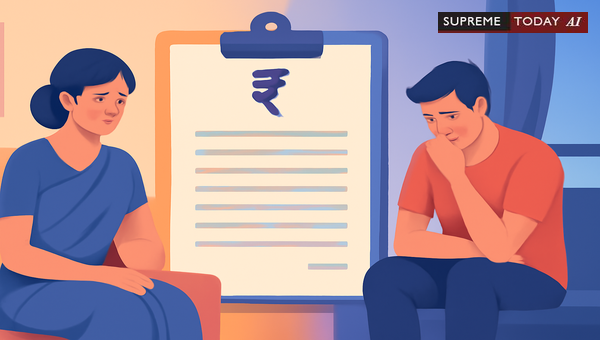
In family law disputes in India, maintenance claims under are common for wives, children, and parents unable to support themselves. A frequent question arises: Can adultery serve as a ground to deny maintenance in a case under ? This issue touches on the balance between spousal obligations and moral conduct, often leading to heated courtroom battles. Understanding this provision is crucial for claimants and respondents alike, as courts scrutinize evidence closely to prevent destitution while upholding .
This article delves into the legal framework, judicial interpretations, proof requirements, and related considerations, drawing from key precedents. Note that this is general information and not specific legal advice—consult a qualified lawyer for your situation.
aims to prevent vagrancy by providing maintenance to dependents. It typically covers:- Wives unable to maintain themselves.- Minor children.- Unmarried daughters (in some cases).- Parents.
However, explicitly bars maintenance if the wife is or if the couple lives separately by mutual consent. The phrase implies ongoing adulterous conduct, not isolated incidents, and the burden falls on the husband to prove it. Courts emphasize that the provision's intent is humanitarian, but statutory exceptions must be respected. 2024 0 Supreme(P&H) 1220
Adultery can disqualify a wife from interim or regular maintenance. In one case, a initially granted Rs. 3,000 monthly and Rs. 10,000 litigation costs to the wife. The husband contested, claiming she was . The court examined evidence like photographs showing her in a relationship with another person, ultimately setting aside the order: The court found the wife not entitled to based on the evidence. 2024 0 Supreme(P&H) 1220
Key takeaway: A husband may raise adultery as a defense, but success hinges on sufficient proof. The court noted, The lies on the husband to establish the claim of adultery, which can be proven through . 2024 0 Supreme(P&H) 1220
This aligns with the statutory language: from her husband under this section if she is , or .... 2024 0 Supreme(P&H) 1220
Courts demand robust evidence, as mere allegations won't suffice:- : Photographs, witness statements, or the wife's admissions can work, as in the aforementioned case. 2024 0 Supreme(P&H) 1220- Ongoing conduct: suggests a continuous relationship, not a one-off affair.- standard for interim relief: At the interim stage, magistrates assess initial evidence before final adjudication. 2022 0 Supreme(Del) 24
Failure to prove adultery means maintenance continues, underscoring judicial discretion.
While Section 125 traditionally applies to legally wedded wives, judicial precedents have extended it to live-in partners in . A woman in a live-in setup is entitled to under , recognizing needs akin to a wife's. Courts focus on the relationship's nature and financial dependency, not just marital status. 2016 0 Supreme(P&H) 2859 2007 0 Supreme(Mad) 1114
Does adultery apply similarly to live-in claims? Though not explicitly barred for non-wives, courts analogize: proof of the partner's adulterous living could weaken claims, but evidence standards remain high. One ruling clarified that live-in partners may claim under related laws like the , where relationship proof is key, potentially overlapping with CrPC proceedings.
For wives or live-in partners:- Formal marriage isn't always required if parties lived as husband-wife. 2007 0 Supreme(Mad) 1114 2014 0 Supreme(Tri) 141- In second-marriage disputes, if void due to a living first wife, maintenance may still be assessed. 2017 0 Supreme(All) 2288
Family Courts can consider broad material for adjudication, even if not strictly evidentiary. 2024 0 Supreme(P&H) 1220 They balance financial capacity and relationship essence. 2013 0 Supreme(AP) 989
Counterarguments persist: Some view Section 125 as marriage-exclusive, questioning live-in extensions. Yet, precedents favor inclusion with proof.
2016 0 Supreme(P&H) 2859
In live-in cases, prior denials based solely on status are unsustainable; merits matter.
If claiming maintenance:- Gather cohabitation evidence (photos, witnesses, joint accounts).- Document financial dependency.
If defending on adultery grounds:- Collect strong, admissible proof early.- Prepare for cross-examination.
Seek legal counsel to navigate these nuances, as outcomes vary by facts and jurisdiction.
Adultery remains a valid ground to contest maintenance under , per , but requires solid evidence from the husband—circumstantial proof like photos has succeeded in denying claims. 2024 0 Supreme(P&H) 1220 For live-in partners, entitlements are broadening via judicial interpretation, though defenses like adultery may apply analogously. 2016 0 Supreme(P&H) 2859 Courts prioritize preventing destitution while enforcing bars, exercising wide discretion. 2007 0 Supreme(Mad) 1114
Key Takeaways:- Wives: bars maintenance if proven.- Live-in Partners: Eligible with relationship proof; adultery defense possible.- Evidence is King: Burden on contestant; use circumstantial facts.- Holistic View: Financials, consent, and status all factor in.
Stay informed on evolving family law—precedents shift with societal changes. For personalized guidance, contact a family law expert.
References:2024 0 Supreme(P&H) 1220 2016 0 Supreme(P&H) 2859 2007 0 Supreme(Mad) 1114 2013 0 Supreme(AP) 989
2022 0 Supreme(Del) 24 2014 0 Supreme(Tri) 141
2024 0 Supreme(All) 1471 2017 0 Supreme(All) 2288 2009 0 Supreme(Pat) 625 2008 0 Supreme(All) 2337 2002 0 Supreme(Pat) 366 2001 0 Supreme(P&H) 837 #Section125CrPC #MaintenanceLaw #AdulteryDefense


wife as denoted in section 125 of the Cr.P.C. to include such livein partners for maintenance claims. ... Partners in a live-in relationship do not enjoy an automatic right of inheritance to the property of their partner. In Vidhyadhar v. ... Ganesh Ram 2015 (12) SCC 301, the Supreme Court decided that couples in live in relationships will be presumed legally married. It was also held that the woman in #H....

Where the maintenance proceedings are being dealt with by a Family Court, such Court is entitled to take into account any material, which in the judicial discretion of such Court, may be essential for effectively adjudicating a lis before it, whether or not it meets with the requirements of Indian Evidence ... expenses of proceeding, as the case may be,] from her husband under this section if she is living in adultery, or ....

A marriage which is valid and subsisting on the relevant date, automatically confers a right upon the wife to live in the shared household as an equal partner in the joint venture of running a family. ... A woman in such a case, may not live or at any point of time lived either singly or together with the husband in the “shared household”, despite a legally valid marriage followed even by its consummation. ... Her right to....

Code of Criminal Procedure, 1973 , namely, to a shared household also. H 10. Now incidentally, under Section 125 of the Code of Criminal Procedure, maintenance is provided for. ... Therefore, rejecting the claim of the lady simply on the ground that because she is a live in partner, thus, she is not entitled for H maintenance under the Domestic Violence Act, 2005 is not sustainable in ....

Therefore the petition filed under section 125 of Cr.P.C. are to be dealt with independently whether the wife is entitled for maintenance or not. ... Maintenance under Section 125 of the Cr.P.C. may be claimed by a person irrespective of the religious community to which they belong. The purpose and object of Section 125 Cr.P.C. is to provide immediate relief to an appli....

Before maintenance can be granted under Section 125 Cr.P.C., the following conditions must be specified:— “(a) The applicant must be unable to maintain himself or herself, as the case may be; (b) The opponent must have sufficient means to maintain the applicant ... In this regard, Section 125(4) of the Cr.P.C. reads as under:— “(4) No wife shall be entitled to receive an allowance for the mainte....

He would further submit that since the Family Court has not granted any maintenance to the applicant this Court cannot ascertain the quantum of the maintenance. ... 125 of Cr.P.C. for grant of maintenance allowance has been rejected. ... (4) No wife shall be entitled to receive an allowance for the maintenance or the interim maintenance and expenses of proceeding, as t....

She refused to live with the petitioner/husband. Learned Family Court without any documentary evidence, the huge amount of maintenance has been granted to the respondent/wife. 9. ... Whether strict proof of marriage is essential for a claim of maintenance under section 125 Cr.P.C. having regard to the provisions of the Domestic Violence Act, 2005? 3. ... Whether the l....
the same relief which have already been granted in the proceedings under Section 125 Cr.P.C. ... The wife of the petitioner, i.e., mother of respondent No. 3 filed an application under Section 125 Cr.P.C. claiming maintenance @ Rs.500/- per month to each of the applicant, which was granted by the Family Court. ... (4) No wife shall be entitled to receive an allowance for the maintenance....

Hence, I find it justified to adjust the amount of maintenance granted under Section 125 Cr.P.C. with the amount granted towards interim relief of maintenance by the learned Judicial Magistrate, 1st Class. Kamrup (M) under the Domestic Violence Act. ... granted on 02.03.2019, by invoking Section 482 of the Code of Criminal Procedure. ... and the respondent whe....

The point which is to be considered for awarding the maintenance under section 125 Cr.P.C. is whether the applicant is legally wedded wife or not? In order to appreciate this controversy between the parties, I would like to refer the legal position. Undoubtedly, the perusal of the application and the objection filed against the application under section 125 Cr.P.C. the opposite party had admitted the fact that he had married with the applicant by the Hindi ritual rites that ....

5. Section 125(4) of the Code of Criminal Procedure states that if a husband and wife live separately with mutual consent then in such case the wife becomes disentitled for maintenance. The Family Court after considering the materials on record as well as deposition of witnesses of both sides, directed the petitioner to pay maintenance of Rs. 1,000/- each to the wife and two daughters.
Whether interim maintenance can be granted under the proviso to Section 126, Cr.P.C. at the time of recalling the ex parte order in the proceedings under Section 125, Cr.P.C.?
So, in the instant case, pertinent question was whether Reeta Kumari had surrendered her right of maintenance contemplated within S.127(3)(c). Moreover, maintenance allowance granted under S. 125, Cr. P.C. may also be cancelled if the wife who obtained divorce from her husband has voluntarily surrendered her right to maintenance under S. 127(3)(c), Cr. P.C. It was the case of Reeta Kumari that the alleged agreement surrendering her right of maintenance was obtained under dure....

Against the judgment and decree dated 15.12.1978 passed by the Sub Judge Ist Class, Mansa, the appellant- husband filed an appeal. It was further made clear that since the respondent- wife was granted maintenance under Section 125 of the Criminal Procedure Code also, she was not entitled to realise the maintenance amount in pursuance of both the orders civil as well as criminal. The trial Court decreed the suit of the respondent-wife fixing her maintenance @ Rs. 100/- p.m. an....


An indispensable Tool for Legal Professionals, Endorsed by Various High Court and Judicial Officers
Please visit our Training & Support
Center or Contact Us for assistance

Scan Me!
India’s Legal research and Law Firm App, Download now!


For Daily Legal Updates, Join us on :



 Back to top


